🔑 Quick answer: A great Northern Italy itinerary runs from Turin to Milan to Verona over 10 to 12 days, with Venice an add-on: 2 to 3 nights in Turin, 3 to 4 in Milan for the lakes and medieval towns, and 2 to 3 in Verona. It works by train or car, and trades the tourist crush for food, wine, art, and lakes.

Key Takeaways
- Ten days is our sweet spot for the classic route (Turin, Milan with day trips, and Verona, plus optional Venice); a week is the fast version.
- It works entirely by train, or as a road trip if you want Piemonte's vineyards and the lakes.
- Stretch it to two weeks with the extensions our clients most often pick: Switzerland and the Dolomites.
- Each region peaks at a different time: Piemonte in the fall at harvest, the lakes and Verona in summer, Venice in spring and fall, Milan year-round.
Dreaming of castles, polenta, high fashion, and wine? This Northern Italy itinerary covers all of it: the route I first built for myself more than 15 years ago, and the one I still reach for whenever someone wants the north.
Here at Salt & Wind Travel, we love Northern Italy and love helping our Italy travel clients discover it, too. While many tourists immediately head to the Big Three of Italian travel (Venice, Florence, Rome), we are always thrilled when someone wants to explore a less-traveled corner of Italy.
Why do we love Northern Italy so much? One reason I keep going back is that it’s a land of contrasts. It’s a place where ancient cities blend seamlessly with cosmopolitan hubs, and serene lakes sit against daring Alpine backdrops. It’s where you can taste Barolo at a rustic vineyard, admire masterpieces by Leonardo da Vinci in bustling Milan, cruise across the calm waters of the Italian lakes, and stroll through romantic Verona, all in the same trip and all within easy reach.
So if you too want to explore all Northern Italy has to offer, look no further. This itinerary begins in Turin, runs through the vineyards of Piemonte, passes through the stylish capital of Milan, goes on day trips to some of Lombardy’s most beautiful corners, and ends in the Shakespearean city of Verona, with Venice as a bonus.
This is the travel itinerary I created for myself more than 15 years ago when I was living in Italy. And it was the reason I became a professional travel planner. It’s also flexible: do it entirely by public transport or turn it into a road trip, and lengthen or shorten it to fit your trip. Ready? Pack your bags and andiamo!
Why Trust Us With Northern Italy
I’m Rachel Vermiglio Smith, one of Salt & Wind’s Italy specialists (you may know me as @theitalianista). I built this route for myself while living in Italy. Northern Italy is also where Salt & Wind’s travel business began: we launched small-group trips through these regions, and we’ve worked there for over a decade since.
These days we plan some version of this route around 30 times a year, with roughly 100 travelers through these cities and regions annually. That volume buys a network you can’t get from a guidebook, the local food writers, Slow Food chefs, sommeliers, boat captains, café obsessives, and Milan design experts we lean on when we plan a trip.
I’m WSET Level 2 trained too, which shapes the wine-country stops. So these aren’t picks from a single visit; they’re the towns, trains, and tables we book and send travelers to, year after year.
A few things we build into these trips that you can’t easily arrange on your own: a food writer to eat through Turin and Milan with, cellar access with a premier local sommelier in Piemonte (the cult names and the small growers), a lakeside cooking class at a private villa, and our favorite boat captains on each of the lakes.
What is Northern Italy?
Northern Italy is the northern third of the country, comprising eight regions: Aosta Valley, Piedmont, Liguria, Lombardy, Trentino-Alto Adige/South Tyrol, Veneto, Friuli Venezia Giulia, and Emilia-Romagna. It runs from the Alps and the great lakes in the north down to the Po Valley plains, and from the Ligurian coast and Cinque Terre in the west to the Adriatic in the east.
Together, these regions represent some of Italy’s most economically vibrant and culturally rich areas. From Alpine ski resorts to Renaissance cities, from culinary capitals like Bologna to fashion-forward Milan, Northern Italy offers a diversity of experiences unmatched elsewhere in the country.
One caveat before we dive in: no single week, or even two, covers all eight of those regions. Think of this itinerary as an amuse-bouche, a first, delicious taste that runs through the heart of the north: Piedmont, Lombardy, and the Veneto, the regions that give first-time visitors the richest introduction.
It doesn’t get into the Aosta Valley, the Ligurian coast, Friuli Venezia Giulia, or much of Trentino-Alto Adige, though a couple of those turn up in the extensions later (the Dolomites, Cinque Terre). Consider each one a reason to come back, or to slow down and give a single region a whole trip of its own.
Get to Know Northern Italy
Northern Italy has long been a crossroads of cultures, thanks to its location between central Europe and the Mediterranean world. The area was once part of the Roman Empire, with cities like Verona, Milan, and Brescia flourishing as important centers of trade and governance. After the empire’s fall, Northern Italy fragmented into city-states and duchies, many of which grew wealthy through banking, commerce, and manufacturing.
During the Renaissance, cities like Milan, Mantua, and Verona contributed greatly to art, literature, and architecture. Ruling families such as the Visconti and the Gonzaga left behind opulent palaces and commissioned masterpieces from artists including Leonardo da Vinci, Andrea Mantegna, and Giulio Romano.
In the 19th century, Northern Italy became the engine of the Italian unification movement and, later, the industrial heartland. Today, it is Italy’s economic powerhouse, yet preserving its cultural treasures, making it both historic and thoroughly modern.
Why Visit Northern Italy?
Northern Italy offers something for every type of traveler. For art lovers, it’s home to great museums, frescoed churches, and iconic monuments like the Last Supper. For food lovers, it’s a haven of culinary delights: risotto from Lombardy, sparkling Franciacorta, and truffles and Barolo from Piedmont. Outdoor enthusiasts can hike the Dolomites, ski in the Alps, or relax along the shores of pristine lakes.
Compared to Southern Italy, the north is more industrialized and fast-paced, but that doesn’t detract from its charm. Cities like Milan are hubs of design and innovation, while smaller towns like Bergamo or Verona preserve an old-world atmosphere. Its excellent transportation, from high-speed trains to modern highways and well-connected airports, also makes Northern Italy easy to explore in a relatively short time.

How Many Days Do You Need in Northern Italy?
Ten to twelve days is the sweet spot for a Northern Italy itinerary: enough to give Turin, Milan, and Verona room to breathe with day trips, without rushing. A week is the compressed version (cut Turin and run Milan-to-Verona with a single day trip). Two weeks lets you add the Dolomites, Switzerland, or an Emilia-Romagna food leg.
That said, this route is a taste of it all, and a wonderful first trip. Many of our travelers do the opposite: they pick one region and stay put, the Langhe through harvest, or the lakes all summer, or they build a north-south loop like Piemonte into Lake Maggiore and Switzerland, or Milan into Como. If that’s you, treat each stop below as a standalone base and go deep.
How we structure it: one western anchor (Turin, with the Piemonte wine country), one central hub (Milan, for the lakes and the medieval towns), and one eastern romantic finish (Verona, with Venice optional). Everything hangs on that spine, so you can lengthen or shorten any leg without breaking the route.
When each region is at its best: Piemonte in the fall, during harvest; the lakes and Verona in summer; Venice in spring and fall, for thinner crowds and kinder weather; and Milan any time, we love it year-round.
Getting There and Getting Around
Fly open-jaw. Fly into Turin or Milan and out of Venice, so you never double back. Both Milan airports (Malpensa and Linate) and Turin (Caselle) are well connected across Europe, and Venice is an easy exit at the far end.
Train or car? Trains are the move if you’re sticking to the cities and their day trips: Turin to Milan runs under an hour, Milan to Verona about 1 hour 15, with no parking or ZTL (limited-traffic zone) headaches. Rent a car (or hire a driver – which we can help with!) if you want to get into the lakes and the vineyards properly. Our usual play is the train between cities and a car for the lake and wine-country days. For booking and rail-pass tips, see our guide to trains in Italy.
Northern Italy Itinerary
Here’s the full route, stop by stop from Turin in the west to Verona in the east, with Venice as a bonus, including day trips, timing, and where to base yourself at each leg.
Italy 101 or Italy 301? The following Northern Italy itinerary works for both. If you’re an Italy 101 traveler, fresh off the Venice-Florence-Rome circuit, it’s a confident, less-crowded introduction that still hits the icons. If you’re Italy 301, a repeat visitor ready to go deeper, it trades the greatest hits for secondary cities, wine country, and the lakes, the Italy that rewards a second or third trip.
Either way, this is a starting point, not a script. We tailor it to how you travel: your pace, your appetite for wine, art, or mountains, your must-sees, and your hard passes. Tell us what you’re dreaming of, and we’ll build your Northern Italy trip.
| Stop | Nights | Why go | Getting there | Where to base |
|---|---|---|---|---|
| Turin | 2–3 | Cafés, Egyptian Museum, less touristy | TGV from Paris ~5h30; ~1h from Milan | Historic center (see Piedmont hotels) |
| Piemonte (day trip) | — | Barolo wine country, castles | ~1h15 train / ~1h car from Turin | The Langhe (see Piedmont hotels) |
| Milan | 3–4 | Duomo, Last Supper, design, day-trip hub | ~1h fast train from Turin | Brera / Porta Nuova / Navigli |
| Como / Bergamo / Brescia | — | Lake / medieval upper town / Franciacorta | 40min–1h from Milan | Como town |
| Verona | 2–3 | Arena, romance, Valpolicella + Lake Garda | ~1h15 fast train from Milan | Historic center (see Verona guide) |
| Venice (optional) | 2–3 | Best at night when day-trippers leave | ~1h15 train from Verona | See Venice stay guide |
Stop 1: Turin (2 to 3 Days)
You’ll want to start your Northern Italy itinerary in Turin: as the westernmost stop and the calmest of the big cities, it’s an easy place to land and get your bearings before Milan picks up the pace.
Why go? Turin, the capital of the Piedmont region in northwest Italy, is an elegant former royal city of baroque avenues, historic cafés, and world-class museums. Its charm lies in that aristocratic elegance and café culture, and it’s less touristy than Florence or Rome, yet just as full of history and refinement.
How to arrive. Turin-Caselle Airport (TRN) connects with major European cities. You can also arrive by train: high-speed trains reach Turin from Milan in under an hour (fares from €8.90), and from Paris in just over 5 hours.
What to do in Turin:
- Mole Antonelliana & National Cinema Museum: the city’s symbol and one of Europe’s best film museums (museum entry about €18, or about €23 with the panoramic lift).
- Egyptian Museum: widely considered second only to Cairo (tickets around €18).
- Porta Palazzo market: spend a morning at Porta Palazzo, one of Europe’s largest open-air markets and the best snapshot of the city.
- Piazza Castello & the Royal Palaces: the baroque heart of Turin, with the Palazzo Reale and Palazzo Madama.
- A bicerin: the local cup of espresso layered with chocolate and cream. It’s the first thing we order in town, all our favorite things in one glass and ideal on a cold day. Try it at Caffè Al Bicerin, where it has been poured since 1763.
- Where to eat: Consorzio or Tre Galline for Piemontese classics. If you spot chestnut-flour pasta or gnocchi on a menu, order it; it’s a proper Piemonte fall dish (we even have a chestnut gnocchi recipe).
Insider tip: don’t judge Turin by a single neighborhood. It’s a city of very different quarters, and you only really fall for it once you’ve wandered across a mix of them.
Where to stay: In Turin, we like Opera35, a design-forward boutique in the lively San Salvario quarter near Porta Nuova. But all check out our guide to luxury hotels in Piedmont.

While in Turin, Consider a Day Trip to Piemonte Wine Country
With Turin as your base, Piemonte wine country is the first detour on the route, an easy day trip and an early taste of Barolo, castles, and rolling vineyards.
Why go. Piemonte makes some of Italy’s finest wines, and its vineyard landscape is a UNESCO World Heritage Site. It’s also the birthplace of Slow Food, founded just down the road in Bra, and Turin hosts the movement’s Terra Madre gathering, so we come at the region the way it asks to be seen: agriculture and terroir first. (Wine lovers, start with our guides to Piemonte wine and the region’s iconic wineries.)
Where to go. The Langhe, particularly around Alba and Barolo, best of all in the fall at harvest.
How to get there. From Turin, reach Alba by train in about 1 hour 15 minutes, or by car in just over an hour. If wine is your focus, a car or private driver is the best way to link several vineyards and the castle-lined countryside.
How we plan it. We build the Langhe in coordination with a premier local sommelier, which is how we get clients into cult cellars like Pio Cesare and Ceretto, or off the map to the small growers most visitors never reach. Our founder Aida knows the region firsthand: she spent two weeks here on a wine masterclass and has been back to Terra Madre more than once, so the winemakers and sommeliers we plan around are people we actually know.
On your own. Visiting independently, Marchesi di Barolo is a fine iconic stop, one of the most storied producers of “the king of wines,” with tours and tastings in a classic setting.
Stop 2: Milan (3 to 4 Days)
Your next stop on a Northern Italy itinerary should be Milan, an hour east by train. It’s the hub of the whole route, where you pick up the lakes and the medieval day-trip towns, and the bridge between Turin’s calm and Verona’s romance.
Why go? Milan is the capital of Lombardy and Italy’s financial and fashion hub, a design-forward city in the north. It’s also the underdog of Italian cities, and we’ll defend it all day. It doesn’t shout, it isn’t stacked with Roman ruins, and it’s risotto country more than a pasta town, so travelers write it off. That misses the point.
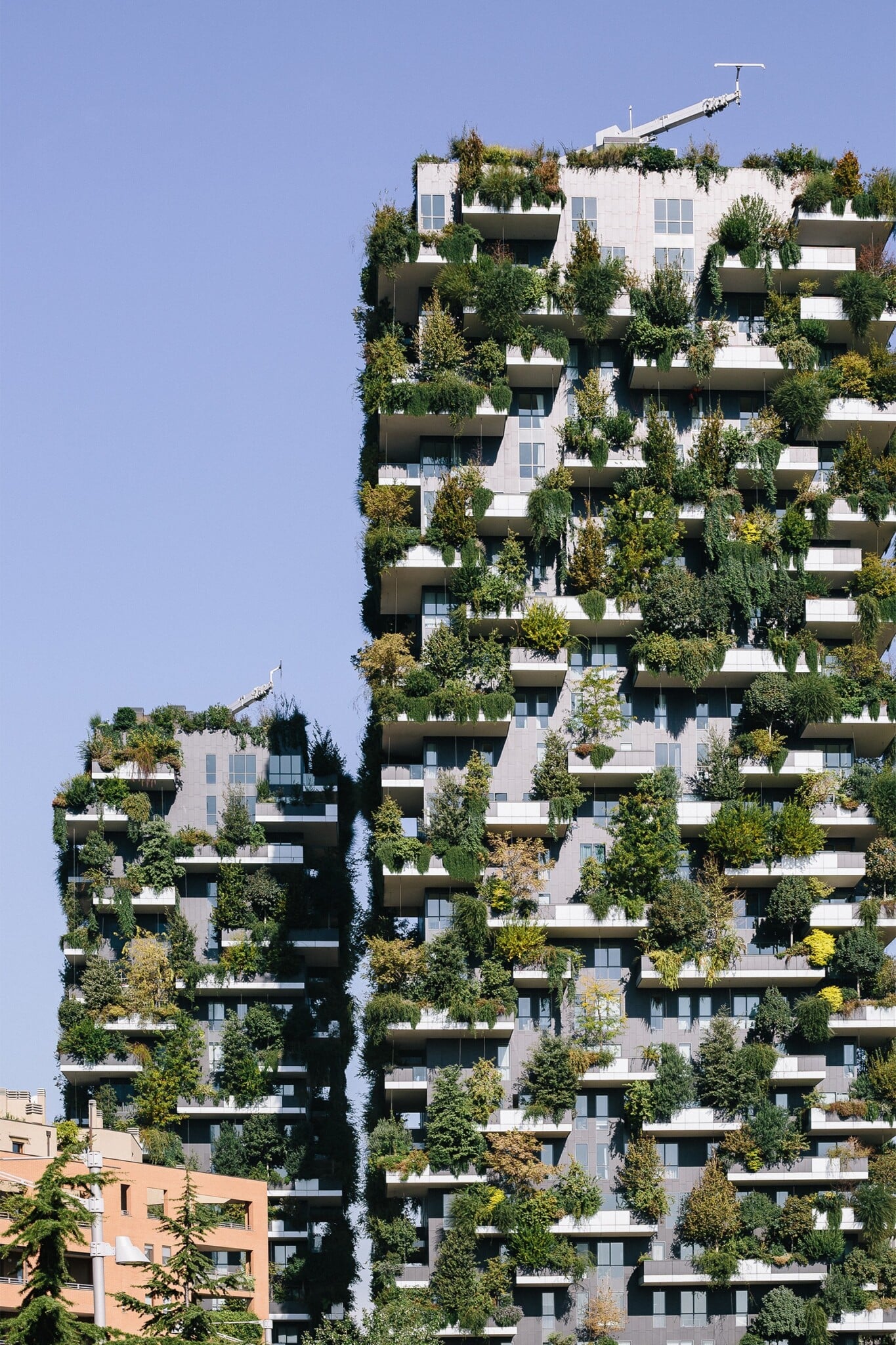
Milan is Italy’s design, fashion, and finance capital and its most cutting-edge city, where old and new sit side by side: La Scala, the Last Supper, and the historic trattoria La Latteria on one hand; the Bosco Verticale “vertical forest,” ambitious green initiatives, and a skyline of new towers. It’s the Italian city that bucks the cliché. See our full guide to what to do in Milan and the wider Lombardy region.
How to arrive. From Turin, Milan is just 1 hour by high-speed train or about 2 hours by car. Milan also has three airports: Malpensa (MXP), Linate (LIN), and Bergamo Orio al Serio (BGY).
Where we base clients. We keep people out of the busy Duomo area and put them in neighborhoods that better reflect their own lives: Brera, around Piazza Gae Aulenti in Porta Nuova, or along the Navigli canals.
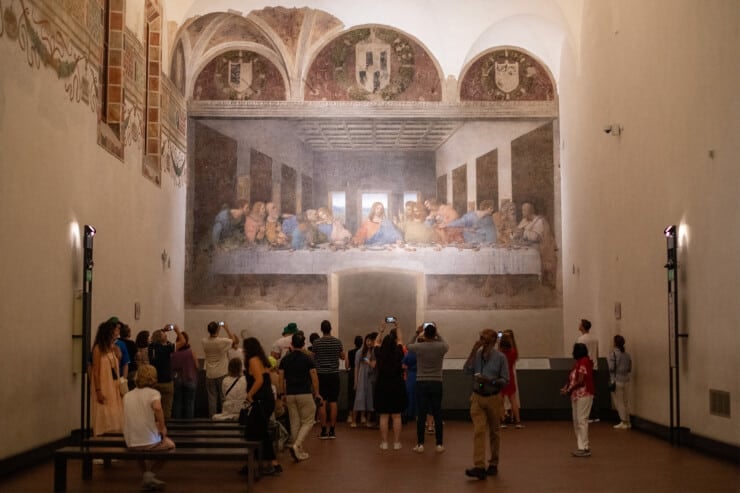
A planning note. The first thing we ask once someone commits to Milan is whether they want to see the Last Supper, because it’s one of the hardest tickets in Italy to secure and has to be booked the moment the window opens.
What to do in Milan:
- Duomo di Milano: climb the rooftop terraces for sweeping views (rooftop entry €18 by lift, €16 by stairs).
- Leonardo’s Last Supper: book tickets (€15) months in advance to see this masterpiece.
- Villa Necchi Campiglio: a 1930s villa-museum in the quiet, elegant Quartiere del Silenzio, and one of our favorite quiet corners of the city.
- Galleria Vittorio Emanuele II: one of the world’s oldest shopping galleries, and one of the most photographed.
- Cinque Vie: our pick for design shopping and small boutiques.
- Bosco Verticale & Porta Nuova: the “vertical forest” towers and Milan’s green, forward-looking side.
- Sforza Castle: several museums and a vast park, and it’s a castle, so it’s always a hit with kids.
- Brera District: a charming neighborhood of art galleries, boutiques, and cafés, and hands down my favorite part of the city.
- Where to eat: Trattoria del Nuovo Macello for a modern take on Milanese, the historic La Latteria for a taste of old Milan, and see our guide to what to eat in Milan. Or have us book you on a private guided experience with a local food writer to get to know the local cuisine for yourself.
Where to stay: In Milan, Senato Hotel Milano is a favorite among many: a serene design hotel a short walk from Brera and the Montenapoleone fashion district.
Consider These Day Trips from Milan
Option 1: Lake Como. Lake Como is a glacial lake at the foot of the Alps in Lombardy, famous for its villa-lined shores and lakeside towns. From Milano Centrale, Como San Giovanni is about 40 minutes by train (roughly 1.5 hours by car).
We base clients in Como town, not Bellagio. Bellagio is lovely but small and swamped, so in season it can be madness. Como town is the underrated pick: high-design shops, easy casual food, a beautiful cathedral, a gorgeous waterfront walk, and, as the lake’s main ferry hub, the simplest base for getting around by boat. It works as a day trip from Milan, but with a night or two you can settle in and ride the ferries properly, and we can set you up with a private boat and a local captain, or a cooking class at a lakeside villa.
See our full guide to things to do on Lake Como, and for the other lakes, our guide to the most beautiful lakes in Italy.
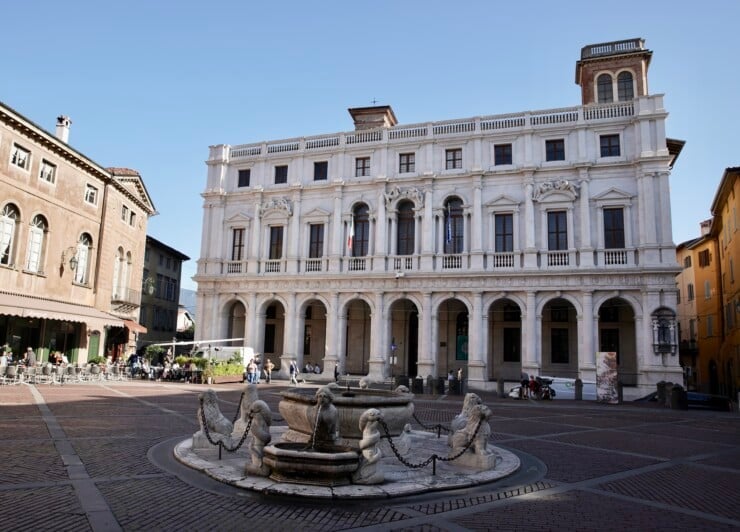
Option 2: Bergamo. Bergamo is a Lombard city northeast of Milan, split between a modern lower town and a walled medieval hilltop, the Città Alta. About 1 hour by train from Milano Centrale, it’s where most of our clients go, and a pleasant surprise for nearly all of them.
The walled Città Alta (Upper Town), reached by funicular, has some of the best views in Lombardy, good food, and cute boutiques, alongside Piazza Vecchia, the Palazzo della Ragione, the Colleoni Chapel, and Venetian walls that are a UNESCO World Heritage Site. Medieval charm with a modern lower town, and a quieter alternative to Milan. For more, see our Bergamo guide.
Option 3: Brescia. Brescia is a city in eastern Lombardy known for its Roman past and its position at the gateway to Franciacorta wine country. About 1 hour by train from Milan, it’s where we point car lovers and Roman-history buffs.
Brescia has genuinely impressive Roman ruins at the Capitolium and forum, a hilltop castle with sweeping views, and the Mille Miglia Museum, a must for anyone who loves classic cars. It’s also the gateway to sparkling Franciacorta wine country, so it’s our pick if you want to fold a tasting into the day. For more, see our Brescia guide.
Stop 3: Verona (2 to 3 Days)
After Milan, Verona is the ideal next stop on your Northern Italy itinerary: a smaller, softer landing after the big city, and a two-for-one base for Valpolicella wine and Lake Garda to round things out.
Why go? Verona is a historic city in the Veneto, on the Adige River, known for its Roman arena, its Romeo-and-Juliet romance, and a walkable UNESCO-listed center. It’s our small-city finish, the stop that gives you that secondary-city feel Italy does so well.
It’s also a two-for-one. Verona is the essential base for wine tasting in Valpolicella and an easy day trip to Lake Garda, so if you haven’t worked in wine country or a lake elsewhere on the trip, this one stop checks both boxes. It’s one of my favorite towns in Northern Italy, and there’s never a bad time to visit. One note: the train station is about a 20-minute walk from the center, with buses and taxis if you’d rather not walk.
How to arrive. From Milan, Verona is just 1 hour 15 by high-speed train, or about 2 hours by car.
Top sights: The Arena di Verona (a Roman amphitheater still hosting a famous summer opera festival), Piazza delle Erbe, and Castelvecchio, a medieval fortress with an excellent art museum.
Where to stay: In Verona, we love Butterfly Verona, an intimate design-suite stay in the historic center, among the places we book here.
P.S. Verona is the Northern Italy city our clients never expect to love and always do. See 17 things to do in Verona.
Bonus Stop: Venice
If you’re extending, Venice is the natural finish to a Northern Italy itinerary, the easternmost point and a dramatic final act, just over an hour past Verona.
Why go? Venice is the capital of the Veneto, a car-free city built across more than 100 islands in a lagoon, famous for its canals, St. Mark’s Basilica, and the Grand Canal. If you have time, add a few days, and the one rule is to stay overnight rather than take a day trip.
Venice is a different, better city once the day-trippers leave, at dawn and after dark, and an overnight also buys you time to get out to the islands of Burano and Murano, or even up into the Prosecco hills. We love Venice in the evening, when the cicchetti bars fill up.
How to arrive. From Verona, Venice is about 1 hour 15 by train. Remember, you can’t drive in Venice, so once you park and take public transport in, a car trip can take upwards of two hours.
See St. Mark’s Basilica, the Doge’s Palace, the Rialto Bridge, and the Grand Canal by vaporetto or gondola. For where to base yourself, use our guide to where to stay in Venice.
Extend Your Northern Italy Trip (Two Weeks and Beyond)
Ten days is our sweet spot for this route, but it stretches easily to two weeks. The two extensions our clients pick most:
Add Switzerland. The most popular add-on. Because the itinerary runs through the lakes, crossing the border is easy: from Lake Como, Lugano is under an hour, and Lucerne and the Swiss Alps are a scenic train ride on. See our guide to day trips from Lake Como to Switzerland.
Add the Dolomites. From Verona, head north into the mountains and Bolzano for alpine air, South Tyrolean food, and some of the best scenery in Europe.
Other ways to stretch it. An Emilia-Romagna and Bologna food leg after Verona (Bologna and Parma for ragù, Parmigiano-Reggiano, and prosciutto), or the Ligurian coast at Cinque Terre off the western end near Turin.

Make It Your Trip
This route bends to what you love. For a food-and-wine trip, weigh it west: more time in the Langhe with the sommelier, a Milan food-writer day, and an Emilia-Romagna add-on. Families do well here, with compact cities, castles, lake ferries, and gelato at every turn (see our guide to Italy with kids). Couples and honeymooners lean into Verona, the lakes, and Venice at night.
What a Trip Like This Costs
For a trip at this level, our clients typically spend around €1,000 per couple per day, covering boutique and design-forward hotels, first-class rail or a car and driver, guided tastings and experiences, and the meals these regions are worth traveling for. A 10-day version lands in that range. Where you can flex it: smaller towns like Bergamo, Brescia, and the Langhe stretch further than Milan or Venice, and eating where locals do rather than on the main squares helps. An experienced planner keeps the whole thing on budget, and we plan custom Italy trips exactly like this one.
Know Before You Visit
Festivals. You may want to plan around the Verona Opera Festival (June–September), the Alba White Truffle Fair (mid-October to early December), Milan Fashion Week (womenswear in February and September), or Vinitaly (April).
Weather. It varies by region and altitude: cold alpine conditions in the north, Mediterranean warmth in Liguria, and hot, humid summers in Lombardy and Veneto.
Frequently Asked Questions
Ten days is our sweet spot for a relaxed version of this route; a week works if you compress it, and 10 to 14 days lets you add destinations we adore such as Bologna, Parma, the Dolomites, and Switzerland.
For a trip at our clients' level, budget around €1,000 per couple per day, more in Milan and Venice, less in smaller towns and the wine country. An experienced planner helps keep it on budget.
Trains are fast and efficient between cities. A car is best for vineyards, lakes, and the countryside. Our usual approach is the train between cities plus a car or driver for the lake and wine-country days.
Yes, and it's the most popular extension. The lakes are the natural bridge: from Lake Como, Lugano is under an hour, and Lucerne is a scenic ride on.
Late spring and early autumn are ideal, with pleasant weather and fewer crowds than peak summer. One warning: if you have seasonal allergies, spring in Como can be brutal, since pollen settles on the lake. I didn't know that when I went in May one year, and the boat ride across was sneeze central.
Not really. Tickets often sell out months ahead, so advance booking is strongly recommended, if not unofficially required.

Recipes Inspired By Northern Italy
Not heading to Italy quite yet? Here are a few of our favorite classic Northern Italian recipes to make at home to stoke your wanderlust:
Italy Travel Guide
Are you considering traveling to Italy in real life? Check out our complimentary Italy Travel Guide for our best travel tips, recipes, and articles.
Have Us Plan Your Italy Trip
Did you know we’re also a boutique travel agency specializing in Italy travel planning? If you’re looking to plan one of the best trips to Italy, our Italy vacation planner services are here to help you plan your perfect itinerary.