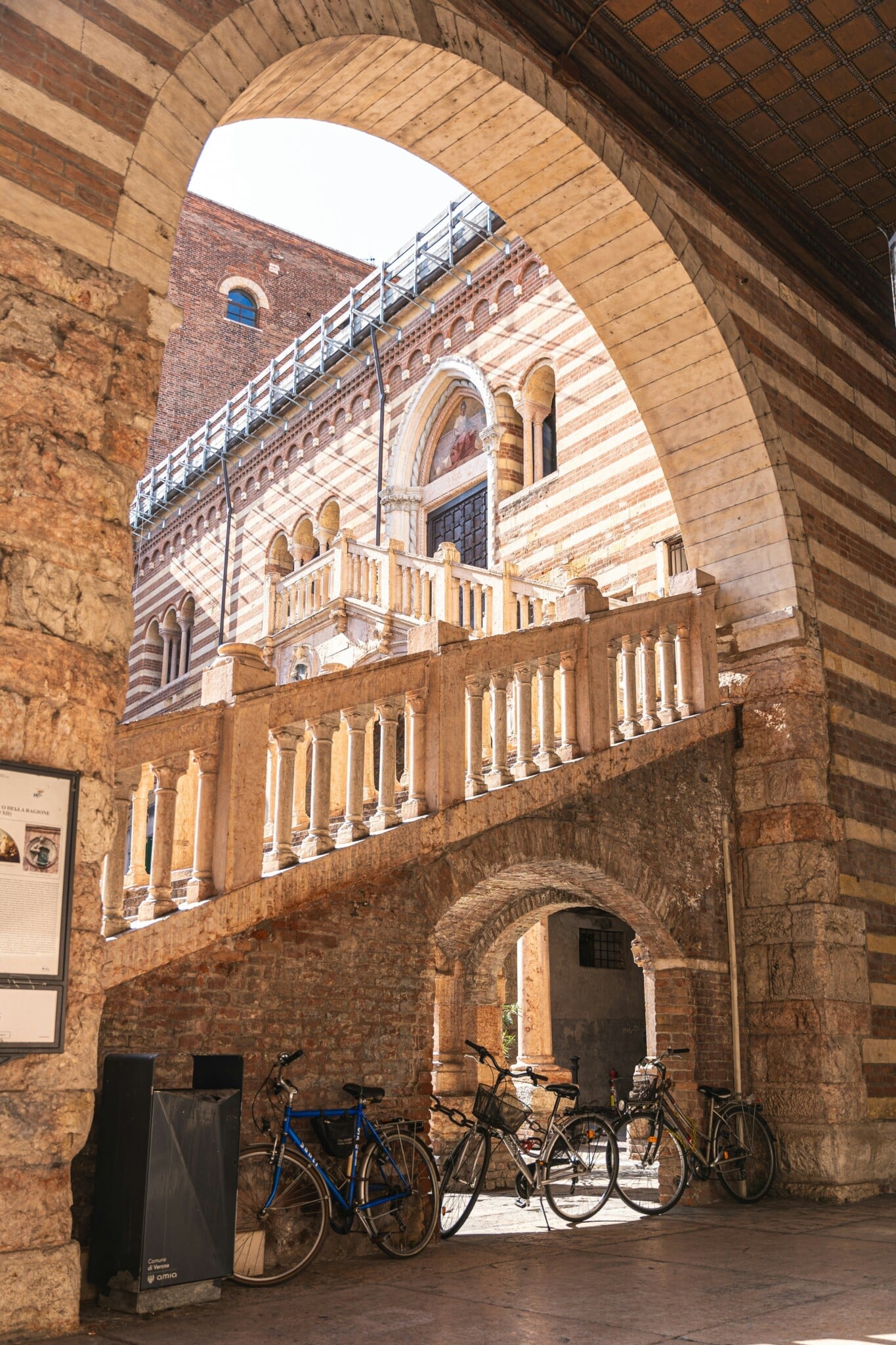
🔑 Quick answer: The best things to do in Verona include the Arena di Verona, the market in Piazza delle Erbe, climbing Torre dei Lamberti for the rooftop view, and a day trip to Lake Garda or Valpolicella wine country. Walkable and easily reached by train, it’s an ideal stop for both first-time and repeat travelers.
Key Takeaways
- Verona is one of the best places to visit in Northern Italy for travelers seeking history, romance, and fewer crowds than in Venice or Florence.
- The top things to do in Verona include the Arena di Verona, Piazza delle Erbe, and scenic walks along the Adige River.
- With its walkable city center and easy access via Verona Porta Nuova, it's a perfect base for exploring Lake Garda and Valpolicella wine country.
When it comes to things to do in Verona, most travelers don’t realize just how much this city delivers until they’ve experienced it for themselves.
Verona is one of the country’s most enchanting cities, set in the Veneto region of northern Italy. But time and time again, as Italy travel planners, we find that our clients aren’t sure what to do in Verona or whether to visit it at all. While the city is celebrated in Italy for its Roman ruins and connection to Shakespeare’s Romeo and Juliet, Verona’s appeal often doesn’t reach all travelers heading to Italy.
Verona is often overshadowed by cities like Florence and Milan, but it is absolutely an Italian city worth visiting. We love it for so many reasons, including its UNESCO World Heritage historic center, its shops, boutiques, and museums, and its scenic setting along the Adige River.
I will admit the first time I went to Verona was quite by chance. I had zero expectations and wasn’t sure what I would find. But as I walked into the old town, I was blown away. Pink marble streets, a huge Roman arena, gorgeous piazzas. It was like a cartoon of Italy at its most perfect.
And we’re far from alone: over 10 years of planning Italy trips and more than 20 team visits in nearly every season, we’ve yet to recommend Verona to a client who wasn’t equally taken with it. If you, too, want to experience all that Verona has to offer, we will break it down for you here.
Why Trust This Guide
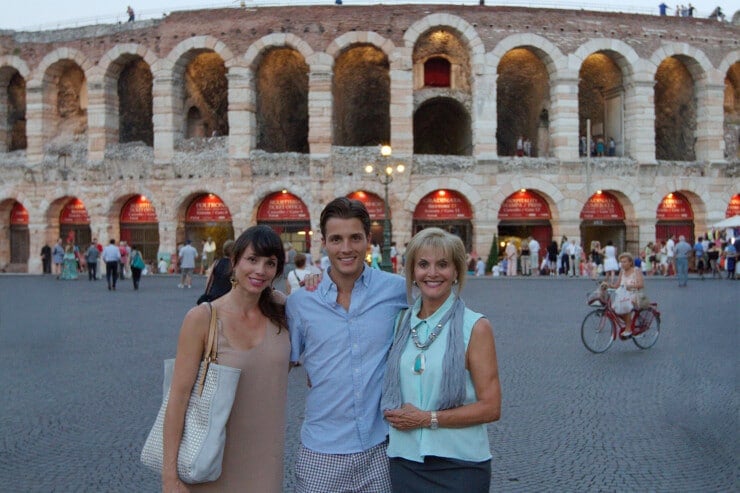
Our team has spent more than 10 years planning trips to Italy, with more than 20 visits to Verona across nearly every season. We’ve built Verona into 50 client itineraries, and our founder, Aida, even saw her namesake opera, performed in the Arena di Verona. So when we tell you what’s worth your time, it’s from a couple dozen visits across nearly every season, not a single day trip.
Time and again, clients tell us the same thing: they came for Venice or Florence and left talking about Verona, lively, unpretentious, and not overrun. We usually give Verona two to three nights and treat it as the calm center of a Northern Italy trip, not a rushed day stop. A few things we have learned across 50+ itineraries here:
- Book the Arena opera as soon as the season is announced, because the best evenings sell out months in advance.
- Steer clear of Vinitaly week each April unless wine is the whole point of the trip, since the city fills up and room rates jump.
- And if your trip leans toward wine, cycling, or the lake, we will often base you just outside the center and bring the city to you in the evenings.
Verona Italy Quick Facts
| Population | ~255,000 |
|---|---|
| Region | Veneto |
| Country | Italy |
| Airport | Valerio Catullo Airport |
| Nearest day trips | Lake Garda (~20 minutes), Valpolicella (~30 minutes), Venice (~1 hour), Milan (~1 hour 20) |
| Language | Italian |
| Currency | Euro (EUR) |
| Best time to visit | Anytime outside of January and August |
Where is Verona, Italy?
Verona is a historic city in Northern Italy, set on a bend of the Adige River about halfway between Milan and Venice. That location is the whole reason it works for the trips we plan: you are a little over an hour from either city, on the main train route between them, with the Dolomites to the north and wine country on three sides. It has been a crossroads since the Romans ran the Via Postumia through it, and it still feels built to move in and out of easily, which is exactly what you want from a base.
Get to Know Verona
What makes Verona fun to walk is that it’s multiple cities stacked on top of each other, and you cross among them in a single afternoon. The Romans came first and left the Arena, the Roman Theatre, and the gate at Porta Borsari. Then the Scaligeri, the medieval lords who ran the city in the 1300s, arrived and built the castles, bridges, and odd Gothic tombs. Venice took over in the 1400s and softened the edges with Renaissance palazzi and gardens, before French and Austrian rule and, finally, unified Italy in 1866. You do not need a history degree to feel it; you just notice the city changing texture street by street, and that layering is a big part of why it rewards slow wandering.
Why Visit Verona, Italy?
Honestly, Verona is my number one pick for a romantic city in Italy, and I do not say that lightly. It has the ingredients you would expect: pink-marble streets, an opera season under the stars, aperitivo in a Roman forum, but what wins people over is the scale. Everything worth doing is a walk apart, so your evenings are spent strolling between piazzas instead of sitting in traffic.
From a planning perspective, Verona is one of those rare destinations that consistently exceeds expectations. While cities like Venice and Florence often top a first-time Italy itinerary, Verona tends to be the place travelers didn’t expect to love but end up remembering most. Verona is also a real base for day trips to Lake Garda, the wine hills, and even Venice or Milan, which means a couple of days here can anchor a much bigger trip.
Aida’s take: “Verona is my case study for the secondary city that punches above its size. You get a Roman arena, a real opera season, Renaissance art, and serious wine country on the doorstep, all the substance of a major Italian city, without the crush of Milan, Rome, Venice, or Florence. And it stays small enough that after two days you know your coffee bar and your sunset bridge. That combination is rare.” — Aida Mollenkamp, founder, Salt & Wind Travel
Verona has a real lived-in energy. With the University of Verona in town, the piazzas stay busy with locals, not just visitors, and the aperitivo ritual runs every evening. The city is compact enough that after a day or two you start to feel like you live here: you learn which bar makes your morning coffee, which bridge to cross at sunset, which wine bar to settle into. That is hard to come by in Venice or a sprawling city like Rome or Naples, and it is exactly why we love Verona for travelers who want to go deeper into Italy. It rewards a repeat visitor who has already done the headline cities, and it pairs beautifully with one of them on a first trip.
After this many visits, what we love most is how fast the city gives way to calm. The historic center hums, but a few minutes on foot and you are along the Adige with the water and the views to yourself. It is a real city, yet nature never feels far. The Veronese are warm in their own way: kind, but with a northern reserve rather than the effusive style of the south. Knowing that going in helps you meet the city where it is.
Who Verona Is Best For
Verona is at its best for:
- Couples looking for a romantic city beyond Venice
- Groups of friends who want a walkable base for wine country and Lake Garda
- Repeat visitors to Italy ready to go past the first-timer cities
- History and architecture lovers drawn to Roman ruins, medieval walls, and Renaissance palazzi
Verona also works well for families who want a compact, walkable city with culture and easy day trips, though in our experience it draws more couples and friend groups than families.
Is Verona Worth Visiting Compared To Other Italian Cities?
Verona stands out among Italian cities because it offers:
- The romance of Venice without the crowds
- The history of Rome in a more compact setting
- Access to Northern Italy’s food and wine culture without needing a car
Is Verona A Good Base For Northern Italy?
Verona is one of the best base cities in Northern Italy, thanks to its central location and fast trains from Verona Porta Nuova. Bologna is about 50 minutes away, Venice around an hour and ten, and Milan roughly an hour and twenty, so you can day trip to any of them and still be back for dinner. The wine country and Lake Garda are closer still, which is why we almost never plan Verona as a single-city stop; the specifics are in our day trips section below.
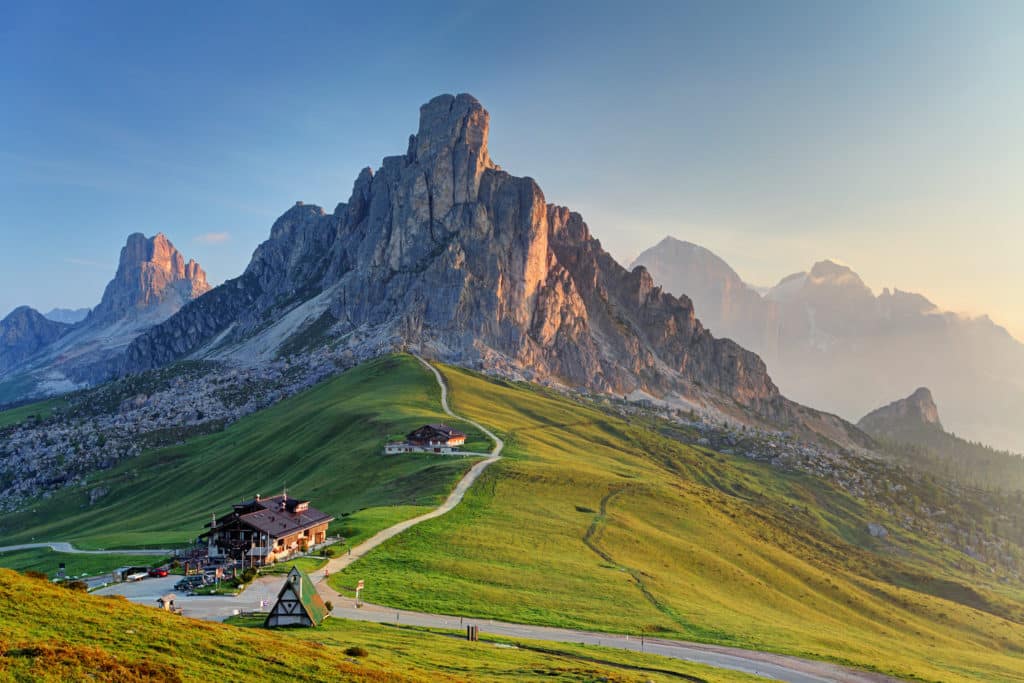
Most of our clients use Verona as more than a day-trip hub, though. We often build it into a longer route: north into the Dolomites for the mountains, west to Lake Garda for lakeside time, or south into Emilia-Romagna for the food cities of Bologna, Modena, and Parma. Verona anchors all three comfortably. (More on that in our companion Northern Italy itinerary.)
Best Things To Do In Verona, Italy
Most of the top things to do in Verona are within the historic center, making it easy to explore on foot. Save them in Google Maps before your visit so you can navigate efficiently between Piazza Brà, Piazza delle Erbe, and the Adige River.
What makes Verona special is how three eras stack up in one walkable center: a Roman arena, the Gothic tombs of its medieval rulers, and Renaissance gardens, all within an afternoon on foot. Most of these sights are covered by the VeronaCard, which also includes city buses, so it’s the simplest way to handle entry.
Historic Landmarks & Roman Sites
Arena di Verona
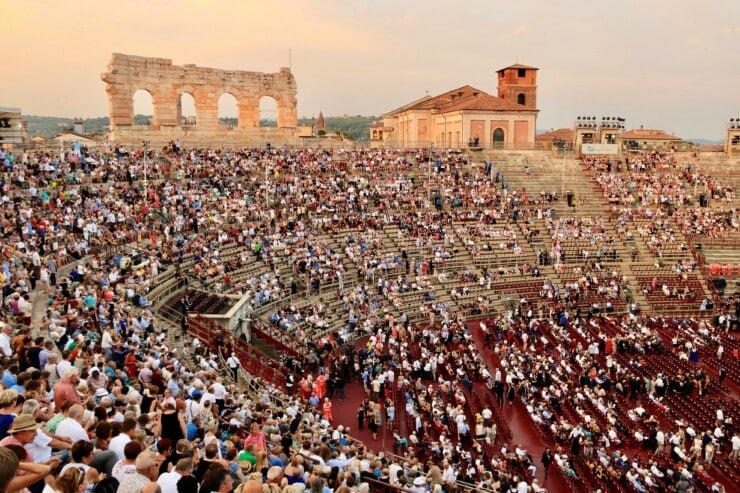
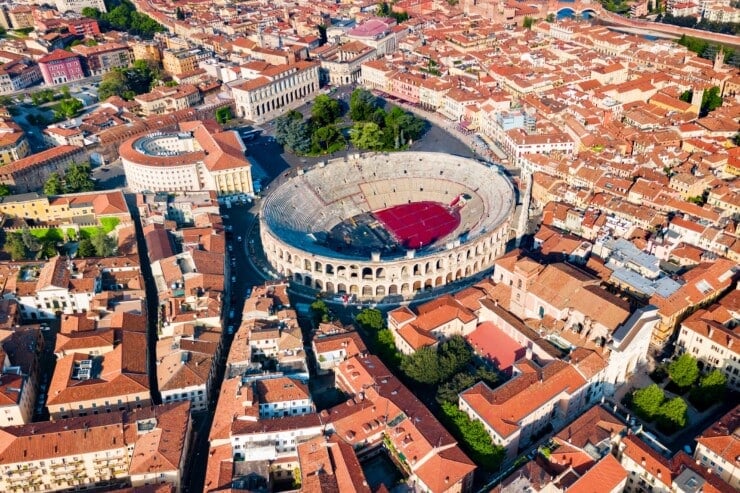
The Arena di Verona is a 1st-century Roman amphitheater in the heart of the city, still in use today for concerts and the famous summer opera festival, and one of the best-preserved anywhere in the world.
Opera tickets go on sale when the season is announced each winter, and the best evenings sell out months ahead, so book the moment they drop. Spring for a cushioned seat or bring your own, arrive early for the sunset over the arena, and hold your dinner reservation for after, since performances run close to midnight.
Best for: opera lovers and first-time visitors.
Porta Borsari
Porta Borsari, a pale stone facade that once marked the main road into the city, is the city’s most striking surviving Roman gate. It is free and always open since it stands in the street, so come at night when it is lit and empty for the best photo.
Best for: history lovers.
Roman Theatre
Cut into the hillside across the river, the Roman Theatre predates the Arena and stays far quieter. The entrance ticket includes the archaeological museum, and both are covered by the VeronaCard. Go late afternoon when the hillside falls into shade, and you often have the stone tiers to yourself; in summer it hosts open-air theatre and jazz.
Best for: history lovers who want Roman Verona without the crowds.
Scenic Views & Walks
Castel San Pietro
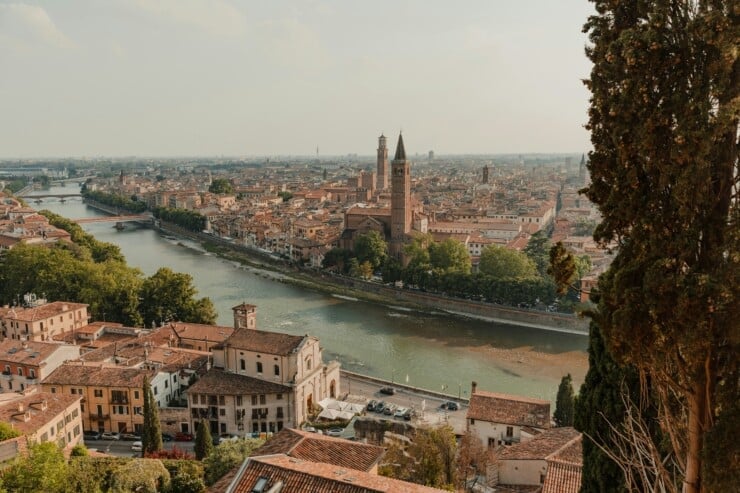
Castel San Pietro is Verona’s classic viewpoint, and you can reach it by a short climb or from the funicular from near Ponte Pietra. The terrace looks straight down on the river bending around the red roofs, with the Roman Theatre below. It is free and busiest right at sunset, so come 30 minutes before for a spot on the wall.
Best for: couples and sunset chasers.
Ponte Pietra
Ponte Pietra is Verona’s oldest bridge, rebuilt stone by stone after the war with the original blocks pulled from the river. Cross it for free any time, and shoot it from the downstream bank for the classic frame with the Roman Theatre rising behind.
Best for: photographers and couples.
Cultural Attractions & Museums
Castelvecchio & Castelvecchio Museum
Castelvecchio is a red-brick Scaligeri fortress on the river, which architect Carlo Scarpa restored into one of Italy’s most beautifully designed museums. It is covered by the VeronaCard; give it 90 minutes and don’t skip the free walk across the Ponte Scaligero out back.
Best for: art and architecture lovers.
Giardino Giusti
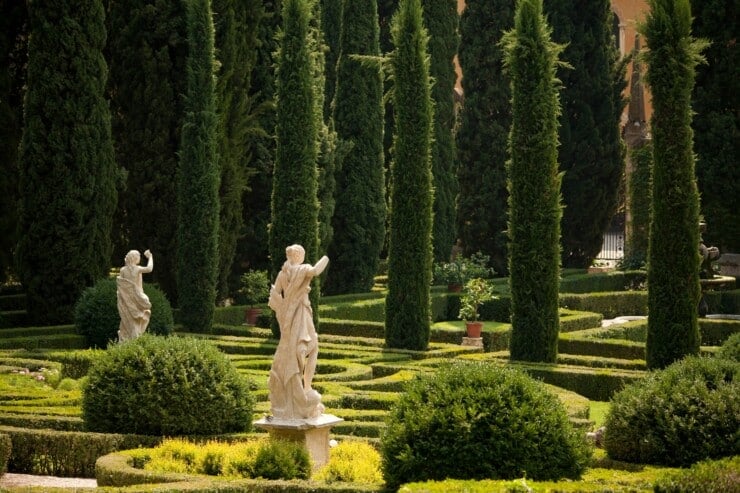
Giardino Giusti is a Renaissance garden of clipped hedges and cypress alleys, and its hillside terrace has one of the prettiest views over the rooftops. Go at opening or late afternoon to slip the crowds, and climb to the top terrace and the little belvedere window for the view most people never find.
Best for: couples and garden lovers.
Torre dei Lamberti
Climb (or take the glass lift partway) the 84-meter tower for the best aerial view of the piazzas and rooftops. It is free with the VeronaCard (or a euro for the lift). Come at opening for empty ramparts and pair it with Piazza delle Erbe right below.
Best for: first-time visitors and photographers.
Galleria d’Arte Moderna Achille Forti
The Galleria d’Arte Moderna Achille Forti is Verona’s modern-art gallery, set in the frescoed Palazzo della Ragione right by Torre dei Lamberti, with works from the 1800s to today. It is rarely busy, and a combined ticket with the tower is the value pick. A good change of pace once you’ve had your fill of Roman stone.
Best for: art lovers and repeat visitors.
Iconic Piazzas & City Life
Local Boutiques
Verona has a real independent streak, and it shows in the family-run shops along Via Mazzini and the side streets off the main piazzas. The real finds are on Corso Sant’Anastasia for antiques and in the lanes off Via Stella; most close from 1 to 3:30 pm for lunch, so shop in the morning or early evening.
Best for: shoppers and slow wanderers.
Piazza Brà
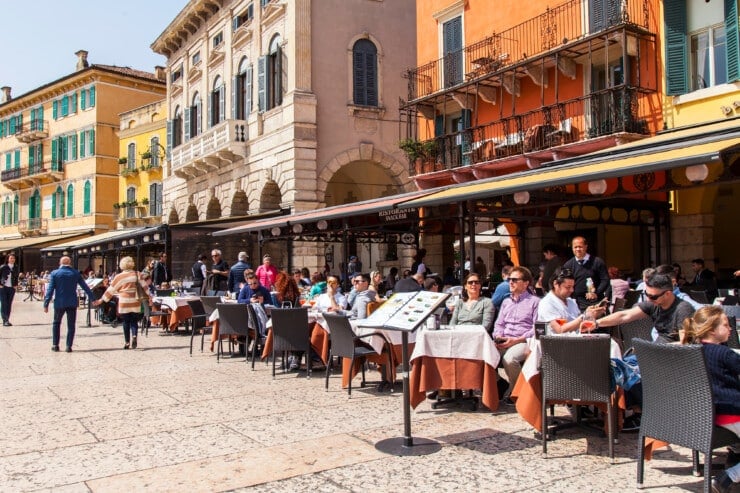
Piazza Brà is the city’s largest square, surrounded by the Arena and lined with cafes beneath the Liston arcade. The arcade cafes charge a premium for the Arena view, so we sit for one coffee and move on; the evening passeggiata fills the square from about 6 pm.
Best for: first-time visitors and people-watchers.
Piazza delle Erbe Market
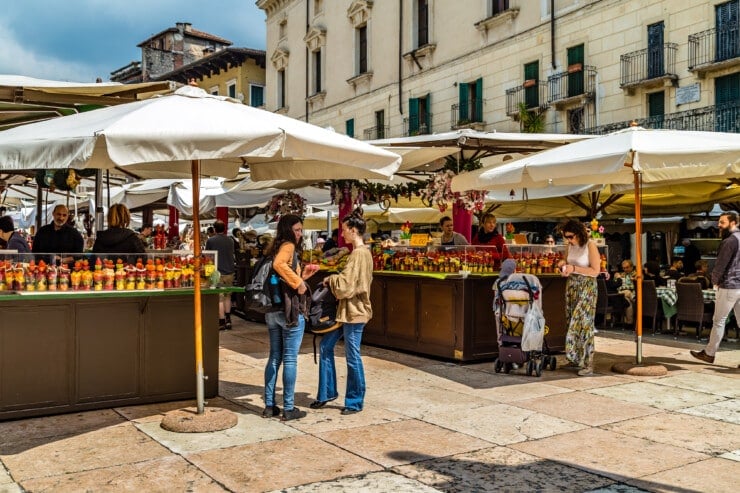
Piazza delle Erbe rose on the old Roman forum and still beats as the heart of the city, with a morning market, frescoed facades, and cafe tables under the umbrellas. The market runs in the mornings, Monday to Saturday; come before 9 am for photos without the umbrellas, or after 7 pm, when it turns into the aperitivo scene.
Best for: everyone, come early.
Piazza dei Signori
Piazza dei Signori is the city’s living room, just off the bustle and ringed by Scaligeri palaces with Dante at the center. Quietest in the morning, it is where we send clients for an unhurried aperitivo; look up at the Loggia del Consiglio, the prettiest Renaissance facade in the city.
Best for: couples and architecture lovers.
Arche Scaligere
The Arche Scaligere are a cluster of soaring Gothic tombs, built for the Scaligeri lords who ruled Verona in the 1300s and wrapped in wrought iron beside Piazza dei Signori. You can admire them for free through the railings any time, and the courtyard opens in summer. The clearest window into the family that shaped the city.
Best for: history and architecture lovers.
Churches & Historic Sites
Basilica di San Zeno Maggiore
San Zeno is one of Italy’s great Romanesque churches, with bronze door panels, a “Wheel of Fortune” rose window, and Mantegna’s altarpiece inside. It sits in a more local quarter worth the short walk, and is covered by the VeronaCard and the churches ticket. Time it for the first Sunday of the month and the square out front fills with the Verona Antiquaria market, 200-plus dealers and a great morning wander.
Best for: history and architecture lovers.
Verona Cathedral (Duomo di Verona)
The Duomo layers Romanesque and Gothic into one striped, storybook complex, with a Titian Assumption tucked inside. It is covered by the church’s ticket and the VeronaCard; step behind the main altar for the Titian, which most day-trippers miss. Ten minutes from Piazza delle Erbe through the quiet Sottoriva arcades.
Best for: art and architecture lovers.
Basilica di Sant’Anastasia
The Basilica di Sant’Anastasia is Verona’s largest church and its finest Gothic one, with a soaring brick nave and Pisanello’s delicate fresco of Saint George and the Princess up in the Pellegrini Chapel. By the door, look for the two gobbi, the little hunchback figures crouched under the holy-water fonts, a beloved Verona quirk. It’s covered by the church’s ticket and the VeronaCard, two minutes from Piazza delle Erbe through the Sottoriva arcades.
Best for: art and architecture lovers.
One To Skip
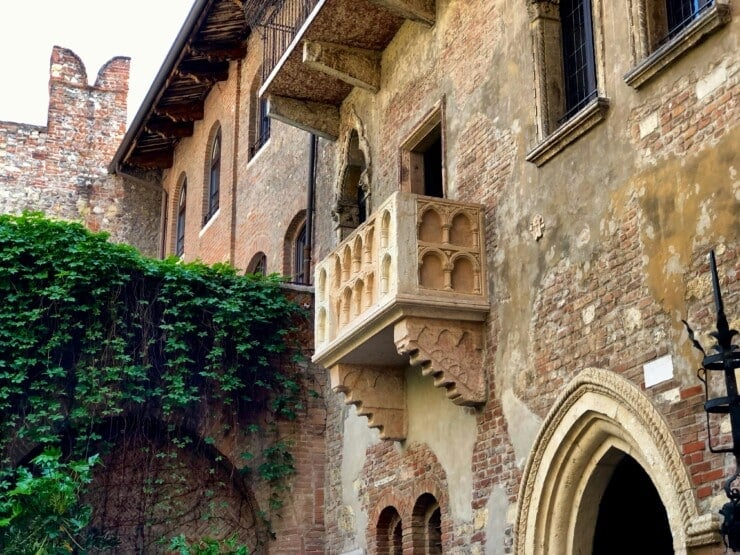
Casa di Giulietta. The “balcony” was added in the 1930s and the Juliet story is fiction, so the tiny courtyard gets mobbed for a photo with little behind it. Curious? Glance in at the opening, then spend your time on the real Verona.
Eat, Drink, and Sip Like a Local
Eat a proper Veronese meal.
Sit down to the classics at least once: Trattoria al Pompiere for old-school Verona under hanging hams, or Osteria al Duca for pastissada de caval, the horse stew the city is known for.
Prefer to graze? Raid a salumeria or the Piazza delle Erbe stalls for Monte Veronese cheese and soppressa and eat along the Adige. (Full picks in our Verona food guide.)
Have an aperitivo in the shadow of the Arena.
Take a table on Piazza Brà under the Liston arcade with a spritz or a coffee and the Arena right there. It’s the obvious choice, and you pay for the view, but some clichés earn it, and we still do it every trip.
Dive into the wine bar scene.
Verona sits at the center of the Italian wine trade: it has hosted Vinitaly, one of the world’s largest wine fairs, since 1967, with 15 DOC and 5 DOCG appellations on its doorstep. Start historic at Antica Bottega del Vino, then go natural at Tor Tor by the Arena and Baraldi Enoteca near Castelvecchio.
Do cocktails for aperitivo.
Archivio is the standout craft cocktail bar and makes its own vermouth; The Soda Jerk is a ring-the-bell speakeasy, and Amaro is a great all-day wine-and-cocktail hybrid.
Go deep on craft beer.
Santa Maria Craft Pub is central, with its own Maso Alto brews; Maratonda in Veronetta was the city’s first dedicated craft-beer pub; and serious beer travelers can head south to the Mastro Matto brewery taproom.
If wine is the point of your trip, this is where we lean on our team’s WSET Level 2 specialist to match you to a specific Valpolicella or Amarone maker rather than a generic tasting. We plan custom Italy trips around exactly this.
Best Day Trips From Verona
One of the best things about basing in Verona is how little of your day you lose getting out of it. We rarely plan it as a single-city stop: the wine hills, the lake, and two of Italy’s headline cities are all a short train ride away. These are the day trips we build in most often.
Lake Garda, 15 minutes to Peschiera del Garda. The lake is the closest escape, and the one we suggest first. From Peschiera, you can take a ferry to Sirmione for its castle and thermal spa, or head north to Malcesine for the prettier, more dramatic end of the lake. Go for a long lunch and an afternoon swim, not a checklist.
Valpolicella, about 30 minutes. The valley is Amarone country, home of the big, brooding red that put Verona on wine lists worldwide, and it starts almost at the city’s edge. We send clients out for a morning in the terraced vineyards, a cellar visit, and a tasting over lunch at a grower like Masi Agricola or Tedeschi, and this is where we lean on our team wine specialists to match you to the right estate rather than a generic bus tour.
Soave, about 30 minutes east. If Valpolicella is the powerhouse, Soave is the palate cleanser. The walled medieval town sits under a Scaligeri castle, and its volcanic hills make one of Italy’s most food-friendly whites. It is quieter, cheaper, and rarely on anyone’s list, which is exactly why we like it for a half day.
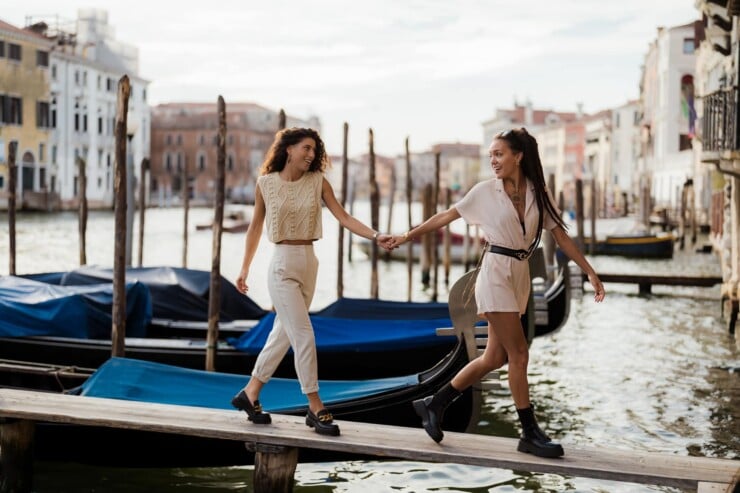
Venice, about an hour and ten by train. Venice is the classic day trip, and the best argument for basing in Verona in the first place: you get an easy day in the city, then sleep somewhere calmer and far kinder on the wallet. Go early, be off the Rialto before the cruise crowds land, and be back in Verona for aperitivo.
Where to Stay in Verona
One thing to set expectations on: Verona is not where you will find the over-the-top five-star resorts. Those are out on Lake Garda, with the spas, the pools, and the lake views. What Verona does beautifully is the lovely boutique stay, smaller properties with character, right in or near the historic center. That suits the city, since you are here to walk out the door and into the piazzas.
For first-time visitors, we typically recommend staying in the historic center, so you’re within a short walk of the main attractions, piazzas, and restaurants. These are properties we like for different kinds of trips:
- Escalus Luxury Suites: best for a design-led stay in an unbeatable spot: self-contained luxury suites steps from the Arena and Juliet’s balcony.
- Butterfly Verona: best for a contemporary, design-forward boutique stay in the heart of the historic center.
- Vista Verona: best for a polished 5-star experience, with elevated service and a rooftop terrace looking toward the Arena.
Know Before You Visit
When to go. Late spring and early fall are the sweet spot: warm evenings, open terraces, and none of the deep-summer heat. We steer clients away from January, when a lot closes, and August, when it is hot and half the city is on holiday.
Events to plan around. The Arena opera season and the Christmas markets are worth planning toward; Vinitaly, the big wine fair each April, is worth planning around, since the city fills and rates spike.
Crowds. The midday crush lands around Juliet’s House and Piazza delle Erbe, so we front-load the big sights early and save shady churches and wine bars for the afternoon.
Getting around. It is a walking city, full stop, which also means cobblestones: bring shoes that can take them, and flag any mobility needs to us early so we can plan around the worst of them.
VeronaCard. For most first-timers it pays for itself: free or reduced entry to nearly every sight in this guide, plus the city buses.
How To Get To Verona
By Train. We get almost everyone here by train. Verona Porta Nuova sits on the main Milan-Venice line, with fast, frequent trains to both, plus Florence, Bologna, and beyond. See our guide to trains in Italy for booking tips.
By Air. Verona’s own Valerio Catullo Airport (Villafranca) is about 15 minutes from the center, with a shuttle to Porta Nuova, and it offers direct flights to several European cities. Coming long-haul, you will more likely land in Milan or Venice and train in: plan on about two hours or more, and note that Venice’s airport has no train station, so you connect through Venezia Mestre.
By Car. Handy if you are touring the wine country or the lake, but a headache in the center, where parking is tight, and much of the old town is restricted. We usually have clients park on the edge and walk in.
When Verona Might Not Be The Right Fit
Verona is not the right fit for every trip, and we would rather say so than oversell it. Give it a miss, or save it for later, if any of these sound like you:
- Not ideal for strict first-timers set on the classic must-see cities
- Limited ultra-luxury hotel scene
- Cobblestones may be challenging
- Summer (July–August) can be hot and crowded
Frequently Asked Questions
Spending 2 to 4 days in Verona allows you to get to know the city and do a day trip to nearby wine country or Lake Garda.
Yes, the historic center is compact and walkable, and there is good public transportation. If you are arriving by train, you can walk to your lodging or take a taxi from the train station.
Yes, you can realistically visit Verona as a day trip via train from major cities like Venice or Milan, or by car from nearby spots like Lake Garda, Padua, Bergamo, and Brescia. We recommend staying overnight as it will be less crowded and it's a great jumping off point to Northern Italy.

Recipes Inspired By Northern Italy
Not heading to Italy quite yet? Here are a few of our favorite classic Northern Italian recipes to make at home to stoke your wanderlust:
Italy Travel Guide
Are you considering traveling to Italy in real life? Check out our complimentary Italy Travel Guide for our best travel tips, recipes, and articles.
Have Us Plan Your Italy Trip
Did you know we’re also a boutique travel agency specializing in Italy travel planning? If you’re looking to plan one of the best trips to Italy, our Italy vacation planner services are here to help you plan your perfect itinerary.