
🔑 Quick Answer: The French Riviera cities run from Saint-Tropez in the west to Menton on the Italian border and include Nice, Cannes, Antibes, Villefranche-sur-Mer, Èze, and Grasse. Nice is the easiest base because of the international airport, but each town has its draw, from historic hill towns with sweeping views to seaside hamlets with beach culture.
Key Takeaways
- The French Riviera, or Côte d'Azur, is a string of distinct cities, towns, and villages, not one destination
- Antibes is our clients' favorite all-around base, Nice is best for transportation and culture, and Menton offers excellent value
- June and September are the best for sunshine and beach weather while August is chaotic and hot. We also avoid May is another to avoid, because Cannes and the Grand Prix spike prices and there are many French holidays that can cause closures.
The French Riviera cities worth your time go well beyond Nice, Cannes, and Saint-Tropez. Travelers come to us dreaming of those famous names (and, ahem, Monaco, which isn’t even part of France), but some of our favorite places on the Côte d’Azur are the ones they initially overlook.
This 80-mile stretch of coast from Saint-Tropez to the Italian border is a gem because it is a true cross-section of France. There are mountains and sea, Roman ruins and modern art, markets and vineyards, villages of 400 people and a city of 350,000. It holds some of the chicest addresses in Europe and, minutes away, a thoroughly laid-back take on French life. Yet almost every client I talk to focuses on staying within the 20 miles between Nice and Cannes.
Don’t Try to See Every French Riviera City in One Trip
The first thing to know is that the cities of the French Riviera are not storybook villages. On my first visit to Nice, I was surprised that it was a city, as I had been picturing a small town. Instead, it reminded me of the seaside areas outside Genoa or Naples, which is not a comparison I expected to be making in France.
If you take one tip from this article, take this one. Give one town four nights minimum. If you want to see both sides of this coast, give it a full week and split it between two bases.
Why Trust Us On The French Riviera
France is one of the places we know best and work in the most. We have been traveling to France for decades and planning custom itineraries for more than a decade. During that time, we have designed over 60 custom South of France itineraries and developed a network of locals and native French wine experts who can open doors at family-run estates.
Our founder, Aida Mollenkamp, lived in Paris while attending culinary school, has French family, and has traveled the south of France more than 20 times. She is a Le Cordon Bleu-trained chef, a cookbook author, and WSET Level 2 certified. Our colleague, Jossie, lives in the south of France and works at the Cannes Lions festival every year, so what we tell you is current rather than just remembered. Others among us have lived and studied in Aix-en-Provence, Toulon, Hyères, and Lourmarin.
And I, too, have my own France history. I got engaged in Provence, and while I lived in Italy for 12 years, I often traveled to the French Riviera. My focus is largely on Italian art, since I hold a BA in Italian Renaissance art from Florence and an MA in art history, and I am WSET Level 2 certified. That matters more on this coast than you might expect, for reasons I get into below.
Understanding The French Riviera
The French Riviera is the Mediterranean coastline of southeastern France, running roughly from Saint-Tropez in the west to the Italian border at Menton in the east. The French call it the Côte d’Azur, meaning the azure coast, a name the writer Stéphen Liégeard coined in 1887 and nobody has improved on since. Our guides to Provence and the South of France place it against the rest of the region.
This French Riviera guide is for couples and friend groups who care about food and wine and would rather have a long lunch than a packed sightseeing list. It works for families too, and particularly well for families with teenagers, because the coast gives older kids beaches, boats, and enough independence to explore an old town while you sit somewhere with a glass of rosé.
11 French Riviera Cities Worth Visiting
Here are 11 French Riviera towns to explore, either as day trips or as a trip base. I have ordered them from west to east, ending at the Italian border. The western end is sandier, has more easily accessible nature, but is harder to reach. Meanwhile, the eastern end is pebblier, has deeper Italian roots, and is better connected by train.
Saint-Tropez
Pronounced San Troh-pay
Best for couples, friend groups, nightlife
Base or day trip Base, if you commit to at least three nights
Location: On its own peninsula in the Var, about two hours west of Nice.
Known for: Saint-Tropez missed the nineteenth-century French Riviera development entirely. The town was a working fishing village too far west and without a railway.
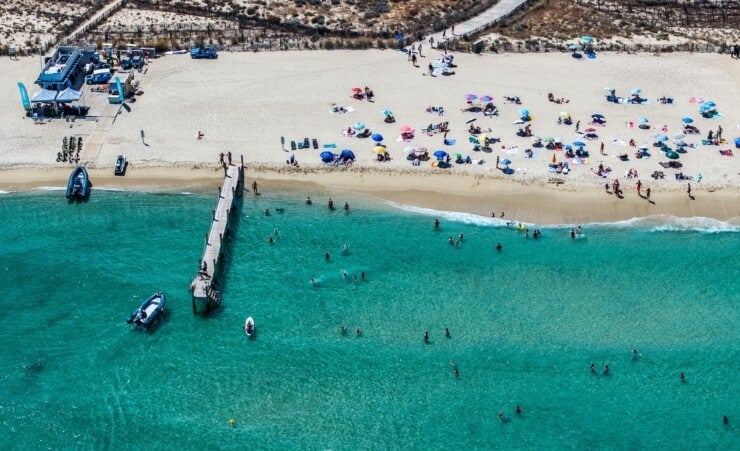
That changed when Roger Vadim shot And God Created Woman here with Brigitte Bardot in 1956. That relatively late start is why a real village still sits underneath the glitz. Pampelonne Beach, three miles south, has truly spectacular turquoise water and miles of sand.
Good to know: Everyone pictures the yacht set, and the yachts are definitely there. But so is the Place des Lices market, which runs each morning like any working Provençal market. The thing nobody plans for is the traffic. The peninsula has one road in and one road out, and in August a 20-minute drive takes an hour.
Where to stay: Some of the most luxurious hotels in France are here, split between hill retreats half an hour inland and places in the mix near the sea. Choose wrong, and you may get relaxation when you want vibes or rowdiness when you want to unwind.
Getting there: No train reaches Saint-Tropez. Most people drive in or come through Saint-Raphaël and continue by ferry. Saint-Tropez is also at the edge of Provence, which is why we often use it as the pivot in a two-region trip ending in Aix-en-Provence.
Fréjus
Pronounced Fray-zhoos
Best for families: history buffs
Base or day trip Day trip
Location: At the western foot of the red Estérel cliffs, beside its twin town Saint-Raphaël, 40 minutes west of Cannes.
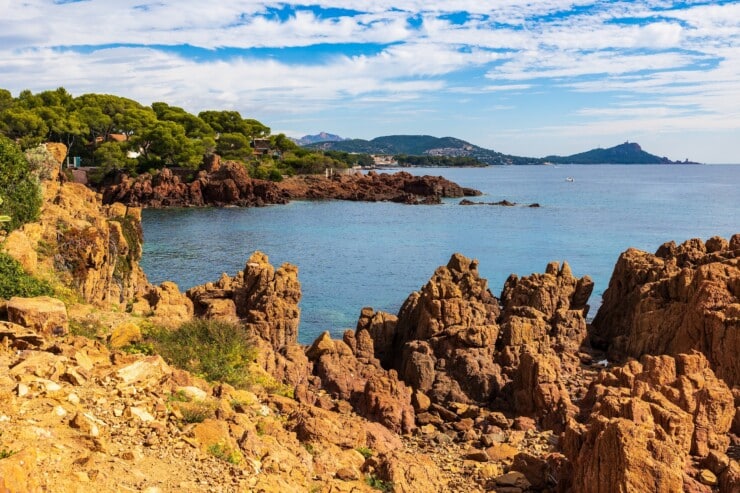
Known for: Julius Caesar founded Fréjus as a Roman naval base, and the amphitheater and one of France’s oldest baptisteries still stand there. The real reason to come is to hike the Estérel, the volcanic massif behind it, and to drive the Corniche d’Or cut through it in 1903. That road is the most dramatic half hour of driving on the French Riviera, with red porphyry cliffs instead of the pale limestone everywhere else.
Good to know: Most drivers take the A8 inland and miss the Corniche d’Or entirely.
Cannes
Pronounced Kah-nne
Best for couples, friend groups, first-timers
Base or day trip: Either
Location: On the coast about 30 minutes west of Nice by train.
Known for: These days, Cannes is best known for its film festival, but it grew out of a cholera quarantine. In 1834, Lord Brougham, a former British Lord Chancellor, was traveling to Italy when the quarantine stopped him from crossing the Var River, so he built a villa there instead.
Within 30 years, the fishing village had a British church and 40-odd aristocratic villas. The town is made up of three parts: the Palais des Festivals at the western end, La Croisette running east along the seafront with its grand hotels and beach clubs, and Le Suquet, the old quarter climbing the hill behind with the best views over the bay.
Good to know: Every conversation I have about Cannes turns into a conversation about the film festival, either about planning to attend it or avoiding it. The festival runs only 11 days, and the other 51 weeks of the year, Cannes is a proper resort town. Most visitors also never leave La Croisette.
Where to stay: The hotels in Cannes have the sharpest price gradient on the coast. There are pricey Belle Époque hotels like the Carlton along La Croisette with sea views and beach clubs, but also smaller properties behind Le Suquet, with more character and a short walk to the water.
Nearby: The Lérins Islands sit a 15-minute boat ride offshore, but very few Americans realize that. Sainte-Marguerite Island has the fort where the Man in the Iron Mask was held, and Saint-Honorat is a working Cistercian monastery where the monks at the Abbaye de Lérins make and sell their own wine.
Grasse
Pronounced Grah-sse
Best for friends, families, couples: rainy-day backup
Base or day trip: half day
Location: Inland and uphill, about 30 minutes north of Cannes.
Known for: Grasse has been the world’s perfume capital since the seventeenth century, but that happened purely by accident. The town made leather; its tanners began scenting gloves to mask the smell of tanning, and from that workaround, an industry was born. You can tour the historic perfume houses, and the surrounding hillsides grow the jasmine and roses that end up in the bottles.
Good to know: The picture in most people’s heads is a sleepy perfume village on a hillside. Grasse is a working town, and it pulls plenty of visitors in summer.
Nearby: Mougins, 15 minutes away, is a restored Medieval hilltop village that has become a serious food destination and where Picasso spent his last years. It pairs easily with Grasse for a day trip.
Antibes
Pronounced Ahn-teeb
Best for families, couples, friend groups: first-timers, food & wine lovers
Base or day trip One of our top picks for a base
Location: Between Cannes and Nice.
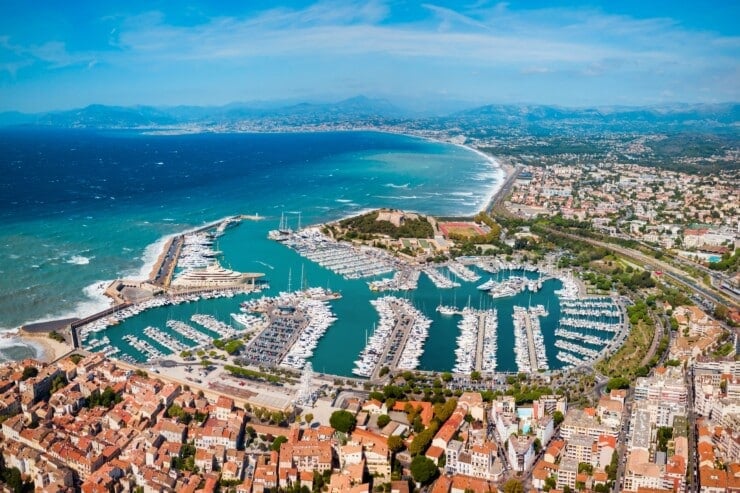
Known for: Antibes is the oldest town on this list. It was founded by the Greeks as Antipolis and fortified for centuries as a border port, which is why the sea ramparts are still the best 20 minutes of walking here.
It is also where the modern French Riviera began. In 1923, an American couple, Gerald and Sara Murphy, persuaded Hôtel du Cap-Eden-Roc to stay open through the summer, which nobody did then, and filled it with Picasso, Hemingway, the Fitzgeralds, and Cole Porter.
Within a decade, a tan had gone from a laborer’s stigma to a status symbol, and the coast had a second season, and AFAR has written about what that era left behind in Juan-les-Pins. Picasso returned after the war to paint in the Château Grimaldi, now the Picasso Museum, and the Marché Provençal is the best food market between Nice and Cannes.
Good to know: Antibes lands on most people’s day-trip list rather than as a base for a trip. It is the one town on this coast with all four of the things travelers want: a market locals actually shop, a walled old town, sandy beaches, and beautiful hotels. It also stays open and vibrant outside high season, which much of the coast does not.
Where to stay: Antibes has one of the widest ranges of lodging of any town here, from small boutique hotels inside the old walls to villa-style properties in gardens out on the Cap, plus villa rentals that are good value for families.
Nearby: The Sentier du Littoral, the coastal path around Cap d’Antibes, costs nothing, takes about two hours, and runs past some of the most expensive private property in Europe. French law protects coastal paths along the length of the country, which is why you can walk it at all.
Saint-Paul-de-Vence and Vence
Pronounced San Pole deh Vonsse
Best for couples: history buffs
Base or day trip Day trip
Location: Inland in the hills, about 25 minutes northwest of Nice or Antibes.
Known for: This is the art heart of the Riviera. The Fondation Maeght holds one of Europe’s finest modern art collections in a building designed around the works, with Giacometti figures in the courtyard and a Miró labyrinth. In the village, the restaurant and hotel La Colombe d’Or took paintings from Picasso, Braque, Léger, and Matisse in lieu of payment, and they still hang on the walls.
Ten minutes on, the village of Vence has the Chapelle du Rosaire, which Matisse designed in his eighties, down to the windows and the vestments. He called it his masterpiece, and it is the single most moving thing I have seen on this coast.
Good to know: Many write Saint-Paul-de-Vence off as a gift-shop village, and, to be honest, at midday in August it feels like one. Go early or stay late and you find a different place entirely.
Getting there: No train runs here. Drive about 25 minutes and park below, because both centers are pedestrian-only.
Nice
Pronounced Niece
Best for families, couples, first-timers, food & wine lovers
Base or day trip: Either
Location: The logistical center of the coast and the region’s main gateway, with the international airport.
Known for: Many people are surprised to learn that Nice was Italian until 1860, and that this heritage is still evident in the architecture, dialect, and cooking.
The waterfront tells the other half of the story, because English winter residents funded the Promenade des Anglais in the 1820s and the name stuck.
Old Nice, with its colorful streets and the famed Cours Saleya market, feels far more like a small town than the rest of the city. The Marc Chagall and Matisse museums were both highlights of my own time here. Our full Nice travel guide goes into more depth.
Good to know: Travelers often expect somewhere tiny, when Nice is a city of roughly 350,000 with traffic, a working port, and a business district. If you want small-town vibes, consider Villefranche-sur-Mer instead.
Where to stay: Nice offers the full range, which is part of why it works: Belle Époque grande dames along the Promenade, design-led boutiques near the port, and plentiful apartment rentals around Old Nice that suit families and longer stays.
Worth knowing: People are consistently surprised that wine grows directly behind Nice. Bellet is one of France’s smallest appellations, meaning a legally defined growing area with rules about what can be planted, and the vineyards sit inside the city limits. Start with our guide to wine tasting in France.
Villefranche-sur-Mer
Pronounced Veel-frahnsh sur Mair
Best for couples: first-timers
Base or day trip: day trip, or a base if you book far ahead
Location: Its own town rather than a neighborhood of Nice, seven minutes east by train.
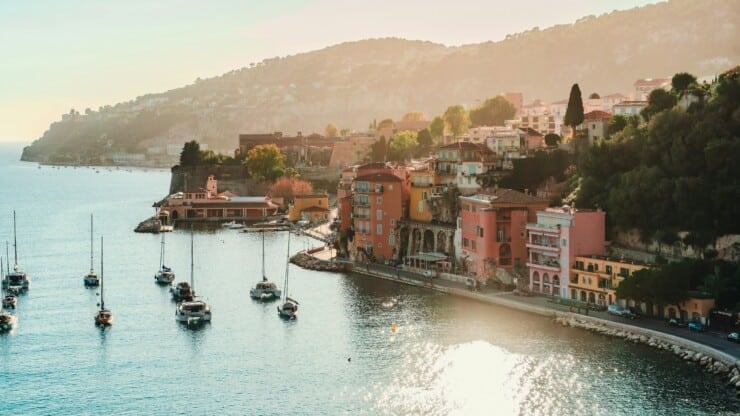
Known for: Villefranche is a separate commune of about 5,000 and is what visitors picture when they picture the French Riviera. Ochre buildings tumble to the water, the beach is one of the softest stretches east of Antibes, and the old town hides a covered medieval street, the Rue Obscure, running beneath the houses.
What people get wrong: Many assume they can base here easily, but Villefranche has only a handful of hotels and waterfront rooms book out months ahead.
Saint-Jean-Cap-Ferrat
Pronounced San Zhon Cap Fer-rah
Best for luxury lovers, couples, families, photographers
Base or day trip Either
Location: On a peninsula 10 minutes east of Villefranche.
Known for: Cap Ferrat holds some of the most luxurious hotels in Europe, but don’t let that discourage you. Even if you aren’t a luxury traveler, go anyway for the Villa Ephrussi de Rothschild, a pink palace whose Rothschild baroness laid out nine themed gardens and arranged them to resemble the decks of a ship, because she wanted to feel as though she were at sea. The coastal footpath around the cap costs nothing and takes about two hours.
The Four Seasons Grand-Hôtel du Cap-Ferrat has anchored the peninsula since 1908 and is a storied property that historic hotel lovers swoon over.
Èze
Pronounced Ehz
Best for couples, friends, photographers
Base or day trip Half day
Location: About 1,400 feet above the sea, on the Moyenne Corniche between Nice and Monaco.
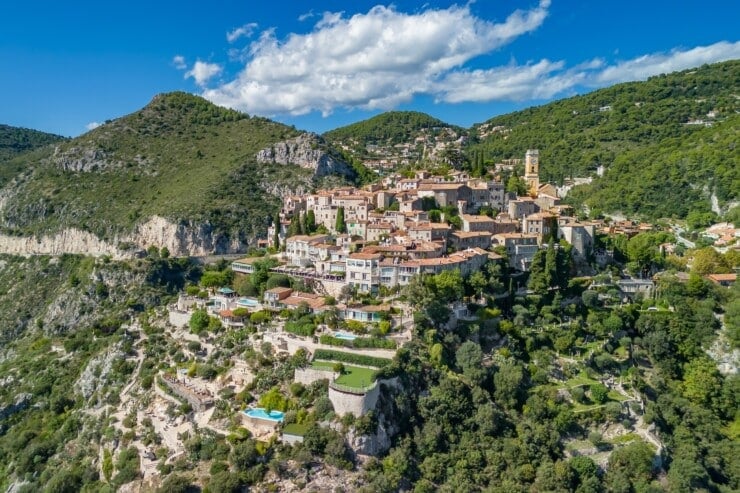
Known for: Èze grew as a fortified medieval settlement built to withstand coastal raids, which is why the streets run so narrow, and the views are so total. The Jardin Exotique crowns the village and holds the panorama.
Château de la Chèvre d’Or, built into the village walls, is the reason some people come at all, a Relais & Châteaux hotel with a two-Michelin-star restaurant and a view straight down to the sea.
Good to know: I have watched people step off the train in August expecting a short stroll into the village. The reality is that the train station sits at sea level, and the village sits 1,400 feet above it.
To reach the village, you can hike an hour up the challenging Nietzsche Path, take the cheap bus, or pay a taxi a summer premium. Go early or late either way, because midday in summer is shoulder to shoulder.
11 French Riviera Cities At A Glance
| City | Best for | Train? | Beach | Base or day trip |
|---|---|---|---|---|
| Nice | Families, couples, first-timers | Yes, plus airport | Pebble | Base |
| Antibes | Families, couples, food & wine lovers | Yes | Sand | Our top pick |
| Cannes | Couples, friend groups | Yes | Sand | Either |
| Menton | Couples, multigenerational families | Yes | Mixed | Base or day trip |
| Villefranche-sur-Mer | Couples, first-timers | Yes, plus bus | Fine gravel | Day trip, or a base if you book early |
| Saint-Paul-de-Vence | Couples, history buffs | No | Inland | Day trip |
| Èze | Couples, photographers | To sea level only | Inland | Half day |
| Grasse | Families, rainy-day backup | Yes, via Cannes | Inland | Half day |
| Saint-Jean-Cap-Ferrat | Couples, photographers | Yes | Small | Half day |
| Fréjus | Families, history buffs | Yes, via Saint-Raphaël | Sand | Day trip |
| Saint-Tropez | Couples, friend groups | No | Sand | Base, if you commit |
Monaco
Pronounced Mon-ah-co
Base or day trip: Generally skip
Location: PSA: Monaco is not in France. It is a sovereign country wedged into the coast between Èze and Menton.
Known for: Monaco is an independent principality of about two square kilometers, smaller than New York’s Central Park, and it has been ruled by the Grimaldi family since the thirteenth century. The city of Monte Carlo was built from nothing in the mid-nineteenth century as a place for northern European money to spend a season, and the casino and the Grand Prix circuit are genuinely there.
Why we send clients elsewhere: Monaco is beautifully kept but, to us, feels a bit soulless. If you want glamour, Saint-Tropez, Cap d’Antibes, and Saint-Jean-Cap-Ferrat do it while staying in France.
Menton
Pronounced Mann-tohn
Best for couples, multigenerational families: food & wine lovers
Base or day trip Base or day trip
Location: The last French town before Italy, about 40 minutes east of Nice.
Known for: Menton is a border town, and that is the whole point of it. Plenty of people here speak Italian, and there is as much Italian food as French, which may be good or bad depending on your preferences.
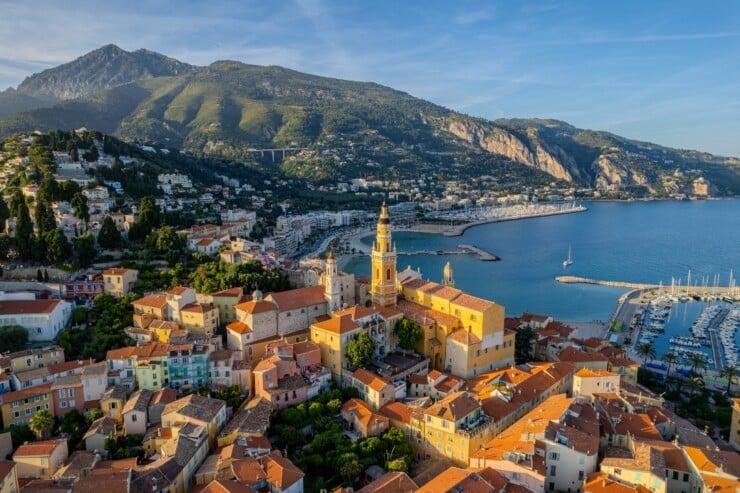
It became definitively French only in 1860, the same year as Nice. The Old Town rises above the sea in a cascade of pastel buildings, and the botanical gardens flourish thanks to a microclimate created by the mountains curving in behind.
Menton gets more than 300 days of sunshine a year, and its lemons carry Protected Geographical Indication status, which is part of why AFAR named it one of the places to go in 2026.
Good to know: Travelers assume Menton is straightforwardly French, when culturally it runs about half Ligurian. If you have loved the Italian Riviera, you will love this French town.
Where to stay: Menton has Belle Époque bones without Belle Époque prices, and it is the best value of any town here, which is why we send repeat visitors.
Nearby: The Friday market at Ventimiglia, 20 minutes over the border by train, is one of the largest on either coast.
Good To Know Before You Book A French Riviera Trip
Distances Are Short, But Can Take Time
Nice to Menton takes about 40 minutes by train, and Nice to Cannes about 30. Nice to Saint-Tropez is a different proposition at roughly two hours by car with no useful rail link, which is why Saint-Tropez tends to be either the whole trip or none of it.
The Beaches Can Be Pebbly Or Sandy
This is the detail clients are most surprised by. The sand runs from Antibes westward, at Juan-les-Pins, Cannes, Sainte-Maxime, and Pampelonne, and pebbles and fine gravel run from Nice eastward, with a mix at Menton. So if sand matters, base west, and either way bring water shoes.
Summer Fire Closures Happen
The Var Prefecture publishes a daily massif access map from mid-June to mid-September, and on extreme-risk days the Maures, the Estérel, and the Îles d’Hyères close outright to walkers. If hiking matters, check the day before rather than the morning of.
Dinner Starts Later Than You Think
Restaurants often do not fill until 8:00 or 9:00 p.m., and in Saint-Tropez the nightlife rarely starts before 11:30, so locals eat around 9:30 and roll straight into the evening. Book restaurants and beach clubs well ahead in summer.
Business Hours Fluctuate
Openings, hours, and prices shift here season to season, so use this to shape your thinking and confirm details closer to your trip, or let us do it for you.
What It Actually Costs
The Riviera, Provence, and Paris are the three most expensive parts of France, and clients under-budget this coast more than they do almost anywhere else we plan.
In June or September, a good four-star starts at roughly €350 a night, and the same room in August starts at €500. The 5-star luxurious palace properties won’t start for less than €1,200 any time of year.
Beach clubs are the cost nobody budgets for, at €80 to €150 for two loungers and an umbrella at Pampelonne and well past €200 at the top clubs. Against that, the train is almost free at about €7 from Nice to Cannes, and museum entry runs €8 to €20.
The French Riviera Is More Italian Than You Might Think
The word “riviera” is Italian (meaning “shoreline”), and the area belonged to the Italian Riviera long before it extended west into France. The border between the two parts is the Var River.
Everything west of it was Provence and had been French for centuries, and everything east of it was the County of Nice, which submitted to the House of Savoy in 1388 and stayed Savoyard until 1860. Nice spent nearly 500 years outside both Provence and France, which is precisely why it feels Italian and Saint-Tropez does not.
The Food Is Unique
This region’s food is first and foremost Mediterranean, and the food is as much Italian as it is French in origin. Socca is a thin, blistered pancake of chickpea flour and olive oil, eaten with pepper and your fingers, and Genoa claims its own version, called farinata. Pissaladière is a slow-cooked onion tart on bread dough finished with anchovies and olives, closer to focaccia than to quiche.
Menton takes it furthest, and I got by speaking Italian the entire time I was there. Travelers who love Liguria and the Amalfi Coast tend to love this stretch, and the two pair beautifully on one trip, because Menton to Ventimiglia takes 20 minutes by train and the Italian Riviera towns open up from there.
How We Choose A French Riviera Base For Clients
After crafting more than 60 custom South of France itineraries, the rule we follow is: what you actually want to do should carry as much weight as a town’s reputation. For example, if seaside at a sandy beach is a must, you have Saint-Tropez or Antibes. If markets are key, you should make sure you at least take a day trip to Nice. And if you want to be tucked into the hills, consider Mougins, Saint-Paul-de-Vence, or Èze.
Which town suits you depends on how you travel, and it is the first thing we work out on a call. Tell us what you’re after, and we will tell you where to sleep.
The Riviera Month By Month
| Month | What's happening |
|---|---|
| January | Quiet and mild. Many coastal towns wind down, but Nice works as a city break. |
| February | The best quiet-season week of the year. Nice Carnaval and Menton's Fête du Citron overlap, and Menton builds enormous sculptures entirely from lemons and oranges. |
| March | Shoulder season begins and the direct US flights resume late in the month. |
| April | Gardens at their best, weather hit or miss, few reliable beach days. |
| May | The month to avoid. The Cannes Film Festival and the Monaco Grand Prix spike prices and traffic along the entire coast. |
| June | One of the two best months. Warm, everything open, crowds manageable. |
| July | The Nice Jazz Festival, rising heat, and the start of serious traffic. |
| August | The peak of the peak. French holidays, maximum crowds and prices. |
| September | Our favorite month. The sea is still warm, prices ease, crowds thin. |
| October | Lovely shoulder weather, and the direct US flights stop late in the month. |
| November | Quiet and often wet. |
| December | Nice at Christmas is genuinely festive, with markets and lights along the Promenade. Most of the rest of the coast is shut. |
Getting To And Around The French Riviera
Flights
Delta flies JFK to Nice, and United and La Compagnie fly Newark to Nice. All run seasonally, roughly late March through the end of October, with no direct US service in winter, so a February trip means connecting through Paris or another European hub.
Car or Train
Car, train, or driver is a group-size decision more than a budget one. Two people on the coastal corridor should take the train and skip parking, while four or more, or anyone doing hill towns and wine, might want a car. Larger groups, or anyone intending to drink at lunch, should opt for better with a private driver as needed.
Learn The Corniches
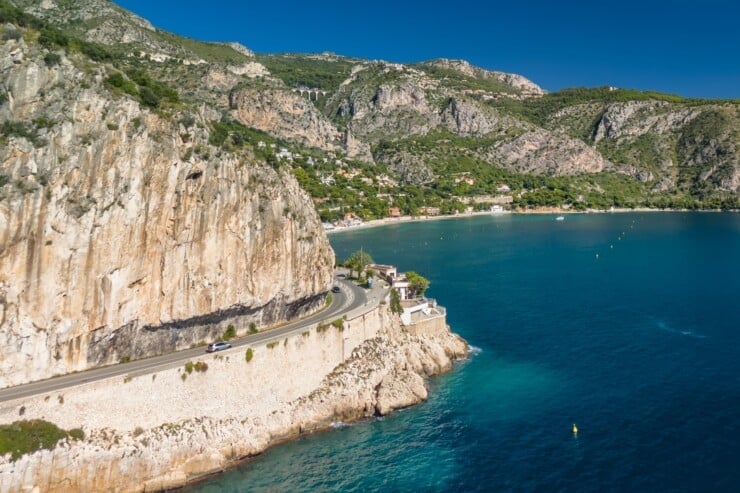
If you are driving between Nice and the Italian border, learn the corniches. A corniche is a road cut into a cliff face, and three run between Nice and Menton, stacked above each other. The Basse hugs the water through Villefranche, the Moyenne delivers you to Èze, and the Grande sits highest, following a Roman road, with the views people photograph.
Frequently Asked Questions About the French Riviera
For most travelers, the best French Riviera cities and towns to visit are Nice, Antibes, Cannes, Menton, Villefranche-sur-Mer, Saint-Tropez, Èze, and Grasse. Antibes is our favorite all-around base, Nice is best for transportation and culture, and Menton offers excellent value. Monaco sits on the same coastline but is a separate country.
Nice has more culture, food, and everyday local life, and Cannes is more glamorous and resort-oriented. It depends on the traveler, which is one reason hiring a travel planner is a good idea. We can help you find the perfect home base.
The French Riviera can be expensive, especially in summer in Saint-Tropez and Cannes. Antibes and Menton offer the same sea at noticeably better value.
Yes, you can get around some of the area without a car. The regional train reaches Nice, Cannes, Antibes, Villefranche, and Menton, and buses fill the gaps including Èze.
South of France Guide
If you’re still deciding whether to anchor your trip in Provence, the French Riviera, or the under-the-radar Languedoc (or thinking about combining two of them), our South of France Travel Guide is the natural next read. It compares all three sub-regions side by side, covers what each is best for, and helps you decide where to base yourself.
Recipes Inspired By France
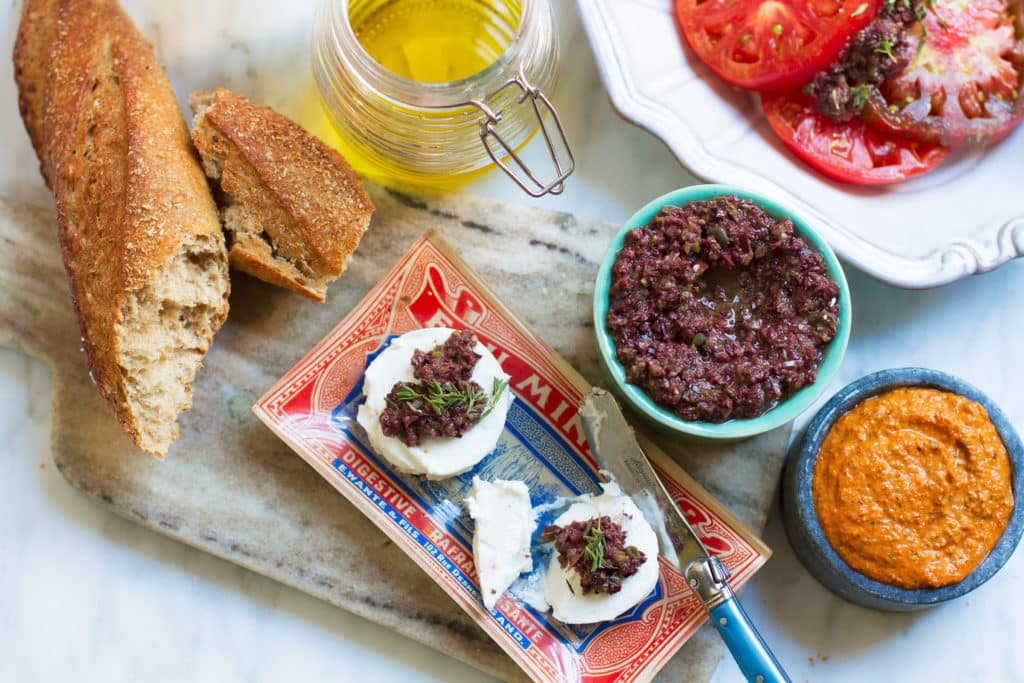
Not heading to France quite yet? Here are a few of our favorite classic French recipes to make at home to stoke your wanderlust:
France Travel Guide
Thinking of traveling to France in real life? Check out our free France Travel Guide for our best travel tips, recipes, and articles on France.
Planning a Trip to the South of France
If you’re planning your first trip—or trying to determine the best way to structure your itinerary—our team at Salt & Wind Travel specializes in designing tailored South of France journeys, from countryside villa stays to coastal getaways along the Côte d’Azur.
Photo Credit: Antibes port aerial panoramic view by saiko3p; aerial view of the medieval village of Eze by Mazur Travel; aerial summer view of Menton by DroneTop; red rocks of the Esterel by ldgfr photos; aerial view of Pampelonne Beach by Mario Hagen; Corniche Inferieure road by Mazur Travel
