🔑 Quick Answer: Wine tasting in France happens mostly at working family estates, by appointment, not at walk-in tasting rooms. Book ahead, keep it to two tastings a day, and plan around the French clock, because wineries close for lunch. Aim for five to 10 days in one or two regions, and go in spring or fall.
Key Takeaways
- Most French wineries take appointments, not walk-ins. Email or call with your date, time, and group size, and expect the small family estates to need the most notice..
- Two tastings a day is the ceiling. Lunches run two hours, the roads between villages are small, and a winemaker who joins you will not be quick.
- Go in March, April, June, or October. July and August are the French holidays, May is full of public holidays, and harvest looks romantic but is when estates have the least time for you.
- Trains reach the cities, not the vines. Bordeaux, Dijon, Lyon, Strasbourg, and Avignon are easy from Paris, and from there you need a car or a driver.
Wine tasting in France is at the top of many of our travel clients’ bucket lists, since they love food and wine experiences. It is one of the most direct ways into French culture, and it hands you the region’s history and heritage in a glass. But as romantic as wandering through French vineyards sounds, you cannot walk into most French wineries on a whim.
France is one of the world’s most celebrated wine-producing countries, and its wine culture has its own rhythm, shaped by the Appellation d’Origine Contrôlée system that governs which grapes may be planted where, the vineyard boundaries, and how the wine is made.
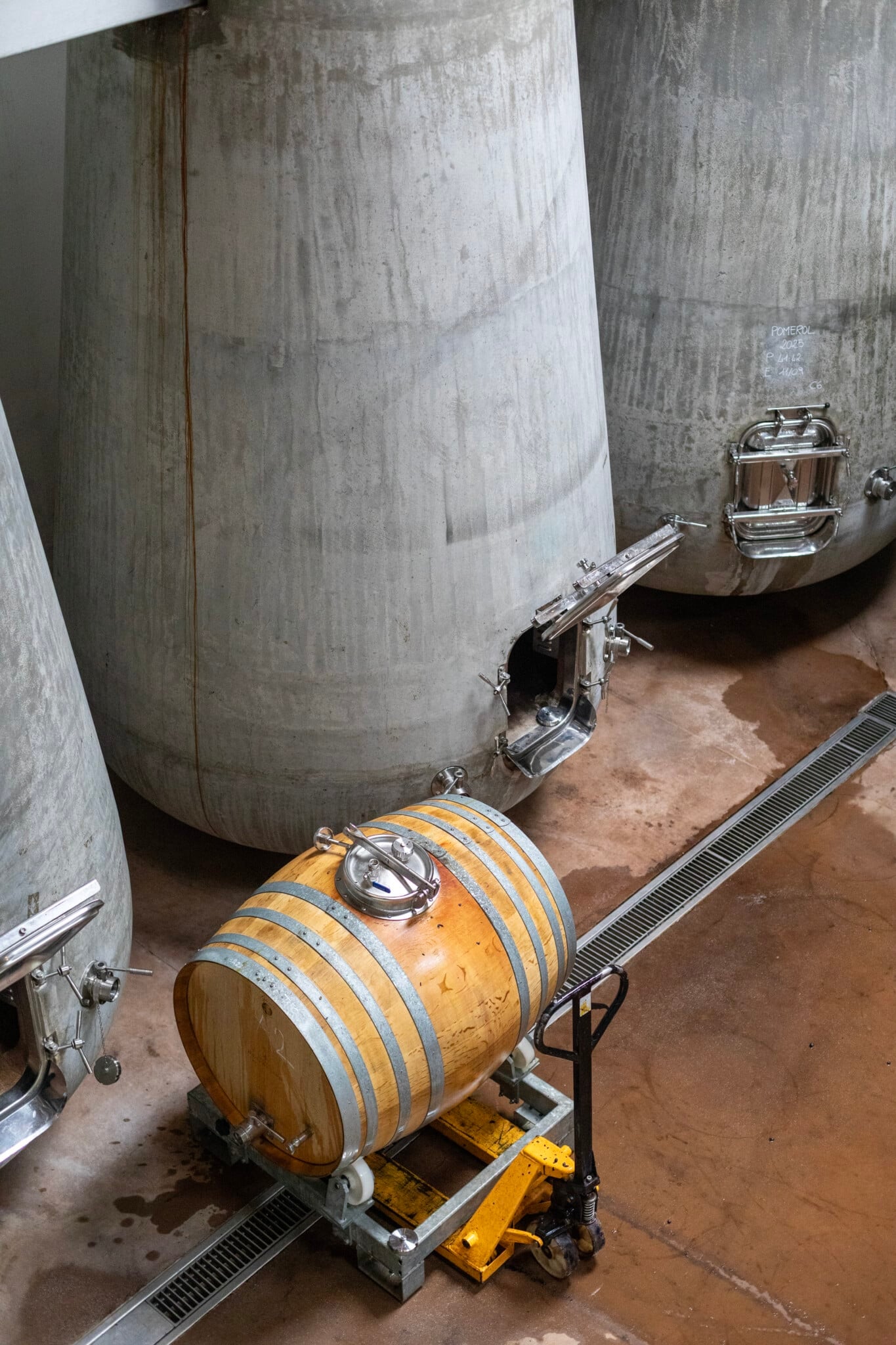
Visiting wineries here rarely means a large tasting room or a casual drop-in. It usually means a working estate, often family-run, where the tasting happens alongside the vineyard and cellar work.
Who This Is For
Who this guide is for: couples and small groups of friends planning their first serious wine trip to France, who would rather understand how a French estate works than collect stamps at 10 of them. If you are choosing between regions rather than planning the visits, start with our guide to French wine regions.
Why Trust Us on Wine Tasting in France
I am a French native, and I have spent my career in the wine industry, studying and working in France, Spain (Toro), Mexico City, and Paso Robles, California. My training is in wine: Wine and Spirits at Charles Péguy, a degree from Aeres University of Applied Sciences, and a professional license in Wine Marketing and Communication from Groupe ESA.
I live in Hyères, and these days I arrange wine experiences across French wine country, from full-day tours to a single tasting at one estate. Most of my work translates how French tasting culture actually works for visitors.
Behind me is Salt & Wind Travel, which has planned food and wine trips since 2014 and built more than 50 wine-focused trips to France. Founder Aida Mollenkamp holds a WSET Level 2 certification and has tasted at 30 to 40 French estates across Champagne, Beaujolais, Burgundy, Châteauneuf-du-Pape, Côte Rôtie, the Loire, Bordeaux, and Provence. Every price in this guide comes from a trip we booked, not an estimate.
If you would rather somebody made the introductions and handled the emails in French, book a complimentary Discovery Call and a Salt & Wind planner will build the trip around what you actually want to drink.
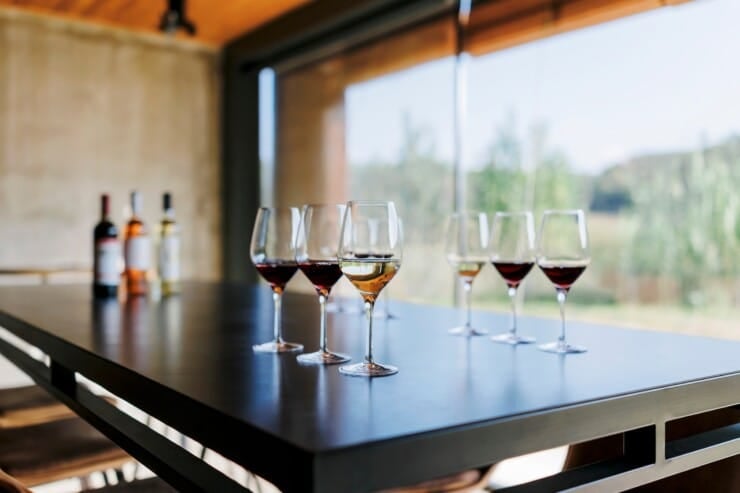
Eight Tips For Wine Tasting In France
From the Champagne region in the far north to the Côtes de Provence in the south, every French wine region carries a long history. Wherever you go, these eight tips cover booking, itinerary, and logistics.
(P.S. If you’re feeling overwhelmed, our team of experienced travel planners is here to help!)
1. Book Ahead
The first and most important rule is simple: book ahead. Some wine regions let you drive up and walk in, but most French wineries don’t work that way.
Many don’t have a dedicated hospitality team and need you to plan your visit. Others open only on certain days or by reservation. Most small properties are family-run, which means the vineyard work, cellar work, winemaking, and hospitality all fall on the same people.
By reaching out first, you secure your spot, especially in the busy season, and you let the winery prepare a tasting that feels intentional rather than improvised. Wineries like knowing who is coming and when, and you get a warm welcome instead of being squeezed into a busy moment. Email or call them directly with your date, time, and group size.
2. Build Your Itinerary
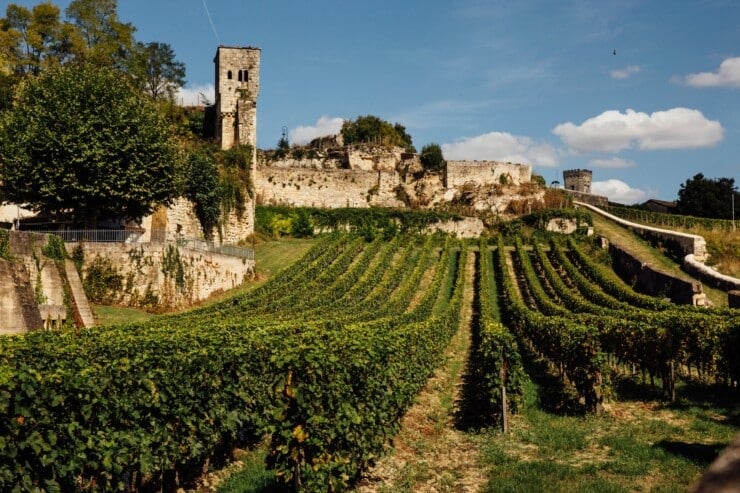
France has 11 wine regions: Champagne, Alsace, the Loire Valley, Jura, Burgundy, Beaujolais, the Rhône, Savoie, Bordeaux, Provence, and Languedoc-Roussillon.
If it is your first time in France, it is easy to underestimate the distances or how complicated it is to move between them. Some areas connect by highway, but most rely on small country roads through villages, so a short distance can take real time.
Choose your base cities first, then explore the wine areas realistically within reach. Your taste can guide you too. If you like bold, structured reds of the Napa Valley kind, Bordeaux will feel familiar.
If you love the energy of Paso Robles, you will likely enjoy the warmth of the Southern Rhône. Burgundy is paradise if you gravitate toward Pinot Noir and Chardonnay from places like the Willamette Valley. And if sparkling wine is the point, you want Champagne.
3. The Best Time to Visit French Wine Country
France is beautiful year-round, but not every month is good for wine tasting. July and August are the European summer break, which means travel and vacation months for the French and much of Europe. Everything is busy, hotels cost more, and the heat can be intense in the Rhône Valley, Provence, the Languedoc, and even Bordeaux.
May is another month to approach with caution: not because of the weather, which is lovely, but because France has many public holidays scattered throughout it.
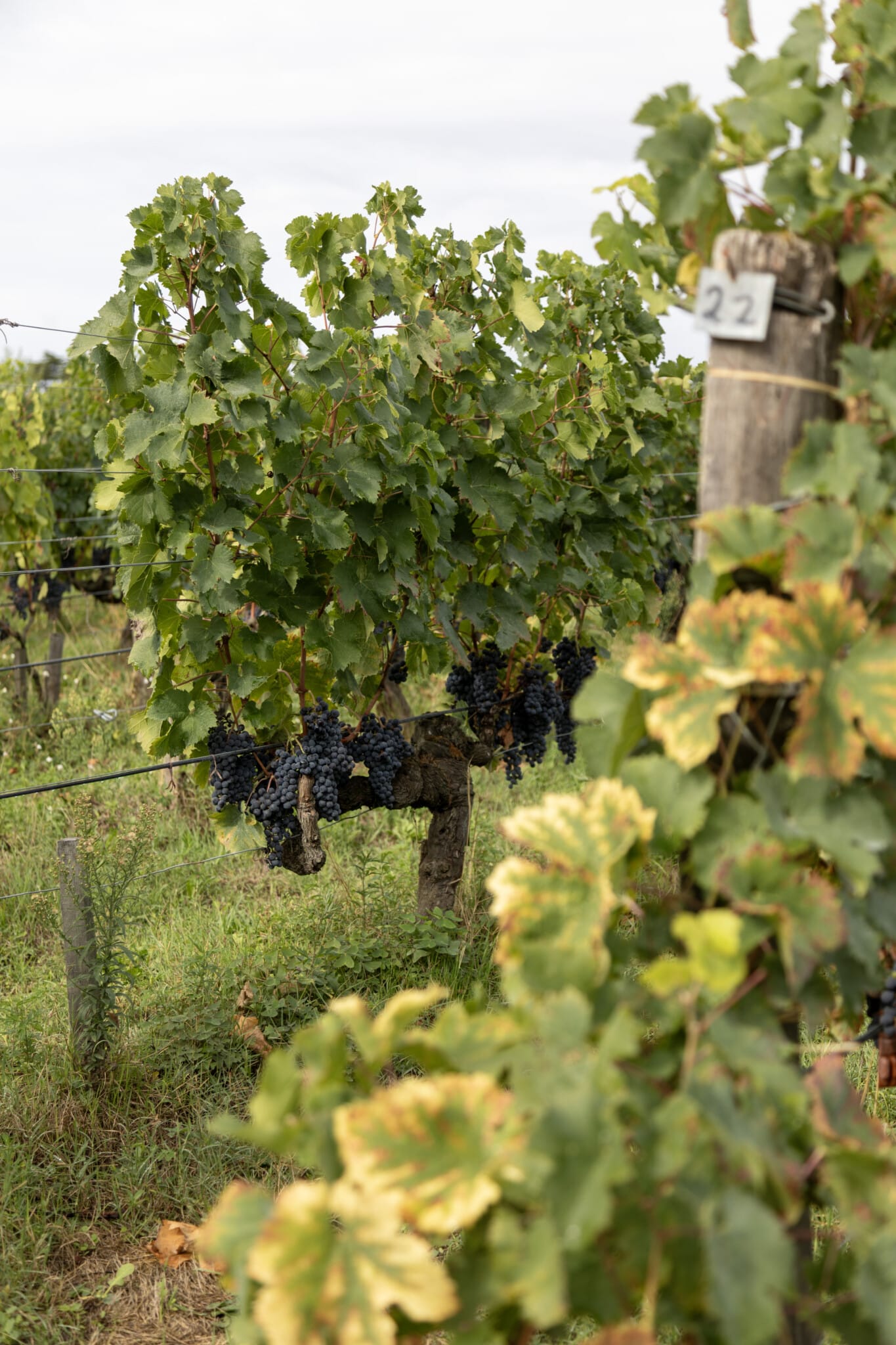
Harvest season, typically mid-August to late September, is the moment many wine lovers dream of witnessing. In reality, it is one of the least convenient times to visit. Small wineries are working nonstop with all hands on deck, and tastings may be unavailable, shortened, or limited.
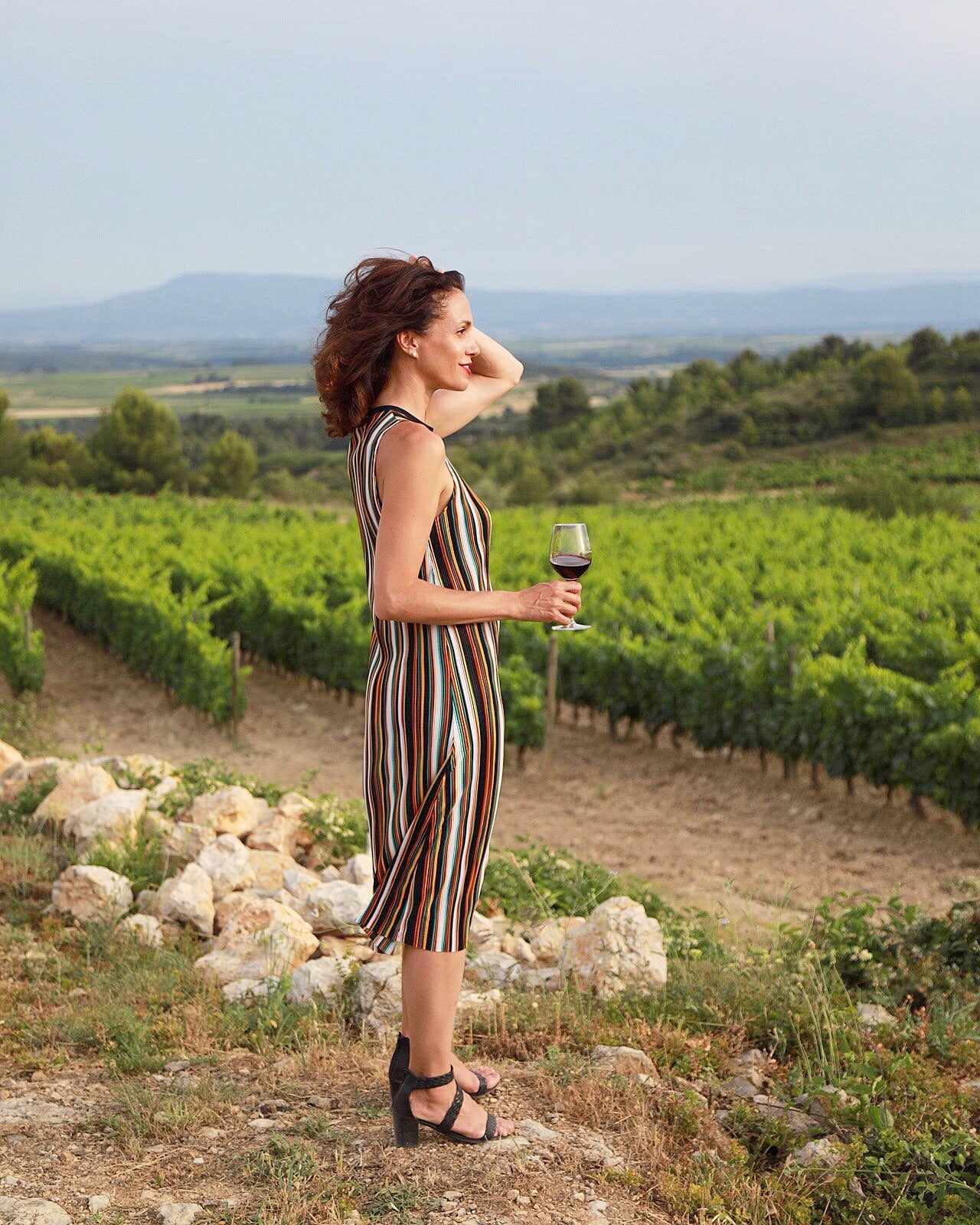
My personal favorite months for wine travel are March, April, June, and October. The weather is pleasant, the landscapes are at their best with spring blossoms or fall color, and wineries are more flexible with their schedules and more open to visitors.
4. Explore Beyond the Usual
Even if you have already tasted plenty of French wine, the real pleasure of wine tasting in France is finding wines you have never had, or wines that rarely leave the country.
If you are going to Bordeaux, stop in the nearby Cognac region and explore its spirits. Champagne, yes, of course, but the Loire, Alsace, and Burgundy also produce excellent sparkling wines.
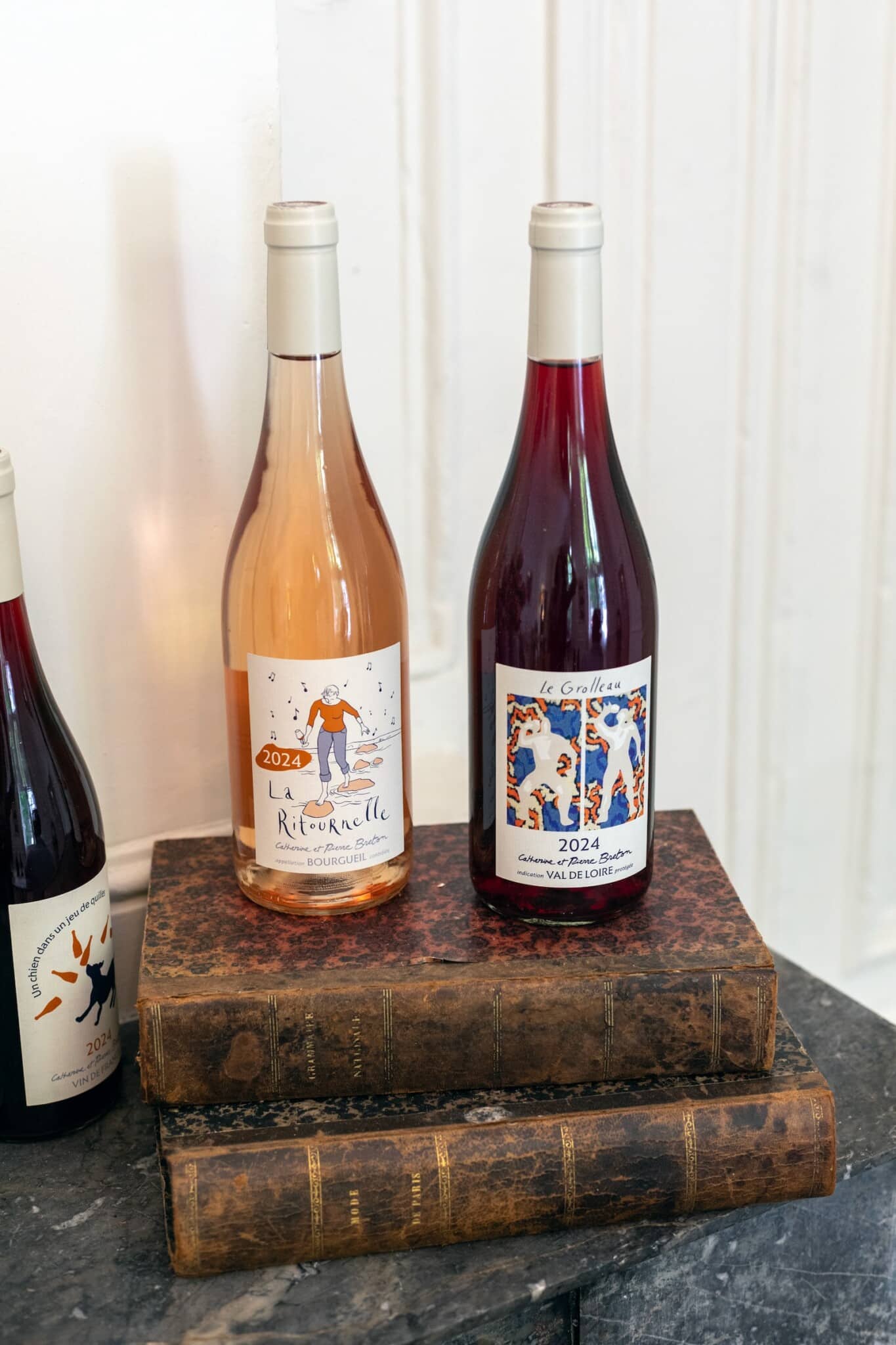
If you want natural wines, head to the Loire Valley, Provence, or Languedoc-Roussillon, where producers focus on sustainable wine and make organic, biodynamic, and other low-intervention bottles.
5. Ask for the Experience You Want
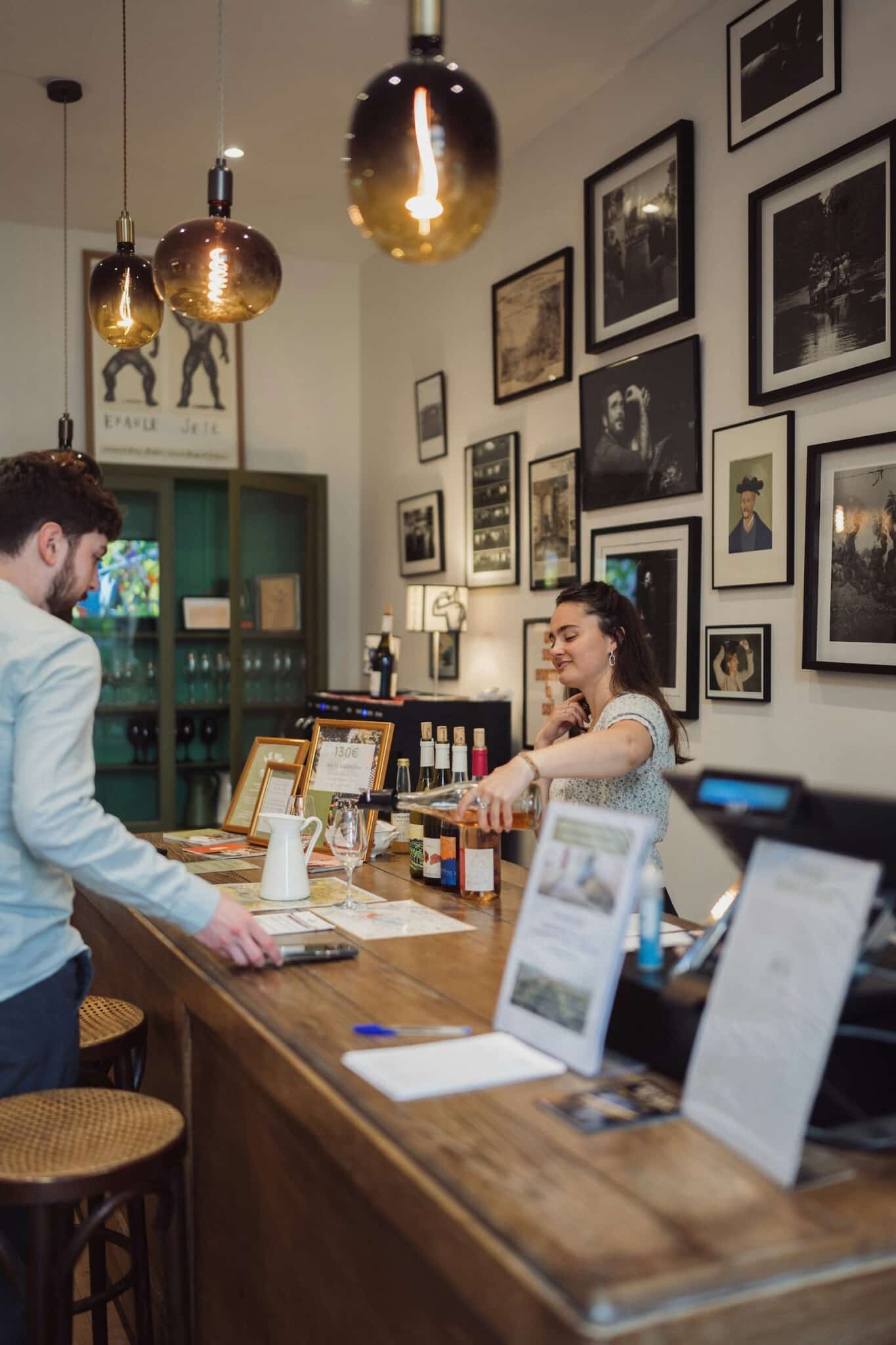
France has no standard wine-tasting format. Every winery has its own approach. In some places you taste at a counter; in others you sit at a table. Some include a full tour of the vineyard and cellar, and others focus only on the wines.
The number of wines poured varies just as widely. You may taste three, or you may taste 10, depending entirely on the estate. That is why it helps to be clear about what you are hoping for. If you want a seated tasting, say so. If you want a full guided tour or a workshop, ask for it. If you are celebrating something, mention it.
French wineries want visitors to enjoy themselves, and the more they know, the better they can make that happen.
6. Prepare to Drive, Because Trains Will Not Take You to the Vines
France’s train network is one of the best in the world, but it has one limitation: it takes you to cities and towns, not the countryside. Wineries aren’t reachable by train. From Paris, you can easily reach Bordeaux, Dijon, Lyon, Strasbourg, and Avignon by rail.
Once you are there, though, the vineyards stretch well beyond the city limits, scattered across hillsides and medieval villages connected only by small country roads. Whether you rent a car or hire a driver, you will need road transportation to visit wineries.
If you are not comfortable driving in a foreign country, especially on narrow roads and tight village streets with limited parking, hiring a driver is a good investment. It lets you relax, enjoy the scenery, and taste freely without worrying about navigation. If you need help arranging a driver or a full wine tour, reach out, and we’ll make it happen!
7. Plan Less, Because This Is Not the Time to Rush
The temptation to pack the day with tastings is understandable. But more is not better here. Tastings run longer than expected, particularly if the winemaker joins you, offers extra pours, or talks through the wines in detail.
Between driving from one village to another, navigating unfamiliar roads, and simply enjoying the scenery, time passes faster than you would think. Lunches typically last two hours, especially in wine regions where meals are part of the cultural experience.
I recommend limiting yourself to two tastings a day. Beyond that, the day starts to feel rushed, and the magic of each visit disappears.
8. Understand the French Schedule
One of the biggest adjustments for visitors is the French schedule. Daily life runs differently. Most businesses, wineries included, close for lunch, often for an hour and a half. Restaurants shut completely between lunch and dinner.
Sundays are quiet too, with many shops and wineries closed or on limited hours. This is not inefficiency; it is the normal rhythm of life in France. Meals are meant to be enjoyed slowly, and family time is prioritized. Planning your days around these hours makes everything run more smoothly.
Instead of fighting the rhythm, use it. A long lunch in a small village bistro may become one of your trip’s highlights. A two-hour tasting that starts in the vineyard and ends in the cellar can feel like stepping into a story.
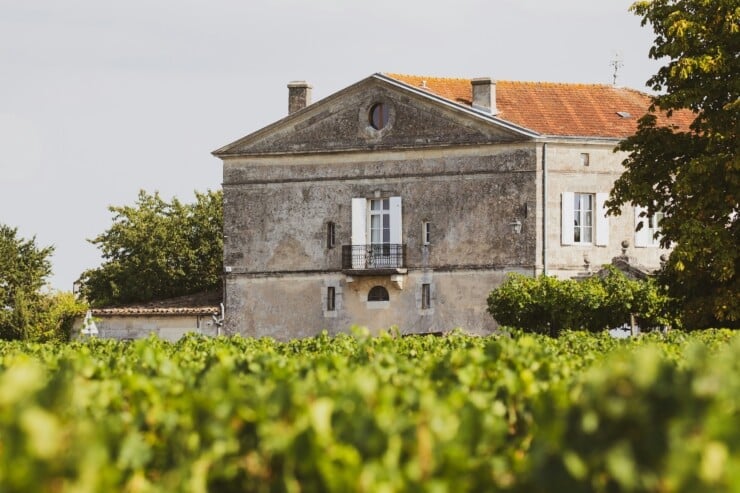
What a Tasting Is Actually Like, Region by Region
France has 11 major wine regions, but a few come up again and again. Here is where we most often arrange tastings for clients, and what actually happens when you turn up.
| Region | Typical format | Walk-ins | Book ahead by | Worth knowing |
|---|---|---|---|---|
| Bordeaux | Formal, seated, often in a salon, with a vineyard walk and talk on blending | Rare at classified estates | Four to six weeks | The grandest chateaux run visits like a scheduled tour, not a drop-in |
| Burgundy | Small, often the winemaker themselves, cellar then table | Rare | Four to six weeks | Many of the most sought-after domaines do not receive visitors at all |
| Champagne | Descend into the chalk cellars, then a seated tasting | At the big houses, sometimes | Four to six weeks | Grower-producers are the more intimate visit and need the most notice |
| Rhone, north | Terraced-slope estates, informal, often standing | Sometimes | Two to three weeks | Cote-Rotie is the prestige name and the steepest vineyards in France |
| Provence | Relaxed, frequently outdoors, rose-led | Often | One to two weeks | The most walk-in-friendly of the famous regions |
| Languedoc | Informal, generous pours, the best prices in France | Often | One to two weeks | The place to taste wines that never leave the country |
| Alsace | Along a marked wine route through villages | Yes | A few days | The one region that genuinely works without a car |
| Loire | Small and varied, natural wine heartland | Often | One to two weeks | Where to go if low-intervention wine is the point |
If you have only tasted in California, the gap is wider than you expect: almost everything in our wine tasting tips still applies to the glass, and almost none of it applies to the booking.
Bordeaux
Bordeaux represents scale, structure, and history. Its grand châteaux and classified growths are among the most famous wine estates anywhere, and a visit often means formal tastings in elegant salons, vineyard walks, and detailed discussion of blending and classification.
Burgundy: Côte de Nuits & Côte de Beaune
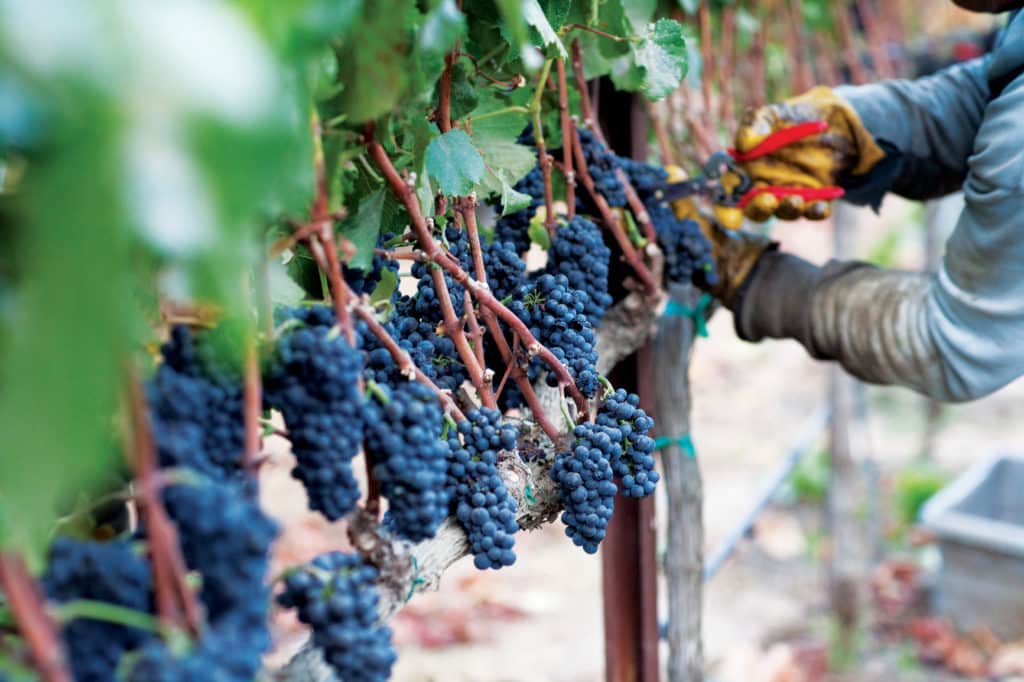
Burgundy is revered among wine experts for its nuance and depth. The Côte de Nuits is home to some of the world’s most sought-after Pinot Noir vineyards, many designated Grand Cru. The neighboring Côte de Beaune is celebrated for both red and white wines, particularly Chardonnay from world-class vineyard sites.
Driving the Route des Grands Crus, you’ll pass stone wine estates, vineyard views stretching across gentle slopes, and quaint villages where time seems to stand still. Many of the best vineyards are run by smaller wineries that require advance booking, so planning is essential.
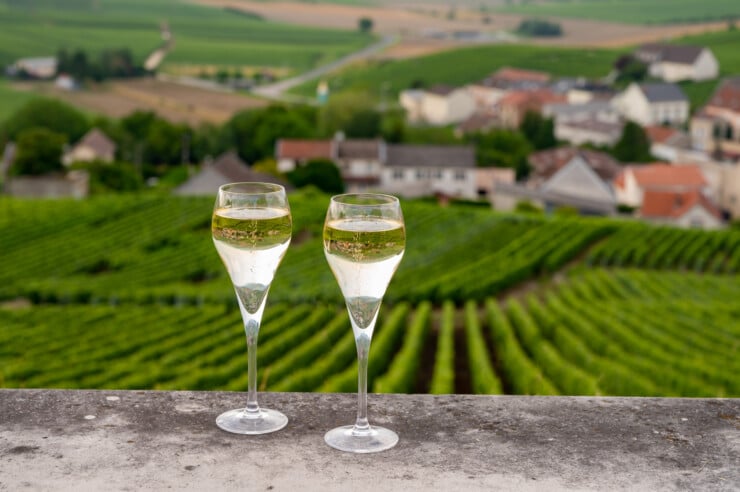
Champagne Region
The Champagne region, especially around the Montagne de Reims and the Côte des Blancs, is synonymous with celebration. Champagne production follows strict regulations under the AOC system, and visiting here means descending into historic chalk cellars and tasting sparkling wines crafted with extraordinary precision.
You’ll find prestigious Champagne houses offering polished experiences, as well as smaller wineries where private tastings feel more intimate. If you’re interested in vertical tastings or rare bottlings, this is one of the best places in French wine country to explore them.
South of France: Côtes de Provence, Rhône & Languedoc
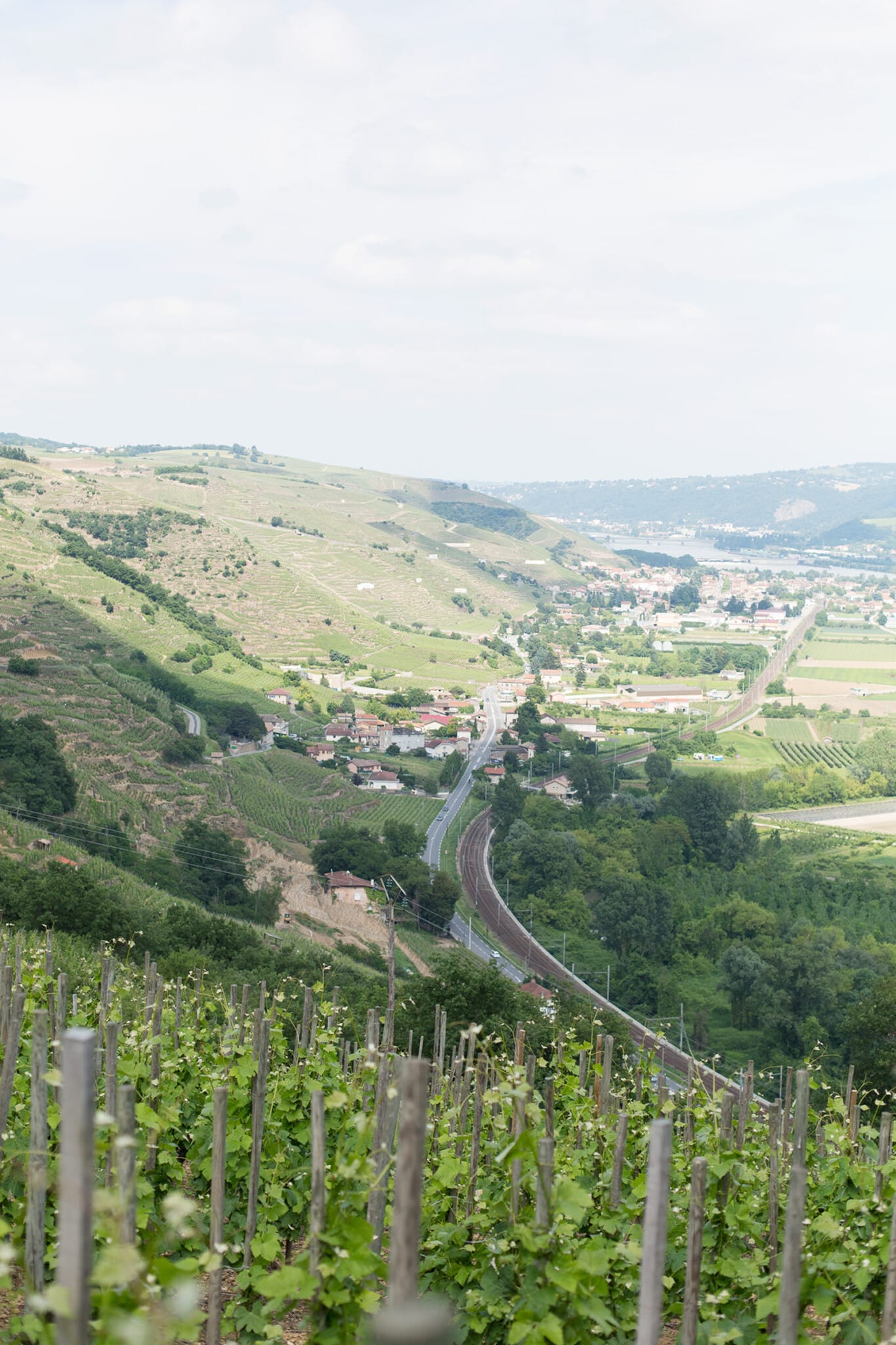
The south of France feels different — sun-drenched, relaxed, and deeply tied to Mediterranean culture. In the Northern Rhône, Côte-Rôtie is one of the most prestigious appellations, known for its Syrah grown on steep, terraced slopes overlooking the Rhône River. These wines are structured yet aromatic, often showing violet, black olive, and smoked meat notes that reflect the dramatic landscape where they are grown.
The Côtes de Provence are known for elegant rosé and scenic vineyard views framed by olive trees, while Languedoc offers dynamic local wines often at some of the best prices in France. Provence is rosé country; plan a tasting trip with our guide to Provence and its wine country.
And the ones Americans skip. We also love introducing clients to Alsace, the Jura, and Savoie. Alsace, in particular, is the one region that works without a car because its wine-route villages are linked by regional trains and buses.
What Wine Tasting in France Costs
Tasting fees in France are generally lower than in California, and at small estates, the fee often disappears if you buy a bottle or two. The money goes on the guided day rather than the pours.
| What | Real booked cost | Notes |
|---|---|---|
| Champagne day, a grande marque house plus a small grower, with lunch | EUR 565 per person | Booked for October 2026. Includes the houses, the guide, and the driving. Lunch in Epernay paid separately, and a cash tip is customary. |
| Private driver-guide, full day | EUR 350 to 600 | Varies by region and vehicle. This is the cost of being able to taste at all. |
| Cellar tasting at a small family estate | Frequently free with a purchase | Buy a bottle or two. Where the tasting is free, the purchase is the fee. |
Our full breakdown of what a day costs across Burgundy and the rest of France sits in the French wine regions guide, which carries the regional cost table.
How to Ask for a Tasting in French
You do not need French to taste in France, and the big houses in Bordeaux, Champagne, and Burgundy all run English tours. At a small family domaine, though, the tasting will usually be in French, and opening in the language changes the welcome you get. These are the words that actually come up.
| French | What it means | Where it catches people out |
|---|---|---|
| une degustation | a tasting | The word to use when you write or call |
| le domaine | the estate | Burgundy, the Loire, the Rhone |
| le chateau | the estate | Bordeaux, where it rarely means a castle |
| le vigneron, la vigneronne | the winegrower | The person who both farms and makes the wine |
| la cave | the cellar | Not a cave. This is where the wine is kept |
| le caveau | the tasting room | The small room where you will actually taste |
| le crachoir | the spittoon | Ask for it. Nobody will think less of you |
| le millesime | the vintage year | On every label and in every conversation |
| la vendange | the harvest | Mid-August to late September, and a bad time to visit |
| sec, demi-sec, moelleux, liquoreux | dry, off-dry, medium-sweet, sweet | The four you will see on Loire and Alsace labels |
| un vin de garde | a wine to lay down | Meaning do not open it tonight |
The one sentence worth learning. Bonjour, je voudrais réserver une dégustation pour deux personnes, s’il vous plaît. Good morning, I would like to book a tasting for two people, please. Send it by email with your date and time, and apologize for writing in English underneath it. That combination gets further than a phone call.
And the one you will hear. C’est fermé entre midi et deux. It is closed between noon and two. Believe it.
Unique Types of Wine Tasting in France
Most wine tasting in France looks like it does elsewhere: you sit and sip through a flight. But France also offers experiences you will not find in many other places. A few we have particularly enjoyed planning:
- Wine and oyster pairings outside Bordeaux and in the Languedoc
- Goat cheese and wine pairing in the Loire Valley
- Picnics with wine and hot air balloon rides in Dijon
- Hiking the wine and cheese trails of the Jura
- Horseback riding and wine tasting in Burgundy
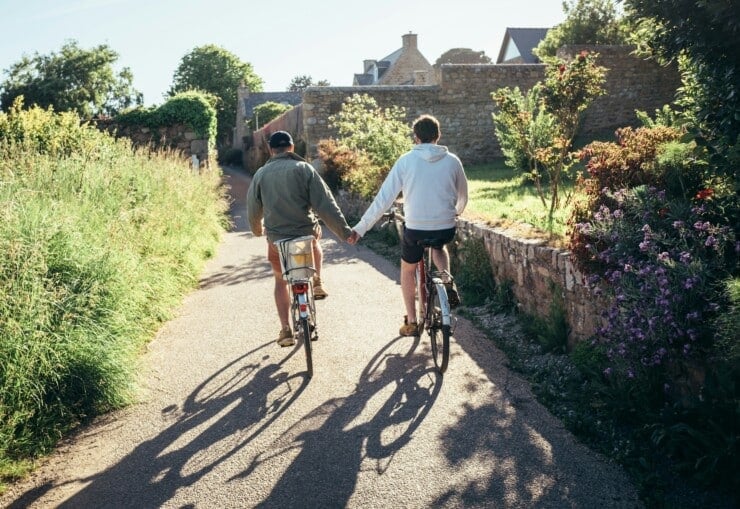
- Cycling on a day tour, or a multi-day trip, through several wine regions
You can absolutely plan a wonderful wine trip on your own. There is also nothing wrong with asking for help.
Frequently Asked Questions About Wine Tasting In France
The best way to experience wine tasting in France is to book private tastings in advance and limit visits to two per day. Many French wine estates operate by appointment only, and working with local experts or a curated French wine tour ensures access to smaller wineries, exclusive cellar tours, and immersive vineyard experiences.
The most famous French wine regions include Champagne, Burgundy (Côte de Nuits and Côte de Beaune), Bordeaux, the Rhône Valley, and the Côtes de Provence in the south of France. Each region offers distinct grape varieties, wine styles, and vineyard landscapes rooted in the Appellation d’Origine Contrôlée system.
The best time for wine tasting in France is spring (March–June) and fall (September–October). July and August, the peak season, can be crowded and hot, especially in the south of France. Harvest season, while romantic, often limits winery availability due to production demands.
Email or call the estate directly with your date, preferred time, and group size. Most French wineries are family-run and take appointments rather than walk-ins because the same people doing the tasting also work the vineyard and the cellar. Four to six weeks ahead for Bordeaux, Burgundy, and Champagne; one to two weeks for Provence, the Languedoc, and the Loire.
Yes. The larger estates in Bordeaux, Champagne, and Burgundy run tours in English. At small family domaines, tastings are usually in French, which is where a guide or private tour earns its cost. Opening your email in French, even badly, changes the reception.
Two. Tastings run long when the winemaker joins you, lunch takes two hours, and the roads between villages are small. A third visit turns the day into driving.
Not at the estate. A tasting fee is a fee, not a service, and tipping the person pouring isn't customary the way it is in California. A guide or driver who has given you a full day is different, and a cash tip there is normal and welcome.

Recipes Inspired By France
Not heading to France quite yet? Here are a few of our favorite classic French recipes to make at home to stoke your wanderlust:
Essential Travel Tips For France
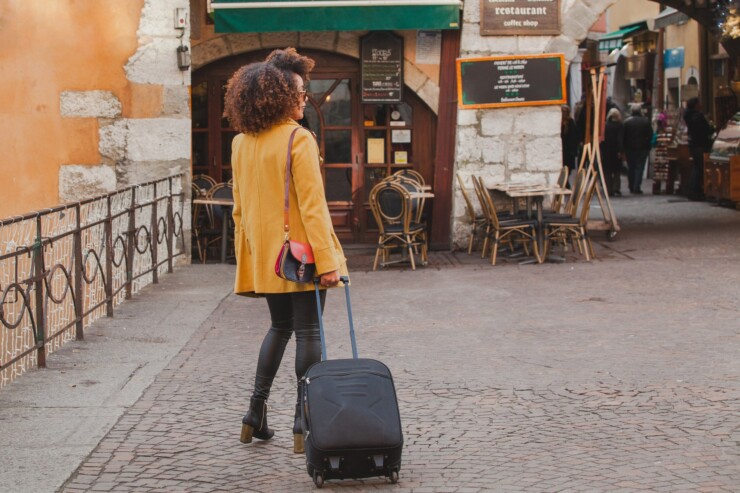
Are you heading to France for your first time (or first time in a while)? You’ll want to read our essential travel tips for France, which cover everything from dining times to tipping and etiquette.
France Travel Guide
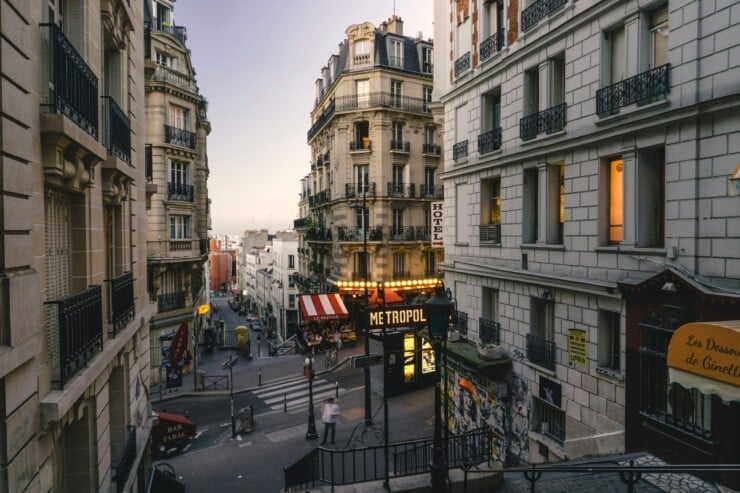
Thinking of traveling to France in real life? Check out our free France Travel Guide for our best travel tips, recipes, and articles on France.
Have Us Plan Your France Trip
Did you know we’re also a boutique travel agency specializing in France travel planning? If you’re looking to plan one of the best trips to France, our France vacation planning services are here to help you plan your perfect itinerary.
Photo Credit: Photos by Bonnin Studio, Jayme Burrows, and Team Salt & Wind Travel