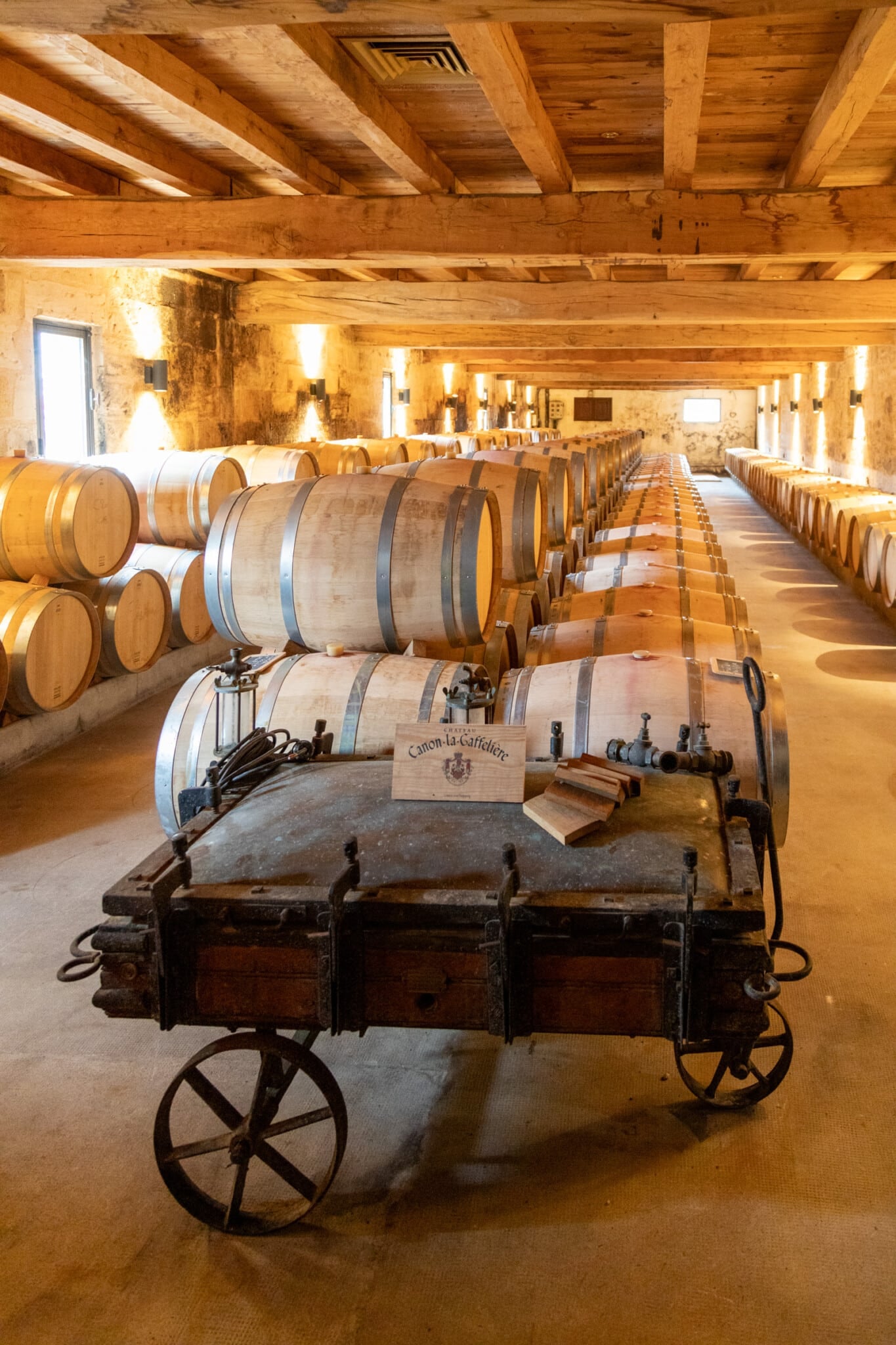
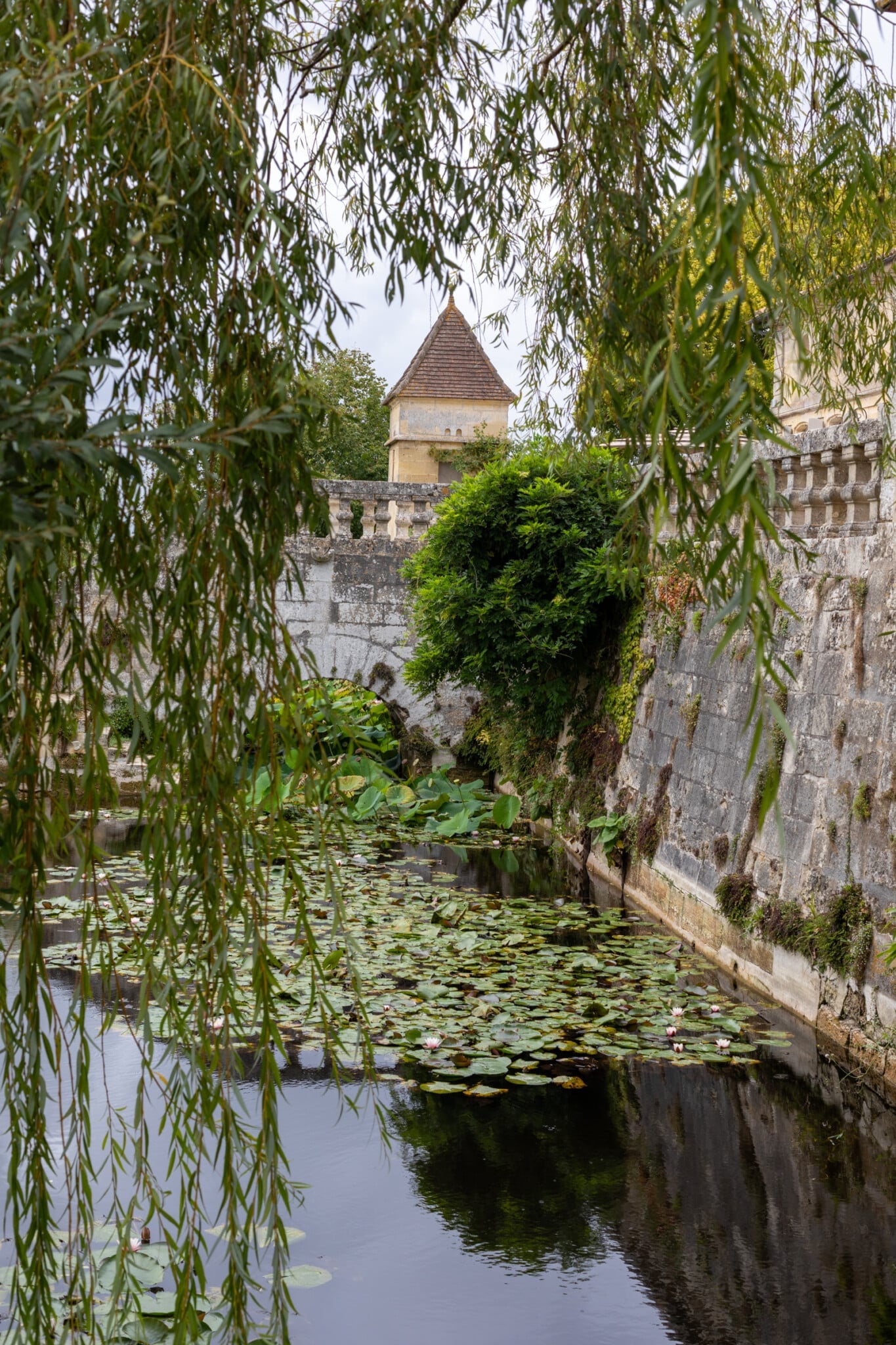
Quick answer: Bordeaux is one of the most rewarding cities in France for food and wine lovers. The best things to do in Bordeaux include tasting your way through Marché des Capucins, exploring the vibrant wine bar scene, walking the UNESCO historic center, and discovering cultural surprises like Bassins de Lumières and Darwin Ecosystem.
Key Takeaways
- Bordeaux is a world-class city in its own right, not just a base for wine country day trips. Spend time here first.
- Food and wine are the lens through which everything is seen. The city's proximity to Spain and the Atlantic gives it a culinary character you won't find elsewhere in France.
- The Bordeaux of today is not the Bordeaux your grandparents knew. The city has had a renaissance, with a renovated riverfront, restored Old Town, and a lively mix of university energy and trade-city heritage.
When people ask me about things to do in Bordeaux, they usually mean the wine region, not the city. Most hear “Bordeaux” and picture vineyard tours and tasting rooms, then kind of stop. But Bordeaux city itself is really special, and it’s one of the more underrated destinations in France.
I know this firsthand because I’m the founder of Salt & Wind Travel, so I’ve been planning trips to the Bordeaux region for nearly a decade. I last visited the city in fall 2025, and every time I return, I’m struck by how much the city has to offer.
Get To Know Bordeaux City
Bordeaux has this honey-colored limestone architecture that reminds you of Paris, which is why people call it “Little Paris,” but it has a totally different energy. There’s a huge university, so it feels younger and more casual. It has a tech scene, a diverse population, and a street life that really comes alive when the sun is out.
This is a merchant city built on wine. The Garonne River shaped the port, the port shaped the wine trade, and the wine trade shaped everything else: the architecture, the culture, the food. With over 7,000 châteaux in the broader wine region and a winemaking heritage spanning more than 2,000 years, there’s nowhere else in the world quite like it.
So whether you’re figuring out if Bordeaux earns a spot on your France itinerary or you’ve already booked your TGV tickets and want the top things to do in Bordeaux, France, this guide is built from our firsthand experience and years of client feedback.
Bordeaux, France Quick Facts
| Field | Value |
|---|---|
| Population | ~260,000 (metro ~800,000) |
| Region | Nouvelle-Aquitaine |
| Country | France |
| Getting There | Paris Gare Montparnasse to Bordeaux Saint-Jean, TGV, 2 hours 4 minutes |
| Nearest Attractions | Pessac-Léognan (~15 min), Saint-Emilion (~45 min), Arcachon Bay (~1 hour), Médoc (~1 hour) |
| Language | French |
| Currency | Euro (EUR) |
| Best Time To Visit | May through September |
Why Trust This Guide
I’ve spent nearly a decade planning custom trips to France, including dozens of Bordeaux itineraries for couples, families with adult kids, and food and wine lovers. I’m a WSET Level 2 certified wine professional and trained at Le Cordon Bleu in Paris, so the intersection of wine education, culinary culture, and travel planning is something I think about both personally and professionally.
Our team has visited Bordeaux across multiple seasons, most recently in fall 2025, and we maintain relationships with trusted local partners throughout the region, including private guides, market tour leaders, and wine professionals.
A City Built On Wine
Before diving further into the things to do in Bordeaux, it helps to understand what kind of city you’re walking into.
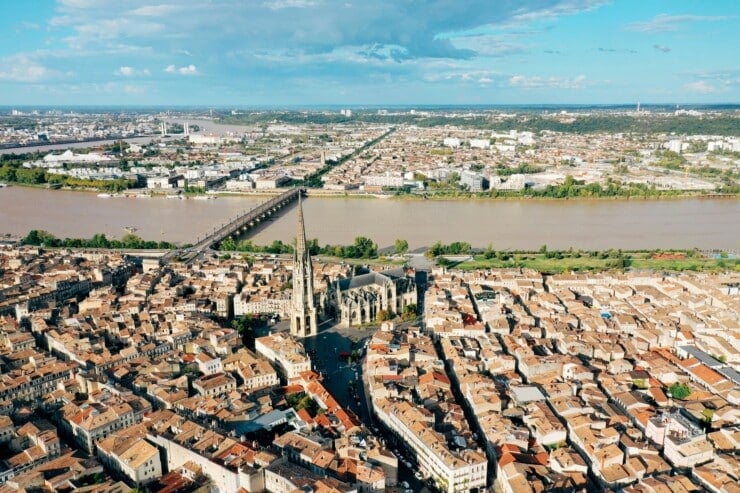
Bordeaux sits along the Garonne River in southwestern France, about two hours inland from the Atlantic coast. The city was designated a UNESCO World Heritage Site in 2007 as the “Port of the Moon,” recognizing its collection of 18th-century architecture as one of the largest in Europe.
But the Bordeaux of today is not that of years past. The city of Bordeaux has had a real renaissance over the past two decades: a renovated riverfront, the Miroir d’Eau reflecting pool, and a restored but vibrant Old Town.
The city punches well above its weight because of its outsized role in French wine history, and because it’s close to the Atlantic, you feel the southwest in the food and the culture.
Neighborhoods to know (briefly):
- Saint-Pierre/Old Town: The historic center. Grand 18th-century limestone, most of the major landmarks, and the heart of the wine bar scene.
- Chartrons: The former wine merchant district. Antique shops, Cité du Vin, and Les Halles de Bacalan are all here.
- La Bastide: Across the river. More contemporary, a bit grittier, and home to Darwin Ecosystem. A different energy from the rest of the city.
Best time to visit Bordeaux: May through September. Bordeaux is close to the Atlantic, so the weather can be unreliable outside this window. Summers can be hot, but that’s when the best events happen, including the Sunday oyster market, open-air concerts, and guinguettes along the river. The ideal weather window is shorter than the South of France, more like mid-May to mid-September.
Our Expert List of Things to do in Bordeaux
Wine Experiences Without Leaving The City
One of my favorite things about Bordeaux is that you really don’t have to leave the city to drink incredibly well. If you’re exploring famous French wine regions, Bordeaux is one of the few where the city itself delivers, too. Most visitors assume wine tasting in France means a full day in the countryside, but some of the best wine experiences are right here.
Cité du Vin
The Cité du Vin is Bordeaux’s flagship wine museum, opened in 2016 in the Chartrons neighborhood. It’s an immersive, hands-on, tactile experience for people who want to nerd out with wine, covering winemaking techniques, terroir, and global wine culture.
But it’s not for everyone. If you prefer a more traditional tasting with a sommelier or wine professional, you might want to skip the museum and head straight to an in-city tasting.
École du Vin de Bordeaux
This is the formal wine education option, run by the Bordeaux Wine Council. They offer classes ranging from introductory tastings to multi-day courses, and it’s a completely different experience from Cité du Vin’s museum approach. For travelers seeking structured learning from wine professionals, the École du Vin de Bordeaux is the place to go.
Bar à vin crawl
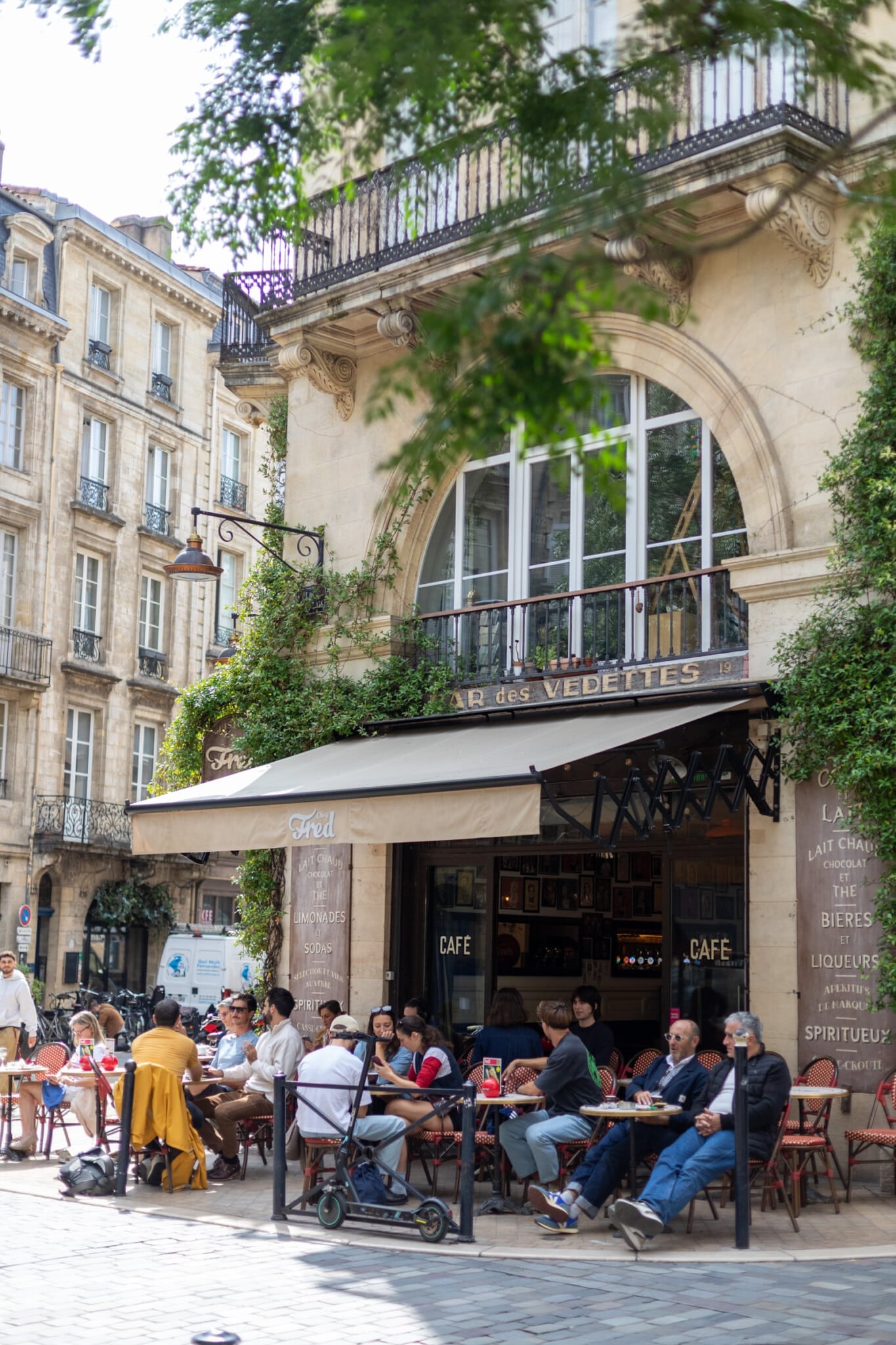
This is the casual, social side of Bordeaux wine culture, and honestly, one of my favorite ways to spend an evening in the city. The historic center has a concentrated cluster of wine bars pouring small-production wines that you won’t find outside the region. You can walk between three or four spots in a single evening, each with its own personality and wine list.
Pro Tip: For recommendations of where to go or any other help arranging your Bordeaux or France itinerary, reach out to our team of France travel experts.
Les Carmes Haut-Brion
This is the insider pick that most visitors don’t know about: a classified Bordeaux wine estate within city limits. You can visit a working château without ever leaving the city. The Chateau Les Carmes Haut-Brion estate is in the heart of Bordeaux, surrounded by the urban landscape, and it produces some genuinely excellent wine. For travelers who want the château experience but don’t have a full day for wine country, this is the one.
Wine blending workshop
Several operators in the city offer hands-on workshops where you create your own Bordeaux-style blend. It’s a fun experience for couples or groups, and it gives you a much deeper understanding of what makes a Bordeaux blend a Bordeaux blend.
Wine Experiences At A Glance
| Experience | Time Needed | Best For |
|---|---|---|
| Cité du Vin | Half day | Wine lovers who enjoy interactive museum experiences |
| École du Vin de Bordeaux | 2 hours to multi-day | Couples and travelers who want structured wine education |
| Bar à vin crawl | Evening | Couples and food and wine lovers seeking the local scene |
| Les Carmes Haut Brion | 1-2 hours | Wine lovers who want a château visit without leaving the city |
| Wine blending workshop | 2-3 hours | Couples and groups looking for a hands-on souvenir experience |
Markets, Food, And The Flavors Of The Southwest
When it comes to things to do in Bordeaux, food and wine are essential because food and wine in Bordeaux are pretty much inseparable. What makes Bordeaux’s food culture different from many French destinations is its geography.
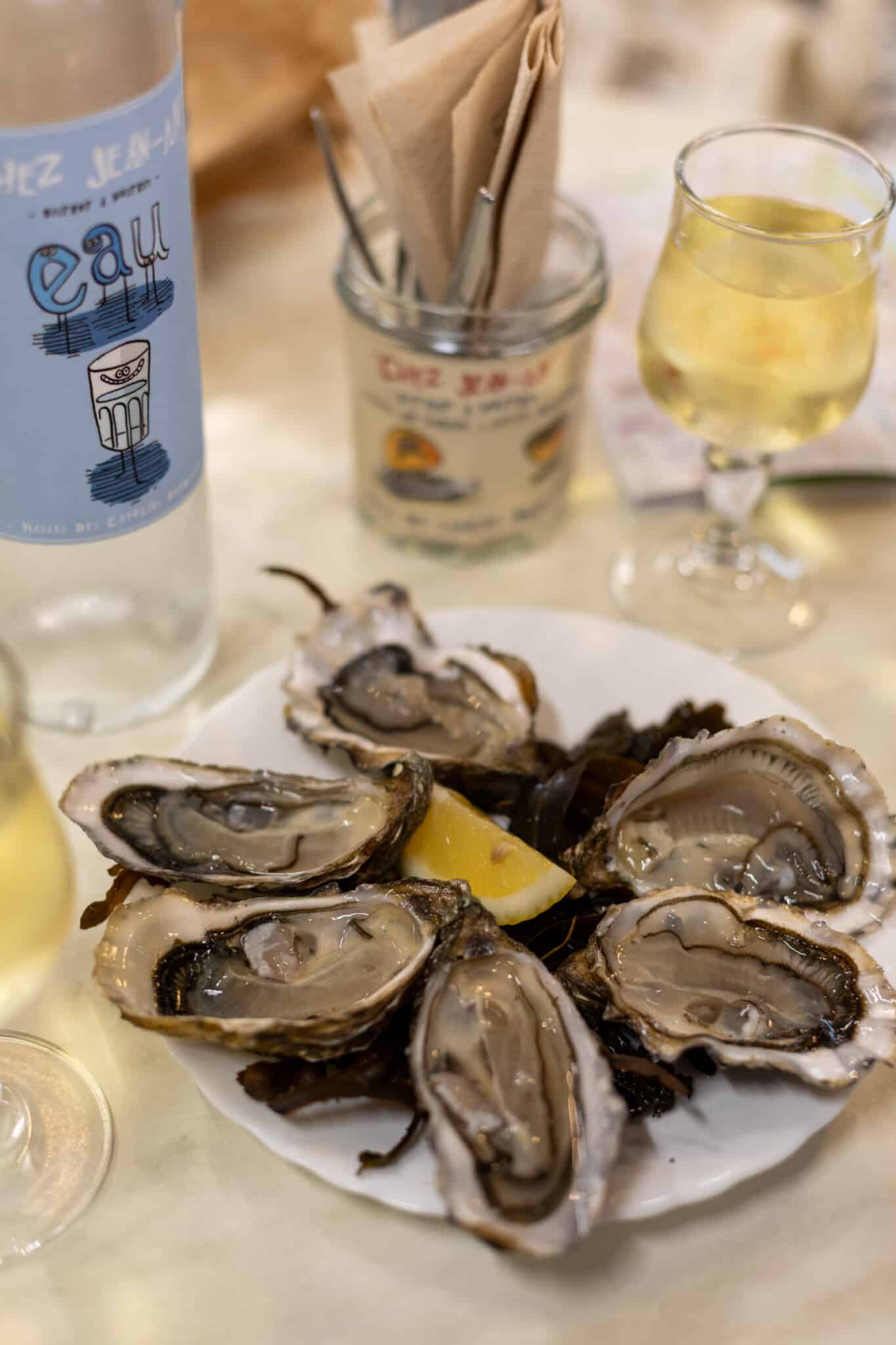
You’ve got the Atlantic coast bringing in fresh oysters and shellfish from Arcachon Bay. You’ve got duck confit and magret de canard from the southwest tradition. And because you’re so close to Spain, the markets carry jamon, pimentos, and southwestern ingredients that you just won’t find in Paris or northern France. You feel that you’re in the southwest, no longer in northern France.
Marché des Capucins
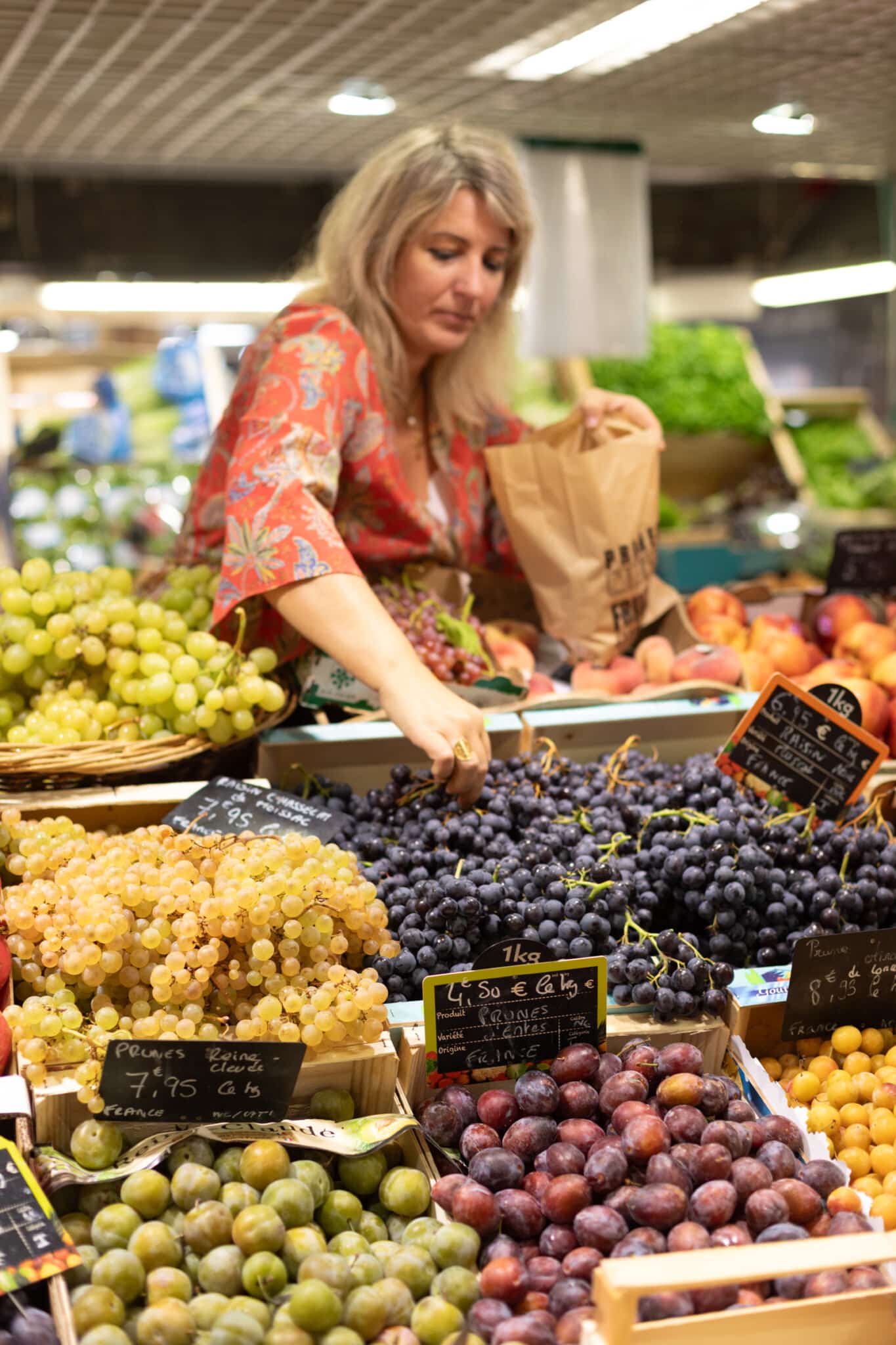
This is the city’s main market, and it’s one of the best food markets you’ll have in France. The energy, the vendors, the quality of the product, it’s all there. The Marché des Capucins puts Bordeaux’s food culture on display: poultry, duck, Atlantic seafood, and southwest ingredients. Go in the morning when it’s buzzing.
Les Halles de Bacalan
This is a curated food hall near Cité du Vin in the Chartrons neighborhood. Les Halles de Bacalan has a completely different character from Capucins. It’s more polished, more of an evening apéro destination, with prepared foods, wine bars, and a social atmosphere. Our local partners recommend it as a perfect complement to a morning at the market.
Sunday at Quai des Chartrons
On Sundays, over 70 vendors set up along the Chartrons riverfront, selling everything from flowers to books to food. It’s casual, it’s outdoor, and it’s quintessentially Bordeaux. Worth stopping in for lunch, especially on a nice day.
Canelé tasting
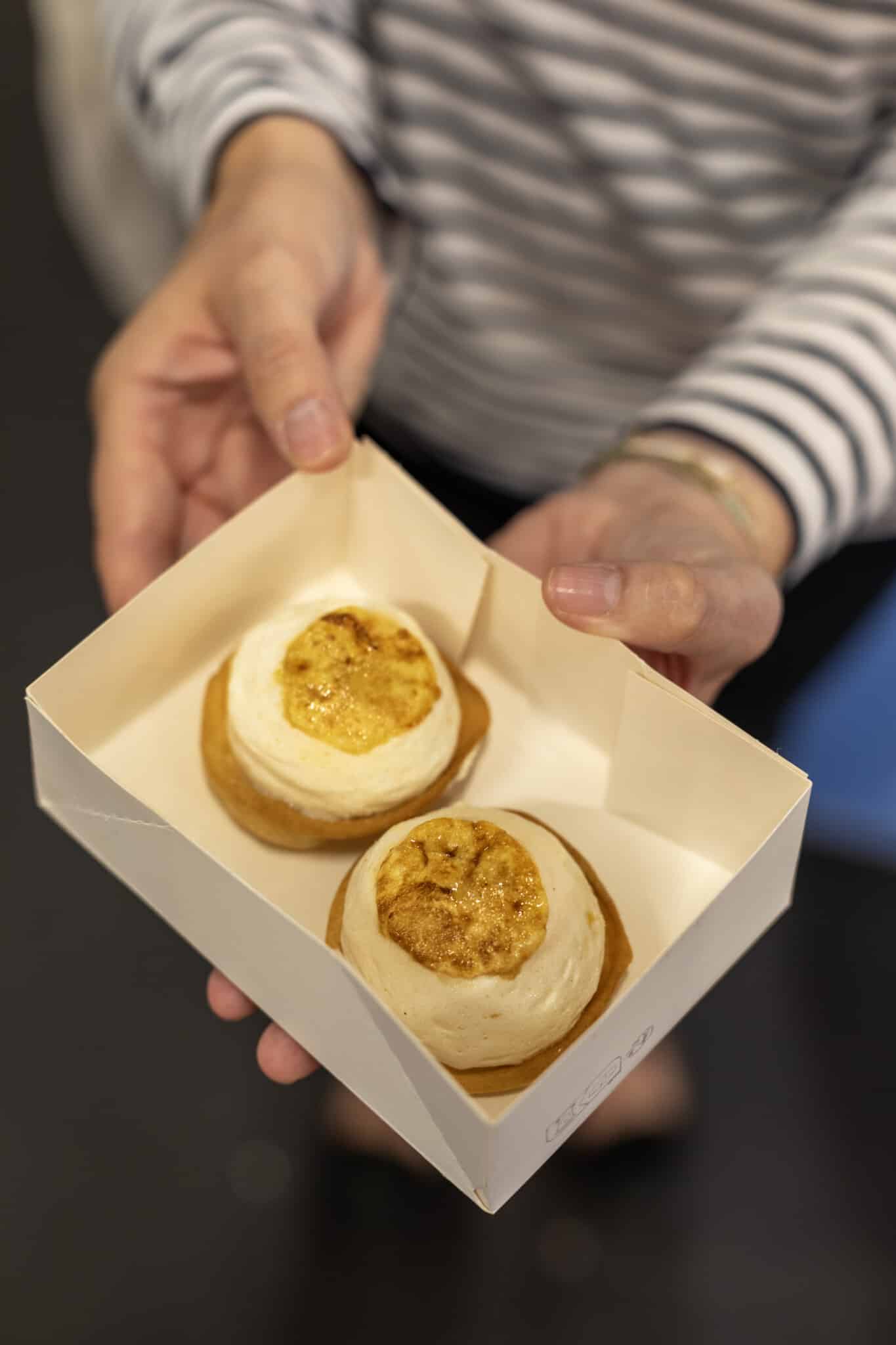
Canelés are one of the signature pastries of Bordeaux: these little caramelized cakes with vanilla and rum, crisp on the outside, custardy on the inside. (Check out Lost in Bordeaux’s guide to sweets from Bordeaux for more on these and other local pastries.) Some shops offer pastry workshops where you learn to make them yourself, or we can set you up with a guide who will teach you the ins and outs!
Private cooking class
Several local chefs and food experts offer cooking classes focused on Bordeaux’s regional cuisine. It’s a hands-on way to understand the local ingredients, especially the duck, the seafood, and the southwestern flavors that make this city’s food identity so distinctive.
Gourmet goods
Beyond the markets, Bordeaux has a strong artisan food scene. Specialty bakeries, chocolate makers, and gourmet shops are scattered throughout the Old Town and Chartrons. They make for great browsing between sightseeing, and the quality is consistently high.
Pro Tip: If Bordeaux’s food and wine scene sounds like your kind of trip, we plan custom France vacations for travelers like you. Get in touch, and we can help you build an itinerary around it.
Food And Market Experiences At A Glance
| Experience | Time Needed | Best For |
|---|---|---|
| Marché des Capucins | Morning (2-3 hours) | Food and wine lovers, families with adult kids |
| Les Halles de Bacalan | Evening (1-2 hours) | Couples looking for apéro atmosphere |
| Sunday oyster market | 1-2 hours | Food and wine lovers, couples (summer only) |
| Canelé tasting | Ongoing (daily snacking) | Everyone |
| Pastry or cooking class | Half day | Couples, food lovers who want hands-on experiences |
| Gourmet shopping | 1-2 hours | Food lovers, families shopping for gifts |
Walking The City: Bordeaux Sightseeing On Foot
Bordeaux’s historic center is compact and genuinely walkable, which is one of its biggest advantages as a travel destination. If you’re wondering what to see in Bordeaux beyond the wine, this is where the city really shines. Most of the major Bordeaux sightseeing attractions are within a 20-minute walk of each other, and the pedestrian streets make exploring on foot a pleasure. The city also has a reliable tram system if you want to cover more ground without a car.
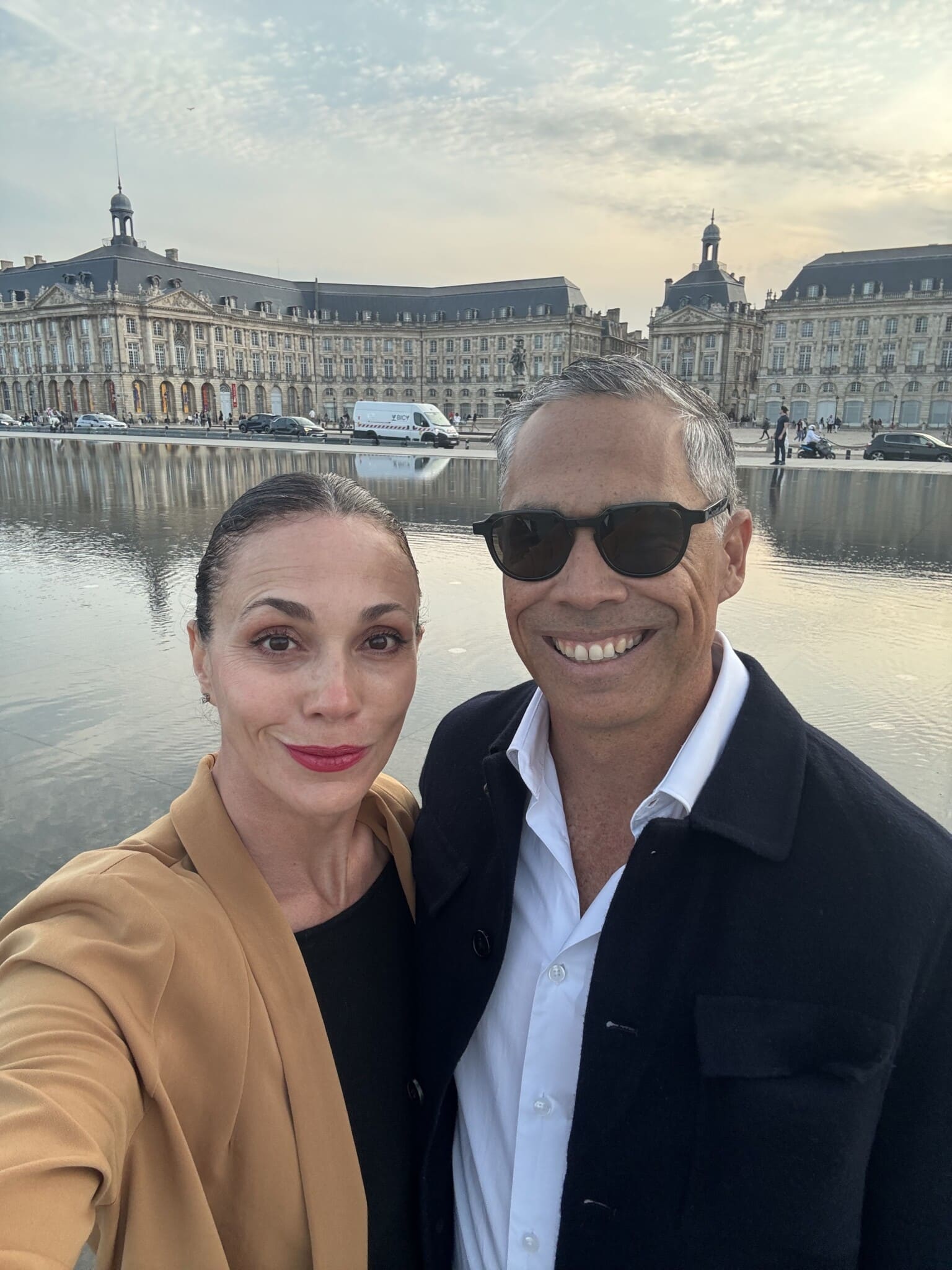
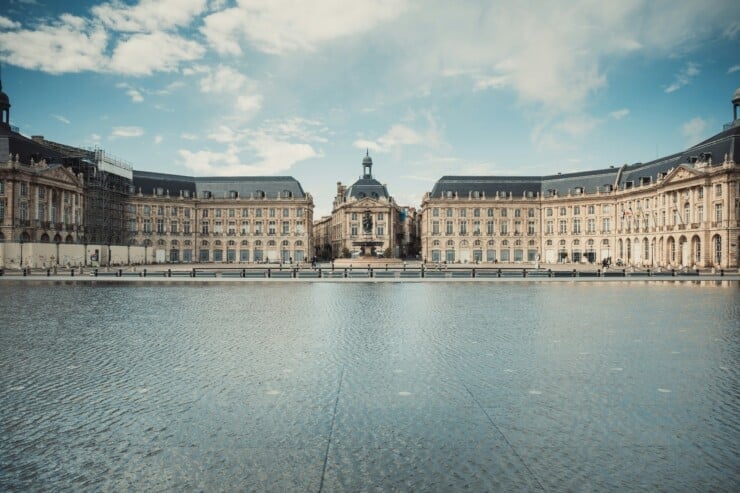
Miroir d’Eau and Place de la Bourse
The Miroir d’Eau is the world’s largest reflecting pool at 3,450 square meters, set in front of the grand 18th-century Place de la Bourse. It alternates between a thin sheet of water that creates mirror-like reflections and a mist effect that kids and adults alike run through. In summer, this becomes a gathering spot where families and couples hang out, cool off, and soak it in. When we visited in the fall, the wet cobblestones and reflections at night were equally stunning.
Grosse Cloche and Porte Cailhau
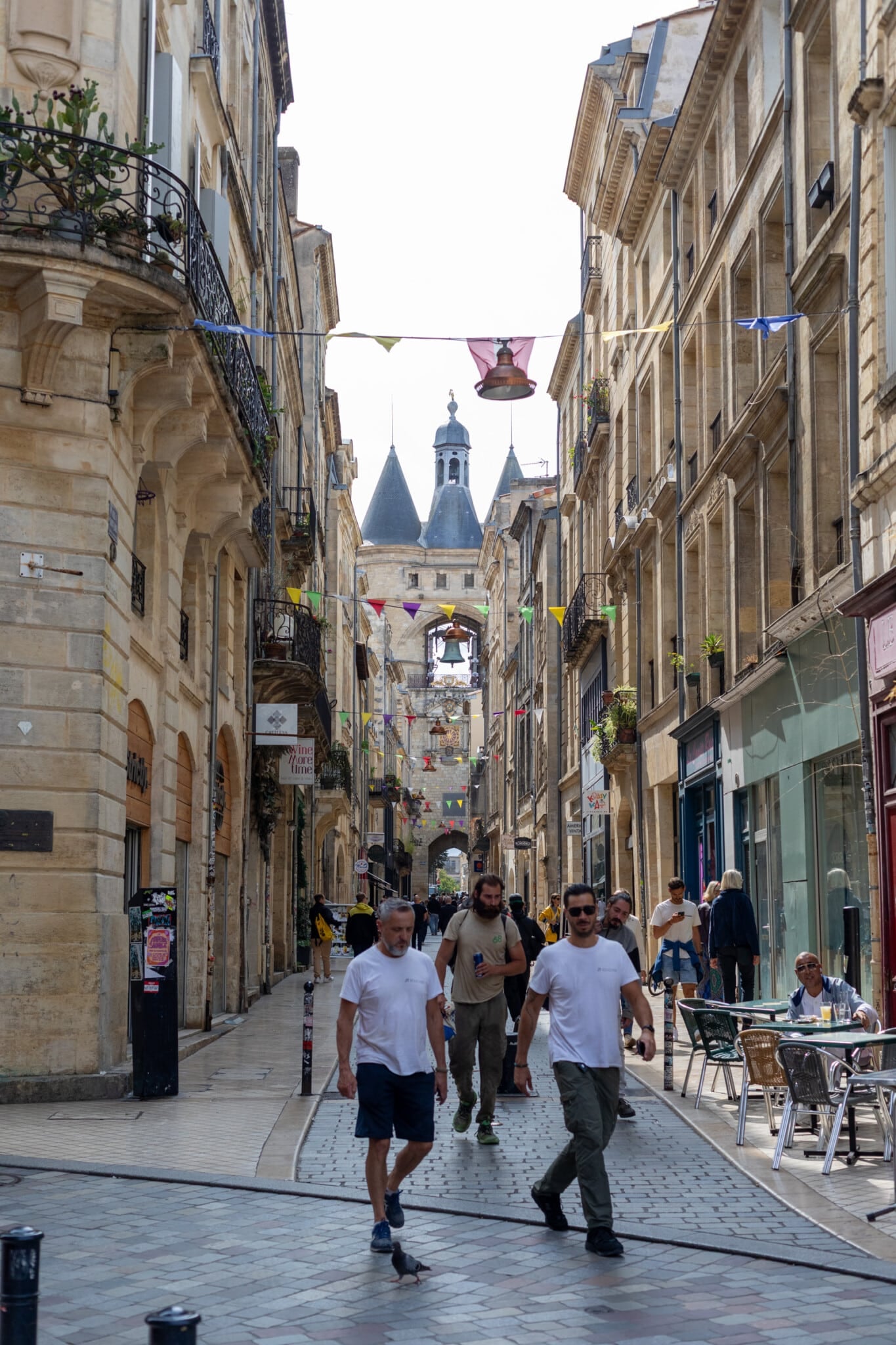
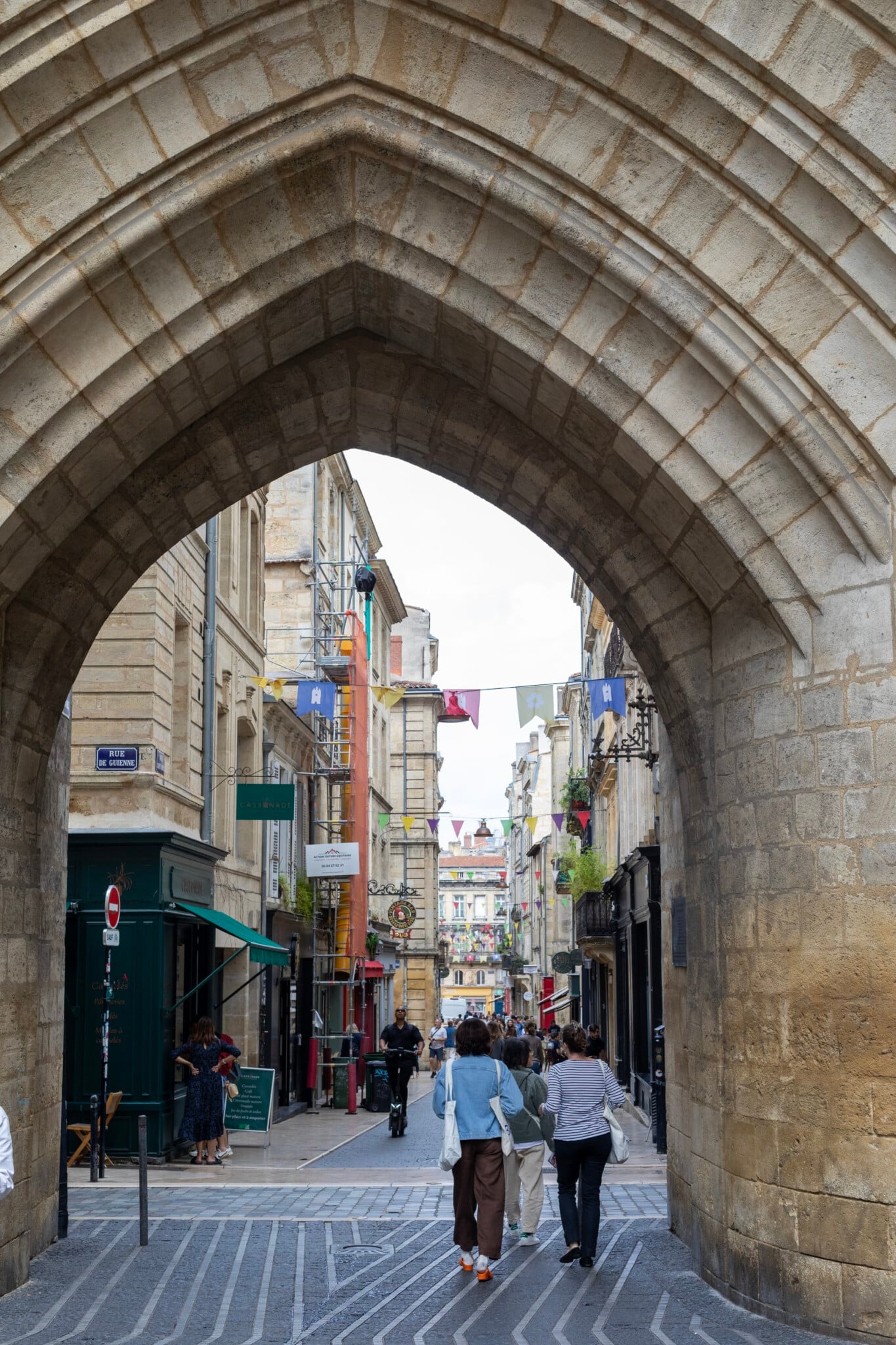
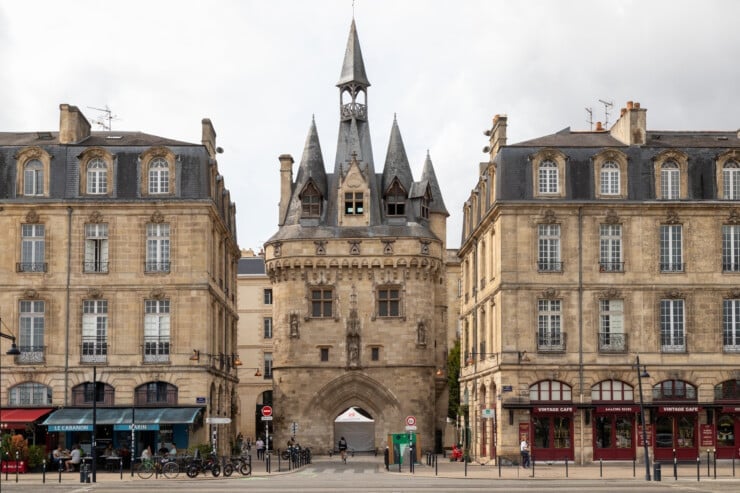
These medieval gates are the “past” side of the past-and-present contrast that defines Bordeaux. The Grosse Cloche is one of the oldest belfries in France, and Porte Cailhau is a late-Gothic triumphal gate overlooking the river. When we walked between them on a rainy fall evening, the light on the wet stone made the whole medieval quarter feel like it had barely changed in 500 years. They’re photogenic, they’re walkable between each other, and they anchor the medieval quarter of the city.
Cathédrale Saint-André de Bordeaux
The city’s main cathedral was originally consecrated in 1096 and expanded over several centuries. The separate bell tower, Tour Pey-Berland, offers panoramic views of the city and the river. Our guides point to this as one of the best orientation experiences for understanding Bordeaux’s scale and layout.
Pont de Pierre
Pont de Pierre is the historic stone bridge across the Garonne, commissioned by Napoleon in the early 1800s. It has 17 arches, one for each letter in “Napoléon Bonaparte,” and it connects the Old Town to the La Bastide neighborhood. We walked across it at sunset during our last visit, and the view of the limestone skyline reflecting off the river was one of those moments that sticks with you.
Place des Quinconces
One of the largest public squares in Europe, anchored by the Monument aux Girondins fountain. It’s grand in scale but relaxed in use, often hosting markets, fairs, and seasonal events.
Guided walking tour
For travelers who want context with their sightseeing, guided walking tours of the UNESCO architecture cover the 18th-century merchant history that shaped the city.
Rue Sainte-Catherine
At 1.2 kilometers, this is the longest pedestrian shopping street in Europe. It runs through the heart of the city with a mix of international brands, independent boutiques, and design shops. You can also reach the Galeries Bordelaises, a beautiful 19th-century covered shopping arcade near the Grand Théâtre.
Bordeaux Sightseeing At A Glance
| Attraction | Why It Stands Out | Best For |
|---|---|---|
| Miroir d'Eau + Place de la Bourse | World's largest reflecting pool, iconic photo spot | Everyone, especially families and couples |
| Grosse Cloche + Porte Cailhau | Medieval gates anchoring the Old Town | History lovers, families with adult kids |
| Cathédrale Saint-André | Panoramic city views from Tour Pey-Berland | Everyone |
| Pont de Pierre | Sunset views of the city skyline from the bridge | Couples |
| Rue Sainte-Catherine | Europe's longest pedestrian shopping street (1.2 km) | Shoppers, casual walkers |
| Guided walking or tuk-tuk tour | UNESCO architecture context and merchant history | First-time visitors, families with adult kids |
Arts, Culture, And Entertainment
Bordeaux has a cultural depth that surprises many first-time visitors. Among the Bordeaux tourist attractions that go beyond wine and food, the arts scene stands out. The contrast between historic venues and contemporary spaces is part of what makes the city interesting.
Grand Théâtre de Bordeaux
Grand Théâtre de Bordeaux is an 18th-century neoclassical opera house and one of the most beautiful in France. Our clients who attend performances say the interior staircase alone is worth the visit, and even if you don’t catch a show, the exterior colonnade is a must-see. If opera, ballet, or classical music is your thing, check the schedule before your trip.
Bassins de Lumières
A World War II submarine base that’s been converted into an immersive digital art center, similar to the Atelier des Lumières in Paris. Floor-to-ceiling projections fill the massive former submarine pens with light and sound. Our local partners recommend Bassin de Lumieres as one of the top cultural experiences in the city, and the scale of the space makes the projections feel unlike anything you’d see in a traditional museum.
Darwin Ecosystem
This is the “present” side of Bordeaux’s past-and-present contrast. A converted military barracks on the La Bastide side of the river, Darwin has been transformed into an urban hub with street art, a skate park, an organic farm, restaurants, and a beer garden. It attracts a younger crowd and has a DIY energy that feels very different from the polished Old Town across the river.
Musée d’Aquitaine
Bordeaux’s history museum covers the city’s merchant and trade past from the Gallo-Roman period through the modern era. The Musée d’Aquitaine provides the deeper context for why Bordeaux looks and feels the way it does. Our guides recommend it for travelers who want to understand the relationship between the wine trade, the port, and the city’s identity.
Guinguettes
Guinguettes are open-air riverside dance halls with live music that pop up along the Garonne in summer. They have a festive, communal energy. Think live bands, dancing, cold drinks, warm evenings. They’re seasonal and typically run from June through September.
Arts And Culture At A Glance
| Experience | Type | Best For |
|---|---|---|
| Grand Théâtre de Bordeaux | Opera, ballet, classical performance | Couples, culture lovers |
| Bassins de Lumières | Immersive digital art in a WWII submarine base | Everyone, especially families with adult kids |
| Darwin Ecosystem | Street art, urban farm, beer garden | Younger travelers, families seeking a different vibe |
| Musée d'Aquitaine | City history from Gallo-Roman to modern era | History lovers, wine enthusiasts wanting context |
| CAPC Musée d'Art Contemporain | Contemporary art in a converted warehouse | Art lovers |
| Guinguettes | Open-air riverside music and dancing (summer) | Couples, groups, social travelers |
On The Water And Outdoors
When it comes to outdoor activities in Bordeaux, the city’s relationship with the Garonne River is central. The renovated riverfront is one of the best things to happen to Bordeaux in the past 20 years, and it’s where locals spend time whenever the weather cooperates.
The quays and riverfront promenade
Walking, running, people-watching. The riverfront comes alive as soon as the sunshine comes out. People flood the cafes and the promenade, biking, strolling, sitting on the stone steps along the water. It’s the kind of scene that makes you want to slow down and just be in the city for a while.
Biking along the Garonne and through Chartrons
The bike infrastructure in Bordeaux is really good. You can rent a city bike for the day and ride along the river, through the Chartrons neighborhood, and out past the Cité du Vin. It’s flat, well-marked, and one of the best ways to cover ground while staying outside.
Aperitif boat ride on the Garonne
A late-afternoon boat ride with a glass of wine is one of those experiences that feels quintessentially Bordeaux. You see the city skyline from the water, the bridge, the architecture, and the riverfront activity. It’s relaxed, it’s social, and it’s a great transition from an afternoon of sightseeing to an evening in the Old Town.
Jardin Public
The main city park, or Jardin Public, is about 10 hectares of green space with a botanical garden, winding paths, and a puppet theater for kids. It’s the quieter side of Bordeaux, good for a morning walk or a picnic, and it’s picnic-friendly if you’ve picked up supplies from the market.
Antique shopping on Rue Notre Dame in Chartrons
The Chartrons neighborhood has a concentration of antique dealers along Rue Notre Dame. If vintage finds, curiosities, and browsing are your thing, you can spend a satisfying couple of hours here between the shops and the cafes.
Outdoor Experiences At A Glance
| Experience | Time Needed | Best For |
|---|---|---|
| Riverfront promenade (the quays) | 1-2 hours | Everyone |
| Biking along the Garonne | Half day | Couples, active travelers |
| Aperitif boat ride | 1-2 hours | Couples, food and wine lovers |
| Jardin Public | 1 hour | Families with kids, morning walkers |
| Antique shopping, Rue Notre Dame | 1-2 hours | Couples, design enthusiasts |
Day Trips From Bordeaux
Part of what makes Bordeaux such a good base is the range of day trips within easy reach. We’re saving the deep dives for our Bordeaux day trips guide (coming soon), but here’s what’s on the map.
Wine country
Saint-Emilion is about 45 minutes east, a UNESCO-listed medieval village surrounded by vineyards and the most popular day trip from Bordeaux. Pessac-Léognan is the closest wine region, about 15 minutes away and practically on the city’s doorstep. The Médoc is about an hour north, home to the First Growths and the most iconic names in Bordeaux wine.
The Coast
Arcachon Bay is about an hour west, known for oysters and coastal scenery. The Dune du Pilat is Europe’s tallest sand dune, and it’s right there. Cap Ferret, across the bay, has oyster villages and beaches with a much more low-key vibe than the Mediterranean coast.
Beyond wine
The Dordogne, Lascaux, and Sarlat are about 2 or more hours east if you want caves and medieval towns. And Cité Frugès in Pessac is a Le Corbusier housing development from the 1920s that architecture fans will appreciate.
Plan Your Bordeaux Trip
Spend time in the city first before day trips. The city is the heart of the region’s history, and it provides the foundation for everything else.
The biggest mistake visitors make is thinking they can blow through the city quickly because it’s not huge. Give yourself a couple of days to acclimate, explore the neighborhoods, eat at the market, try a few wine bars, and let the city set the stage.
This guide was written for food and wine lovers, romantic couples, and families with adult kids who want a France trip that goes beyond the obvious. If Bordeaux sounds like your kind of destination, we offer custom France trip planning built around exactly this type of travel. Get in touch and we can help you plan it.
FAQs About Things To Do In Bordeaux
Yes, the city itself easily rewards two to three days. Between the markets, wine bars, historic landmarks, and cultural venues, you could fill your time without ever visiting a château. The reality is, many travelers come for the wine and end up surprised by how much they love the city. That's the feedback we hear from our clients again and again.
Two to three days for the city. Add days for day trips to wine country, the coast, or both. If you have five nights total, we typically recommend two to three in the city and two in wine country or at the coast. Start in the city to get your bearings, and then head out. The city provides the context for everything else.
May through September. Bordeaux is farther north than Provence and closer to the Atlantic, so the weather window is shorter and less predictable. Summers can be hot, but that's when the best events happen: the Sunday oyster market, guinguettes, and open-air concerts. We don't recommend visiting between late October and early April.
Yes. Les Carmes Haut Brion is a classified Bordeaux wine estate within city limits. You can visit a working château, see the vines, and taste the wine without ever leaving the city. It's one of the details about Bordeaux that surprises visitors the most.
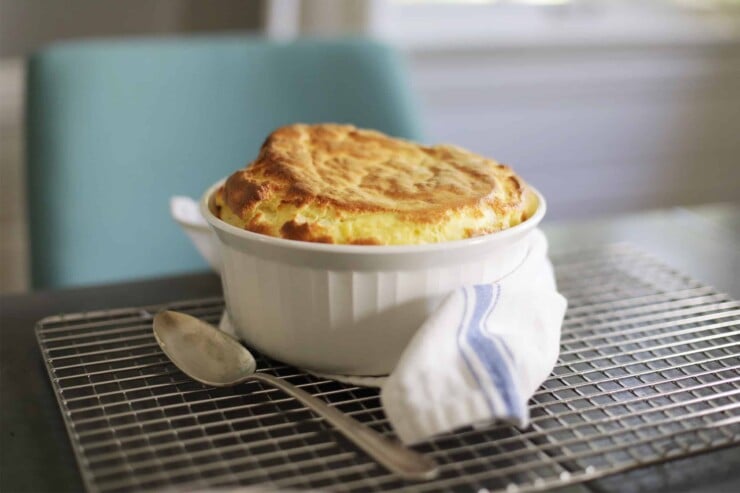
Recipes Inspired By France
Not heading to France quite yet? Here are a few of our favorite classic French recipes to make at home to stoke your wanderlust:
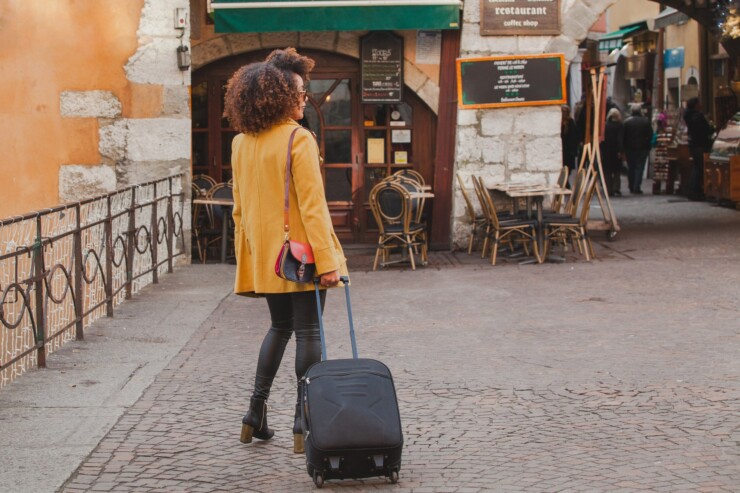
Essential Travel Tips For France
Are you heading to France for your first time (or first time in a while)? You’ll want to read our essential travel tips for France, which cover everything from dining times to tipping and etiquette.
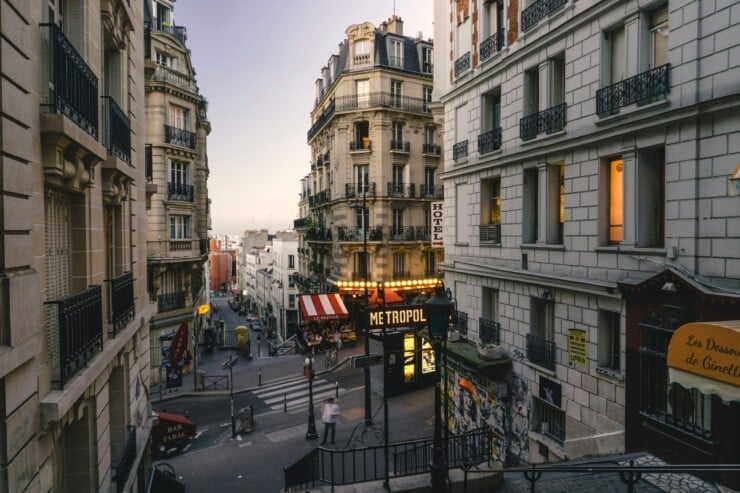
France Travel Guide
For a broader country context, see our free France Travel Guide for tips, recipes, and articles.
Ready to plan? Our team at Salt & Wind Travel specializes in designing tailored South of France journeys, from countryside villa stays to coastal getaways along the Côte d’Azur. Start your trip planning here.