🔑 Quick Answer: France is home to some of the world’s most influential wine regions, including Bordeaux, Burgundy, Champagne, and the Loire Valley. Each region has distinct grape varieties, styles, and tasting experiences, so focus on one or two areas per trip. Plan 5–10 days and visit in spring or fall for the best balance of weather, crowds, and harvest-season energy.
Key Takeaways
- France’s most famous wine regions each offer distinct styles and traditions. From the red blends of Bordeaux to the terroir-driven vineyards of the Burgundy, these areas represent the heart of the world of French wine.
- Understanding France’s wine districts helps travelers plan better wine experiences. Each of France’s key wine regions has its own grape varieties, climate, and appellation rules, shaping the different types of wine produced across the country.
- The best wine regions in France combine great wine, culture, and scenery whether that is cycling through Alsace vineyards, visiting historic châteaux in the Loire Valley, or tasting rosé in Provence.
Real talk: deciding which French wine regions to visit can be really overwhelming. If you love wine, an IRL visit to a French wine region can totally make your trip, be it for world-class bubbles, Pinot Noir, or GSM blends.
But, as one of the world’s biggest wine producers, there is a lot to wrap your head around. Diving into it all may take hours of your time and only leave you unsure where to start or which wine region to visit. But, don’t sweat it: we’re French wine travel experts, so we’ve got you covered!
Why You Should Trust Us
As a French native working in the wine industry and having spent time in vineyards across the globe, I know how special the French wine regions are. I’ve spent my career studying and working in the wine industry in France, Spain (Toro), Mexico City, and the United States (Paso Robles).
Today I specialize in arranging unique experiences in French wine country, from full-day wine tours to intimate tastings at family-run wineries. More often than not, I help visitors understand how wine tasting works in France and how to approach wine producers in a way that respects each region’s traditions.
At Salt & Wind Travel, we specialize in designing food- and wine-focused travel experiences across Europe, including custom France vacation planning. For more than a decade, our team has worked closely with winemakers, sommeliers, and local guides to create immersive itineraries that explore France’s key wine regions through their vineyards, gastronomy, and culture.

What Are French Wine Regions?
French wine regions are geographic areas where wine is produced under the appellation d’origine contrôlée (AOC) system. These regulations define where wine can be produced, which grape varieties may be used, and how wine must be produced.
Many of the most famous French wine districts, including the Bordeaux, Burgundy, and Champagne regions, have a rich history dating back to the Middle Ages, when monasteries carefully mapped vineyard sites and began documenting differences in soil and climate.
Today, France has hundreds of appellations across dozens of wine-growing regions, producing everything from dry whites and fruity reds to sparkling and sweet wines.
What Are the Best Wine Regions in France?
France has many wine-producing areas, but a handful consistently rank among the best wine regions in France for travelers and wine lovers. The best-known wine districts combine historic vineyards, renowned wine producers, distinctive grape varieties, and unforgettable landscapes.
The eight regions below represent some of France’s key wine regions and form the foundation of the world of wine for many travelers.
| Region | Famous For | Main Grapes | Wine Style |
|---|---|---|---|
| Bordeaux | Legendary estates | Cabernet Sauvignon, Merlot | Structured red blends |
| Burgundy | Terroir-driven wines | Pinot Noir, Chardonnay | Elegant fine wine |
| Champagne | Sparkling wine | Chardonnay, Pinot Noir, Pinot Meunier | Traditional method bubbles |
| Rhône Valley | GSM blends | Grenache, Syrah, Mourvèdre | Bold reds |
| Loire Valley | Diverse wines | Chenin Blanc, Sauvignon Blanc | Fresh whites & light reds |
| Provence | Rosé wines | Grenache, Cinsault | Dry rosé |
| Alsace | Aromatic whites | Riesling, Pinot Blanc | Fruity white wines |
| Languedoc | Value wines | Grenache, Carignan | Rich reds |

Eight Famous French Wine Regions To Know
Below, I’ve put together a region-by-region guide to France’s best-known wine districts: what each is known for, how to visit, when to go, and tips to help you make the most of your time there.
Alsace: For World-Class White Wines
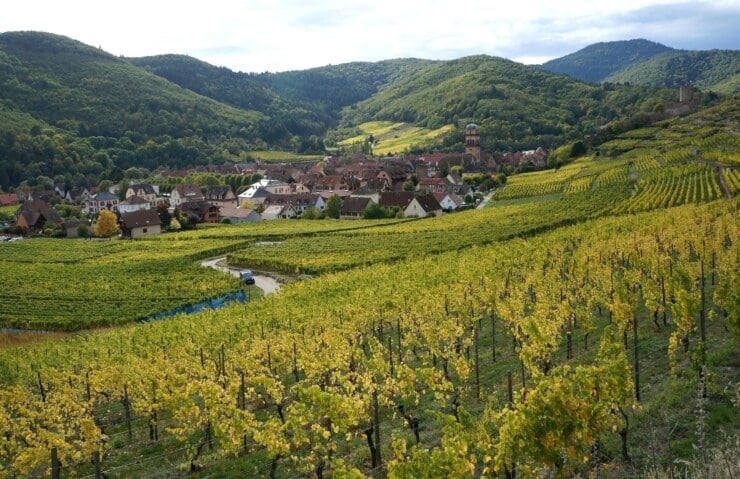
- Where It’s Located: In northeastern France along the German border, the Alsace wine region is a narrow north-to-south wine route with over 51 AOCs, making it compact and easy to explore.
- What It’s Known For: It is best known for aromatic white wines such as Riesling, Gewurztraminer, Sylvaner, and Pinot Gris, as well as prestigious Grand Crus.
- Good To Know: The villages are picturesque, and wineries are close together, so you can see quite a lot in one day. Walk-ins may be accepted during the low season, but reservations are recommended when it’s busy. Beyond wine, the region is ideal for cycling and discovering its Franco-German gastronomy.
- When to Visit: Spring and early autumn are the best times to visit.
- How to Get There: Strasbourg is easily reached by train from Paris.
- Where To Stay: Plan on staying in Colmar, as it places you in the heart of the vineyards.

Bordeaux: For Legendary Wine Estates
- Where It’s Located: In southwest France, about three hours from Paris by high-speed train, Bordeaux is one of the world’s most famous wine regions.
- What It’s Known For: It is mostly known for its blends — Cabernet Sauvignon–dominant wines on the Left Bank and Merlot–based wines on the Right Bank.
- Good To Know: The region is large and spread out, so plan one area per day and book tastings in advance, as many estates require reservations. Beyond wine, you can cycle through vineyards or visit La Cité du Vin in Bordeaux city.
- When to Visit: Spring and autumn are ideal.
- How To Get There: You can take the high-speed TGV train from Paris or fly in from most major French cities.
- Where To Stay: Staying either in a boutique hotel in Bordeaux city or in a village like Saint-Émilion offers two very different but equally memorable experiences.
Burgundy: The Birthplace of Pinot Noir
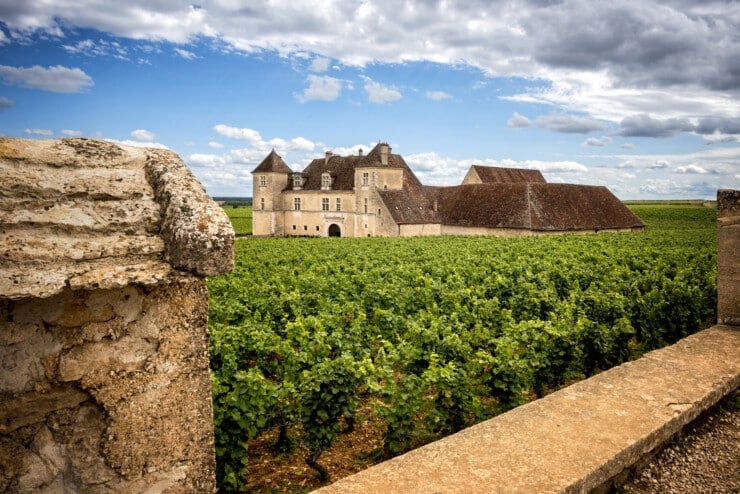
- Where It’s Located: Located between Dijon and Mâcon in central France, Burgundy (Bourgogne) is the birthplace of Pinot Noir and Chardonnay and is defined by its concept of “climats,” precisely mapped vineyard plots and terroir.
- What It’s Known For: With around 100 AOCs divided into Chablis, Côte de Nuits, Côte de Beaune, Côte Chalonnaise, and Mâconnais, the region is small but highly detailed.
- Good To Know: Reservations are strongly recommended, as many top domaines do not accept walk-ins. Burgundy is also a gastronomic destination, home to many renowned restaurants.
- When to Visit: May, September, and October are beautiful times to visit. The Côte d’Or, or “Golden Slope,” earns its name from the sunset light that illuminates the vineyard leaves in autumn, creating truly magical landscapes.
- How To Get There: Paris connects easily by train to Dijon or Beaune, but a car is needed to explore the vineyards.
- Where To Stay: Many of our travel clients prefer countryside hotels, while others prefer luxury hotels or boutique lodging in the main towns of Mâcon, Dijon, or Beaune.

Champagne: For World-Class Bubbles
- Where It’s Located: Just east of Paris, Champagne produces the world’s most iconic sparkling wines from Chardonnay, Pinot Noir, and Pinot Meunier.
- What It’s Known For: The vineyards and houses are relatively close, making it possible to visit several in one or two days.
- Good To Know: The Avenue de Champagne in Épernay is the heart of the region, lined with many of the most prestigious Champagne houses, but you’ll find incredibly small houses all around the region.
Reims and Épernay are the main cities to stay in, and reservations are recommended, especially for major houses. You can do a quick DIY day trip to Champagne but our clients often opt for a private tour with an expert in order to learn not only about the wine but also the region’s rich history. - When to Visit: May, June, and September are ideal months.
- How to Get There: The region is easily accessible by train or car from Paris.
- Where To Stay: Some of our clients prefer the main towns, while others prefer small villages like Hautvilliers or refined luxury hotels in the countryside.
Languedoc-Roussillon: For Under-The-Radar Wine
- Where It’s Located: Along the Mediterranean near Spain, Languedoc is France’s largest planted wine region and one of its most diverse, with over 30 AOCs.
- What It’s Known For: It produces everything from powerful reds to fresh coastal whites.
- Good To Know: The area is quite spread out, so several days are needed to fully appreciate it. Walk-ins are sometimes possible, but booking helps organize your time. Beyond wine, you’ll find beaches, seafood, cycling, and medieval towns like Carcassonne, where hotels can be pretty unique.
- When to Visit: Spring and October are best, as summers can be very hot.
- How to Get There: Montpellier is a convenient entry point by train or plane.
- Where To Stay: There are boutique hotels in Carcassonne, Narbonne, and Montpellier. Or, you can opt for wine estates among the vineyards like Château L’Hospitalet.
Loire Valley: For Wine And Châteaux
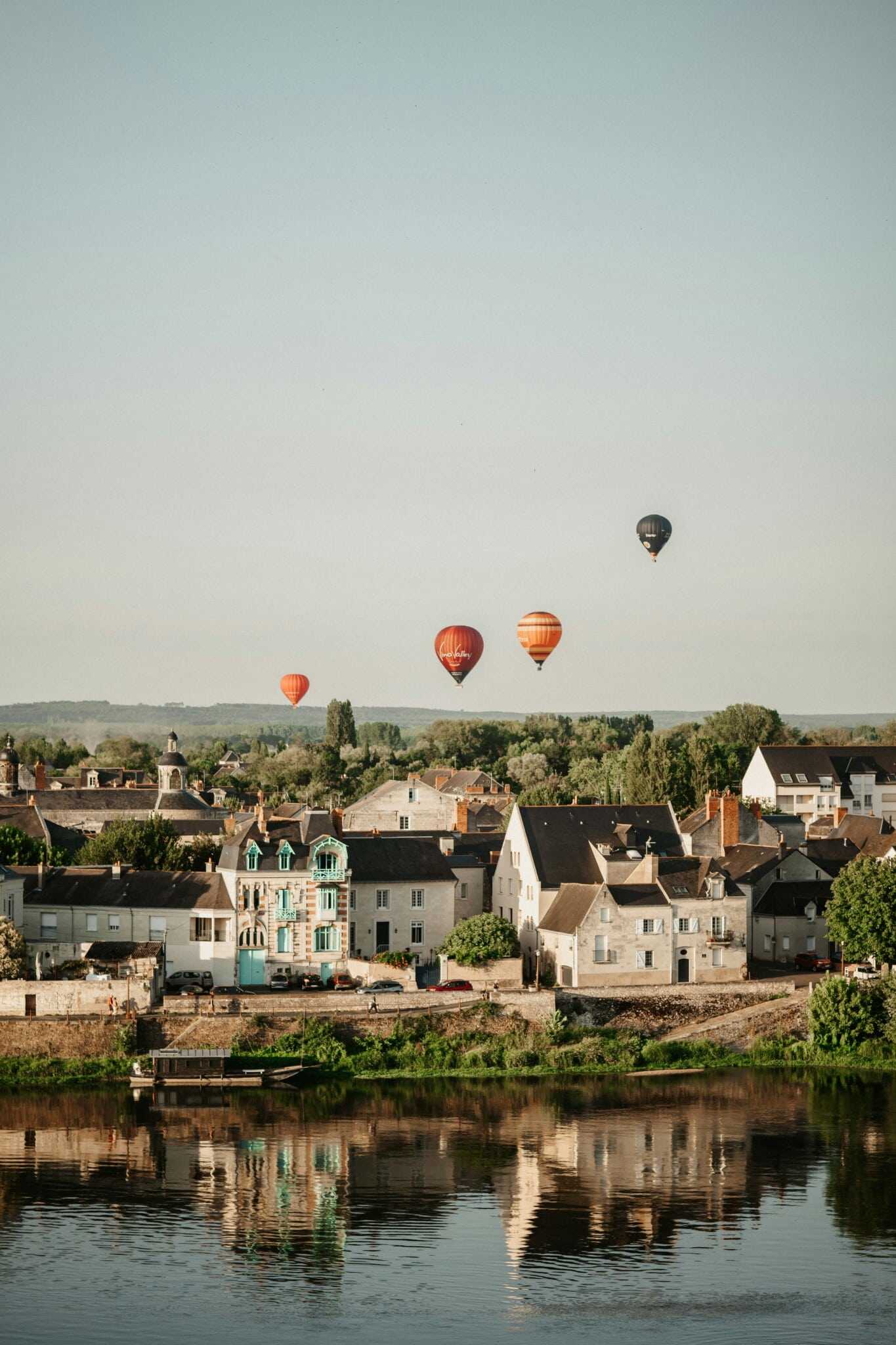
- Where It’s Located: Following the Loire River from the ocean to the heart of the country, this region is southwest of Paris.
- What It’s Known For: The Loire Valley is known for fresh white wines made from Chenin Blanc, Sauvignon Blanc, and Chardonnay, as well as elegant reds, mostly Cabernet Franc.
- Good To Know: The region is spread out, so planning is key, though tastings can sometimes be arranged on short notice. It is equally famous for its châteaux and cycling routes along the river.
- When to Visit: Spring is especially beautiful when gardens bloom.
- How to Get There: Accessible by train or car from Paris or Bordeaux. ,
- Where To Stay: The Loire offers stays ranging from boutique town hotels to countryside château properties, and they tend to be more affordable than similar properties in the better-known wine regions.
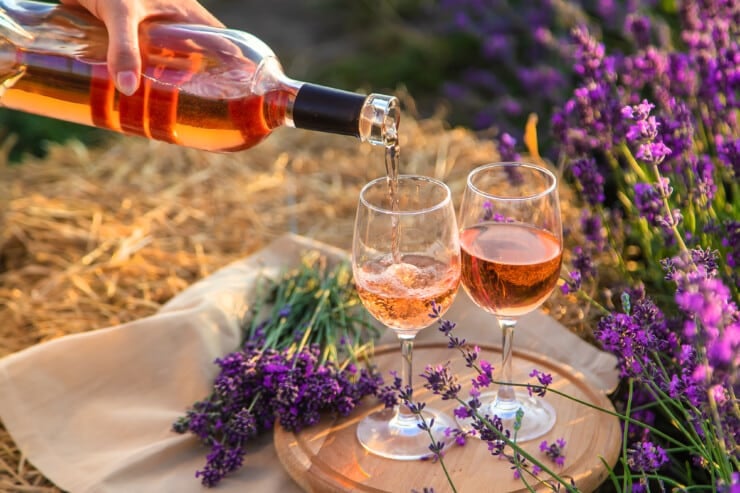
Provence: For Rosé All Day
- Where It’s Located: In the south of France along the Mediterranean, stretching from Avignon to Marseille and beyond.
- What It’s Known For: Provence is synonymous with Côtes de Provence rosé wines. With 8 AOCs, its vineyards stretch between inland hilltop villages and the mediterranean coast.
- Good To Know: The region is spread out and best reached by car, and booking tastings in high season is wise. Beyond wine, visitors come for lavender fields, lively markets, charming villages like Saint-Rémy-de-Provence, and the proximity to the sea with its cute little towns like Cassis or Bandol.
- When to Visit: Spring and autumn offer the best balance of weather and crowds.
- How to Get There: Trains from Paris connect to Avignon, Marseille, or Nice, or you can fly into the region.
- Where To Stay: There is a wide range of accommodations, ranging from boutique hotels in small villages to countryside 5-star luxury and, if you’re staying longer, some of the best villas in France.
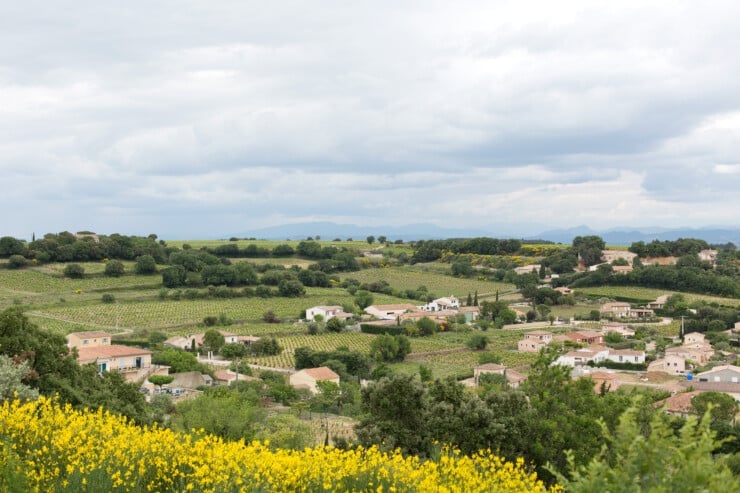

Rhône Valley: For GSM Wine Lovers
- Where It’s Located: Running south from Burgundy toward the Mediterranean along the Rhône River.
- What It’s Known For: The Rhône Valley is divided between the Northern Rhône, starting in Côte Rôtie, known for elegant red wines and aromatic Viognier, and the Southern Rhône, famous for bold red blends of Grenache, Syrah, and Mourvèdre, like those of Châteauneuf-du-Pape.
- Good To Know: With 32 AOCs, this French wine region follows the Rhône River and is fairly spread out, so planning ahead is helpful. Reservations are recommended in well-known appellations.
- When to Visit: Early spring and late autumn are ideal, as summers can be very hot.
- How To Get There: Trains connect to Lyon or Avignon, and then you can take a private transfer, rent a car, or visit the wineries.
- Where To Stay: Stay in Avignon to be near Châteauneuf-du-Pape, in Lyon for Côte Rôtie, or in a vineyard for an immersive experience.
There you have eight of the most famous French wine regions. But, to be honest, that’s just the tip of the iceberg. France is full of incredible wine regions, each with its own wine culture. Other regions, such as Beaujolais, Corsica, Savoy, or Jura, also hold their treasures.
If you want to dive deeper into these French wine regions, our expert travel advisors are here for you. We know experienced drivers, sommeliers, and local guides who understand how each region functions can truly elevate your journey.
Frequently Asked Questions About French Wine Regions
For first-time visitors, the Bordeaux, Champagne, and Burgundy regions are among the best wine regions in France to explore. Bordeaux offers iconic château tastings and historic vineyards, Champagne is easily accessible from Paris and famous for its sparkling wines, and Burgundy provides a deep dive into terroir-driven wines and grand cru vineyards.
Some of the most famous French wine districts include Bordeaux, Burgundy, Champagne, the Rhône Valley, the Loire Valley, Provence, and Alsace. These wine-producing regions are known worldwide for their distinctive grape varieties, historic vineyards, and strict appellation contrôlée classification systems.
The best time to visit France’s wine regions is typically spring (April–June) and early autumn (September–October). During these seasons, vineyards are beautiful, the weather is pleasant, and many wineries offer tastings, tours, and harvest-related events. Autumn harvest season is especially exciting in many of the best wine regions in France.
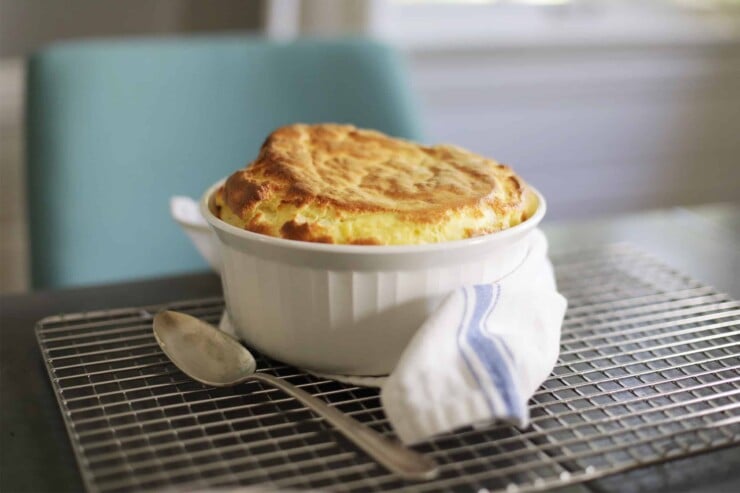
Recipes Inspired By France
Not heading to France quite yet? Here are a few of our favorite classic French recipes to make at home to stoke your wanderlust:
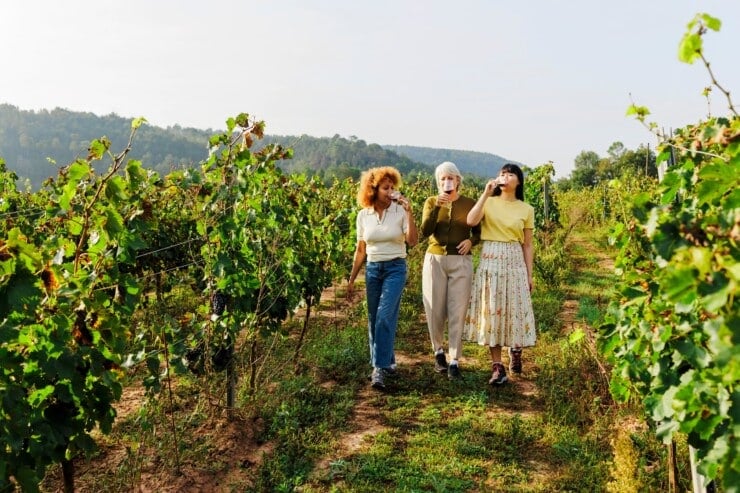
Wine Tasting In France
If you’d like to better understand how tastings work in France — when to book, what to expect, and how to approach wineries with confidence — check out our guide, Wine Tasting in France: Eight Tips You Need to Know.
France Travel Guide
Thinking of traveling to France in real life? Check out our free France Travel Guide for our best travel tips, recipes, and articles on France.
Have Us Plan Your France Trip
Did you know we’re also a boutique travel agency specializing in France travel planning? If you’re looking to plan one of the best trips to France, our France vacation planning services are here to help you plan your perfect itinerary.