🔑 Quick Answer: Aix-en-Provence is one of the easiest bases in southern France for travelers who want Provence at a walkable pace: open-air markets, Cézanne’s landscapes, rosé country at the city’s edge, and the Mediterranean a 30-minute drive away. Best for first-time travelers to Provence, romantic couples, art lovers, and anyone who wants to slow down without going fully rural. Plan on at least 3 nights, ideally 4 to 5 with day trips.
Key Takeaways
- Aix-en-Provence is the most walkable, food-forward base for a first trip to Provence.
- Known for its daily markets, Cézanne heritage, Coteaux d'Aix rosé, calissons, and café life along the Cours Mirabeau.
- Especially well-suited to first-timers, romantic couples, art-and-architecture travelers, and food lovers.
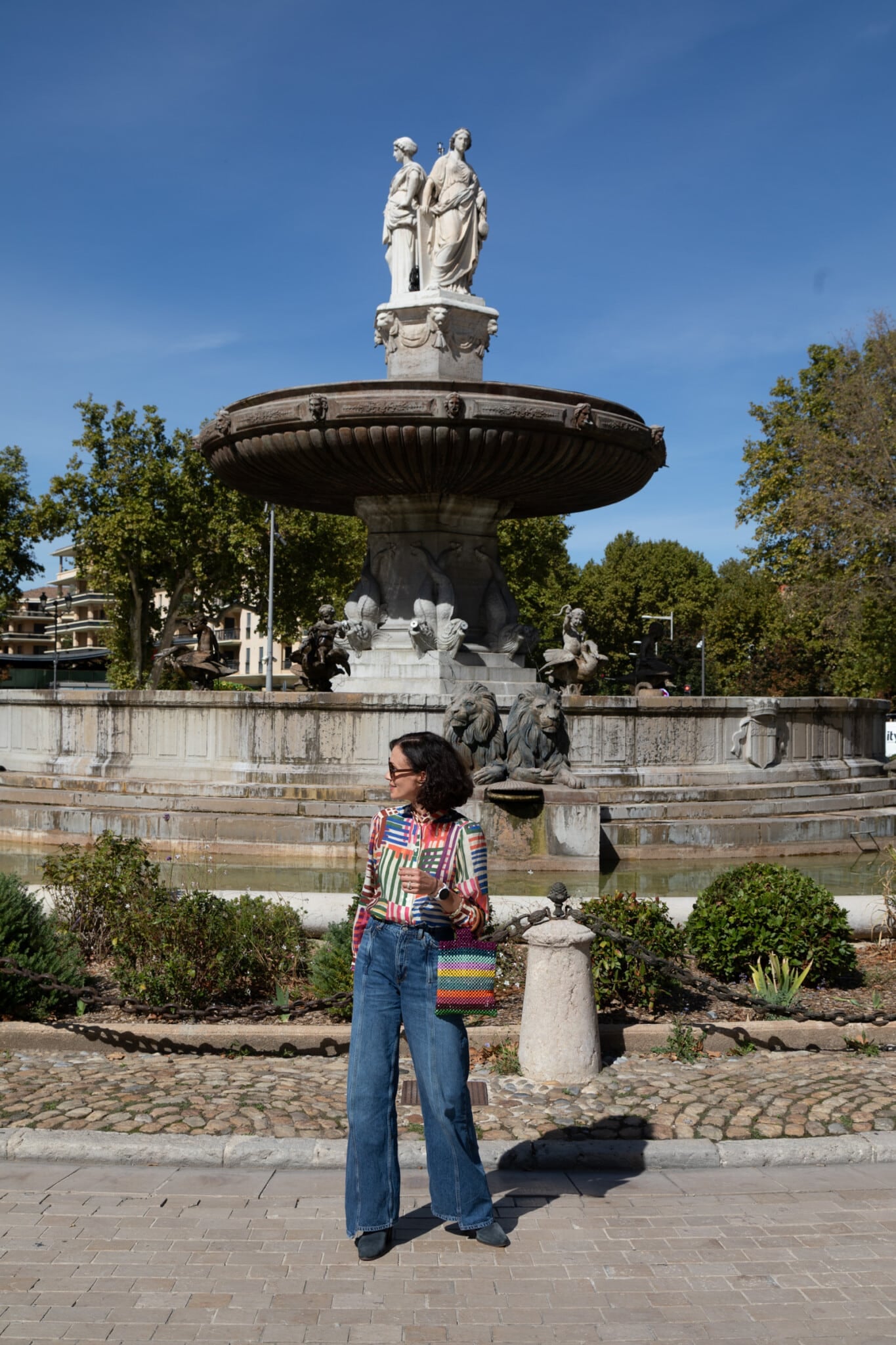
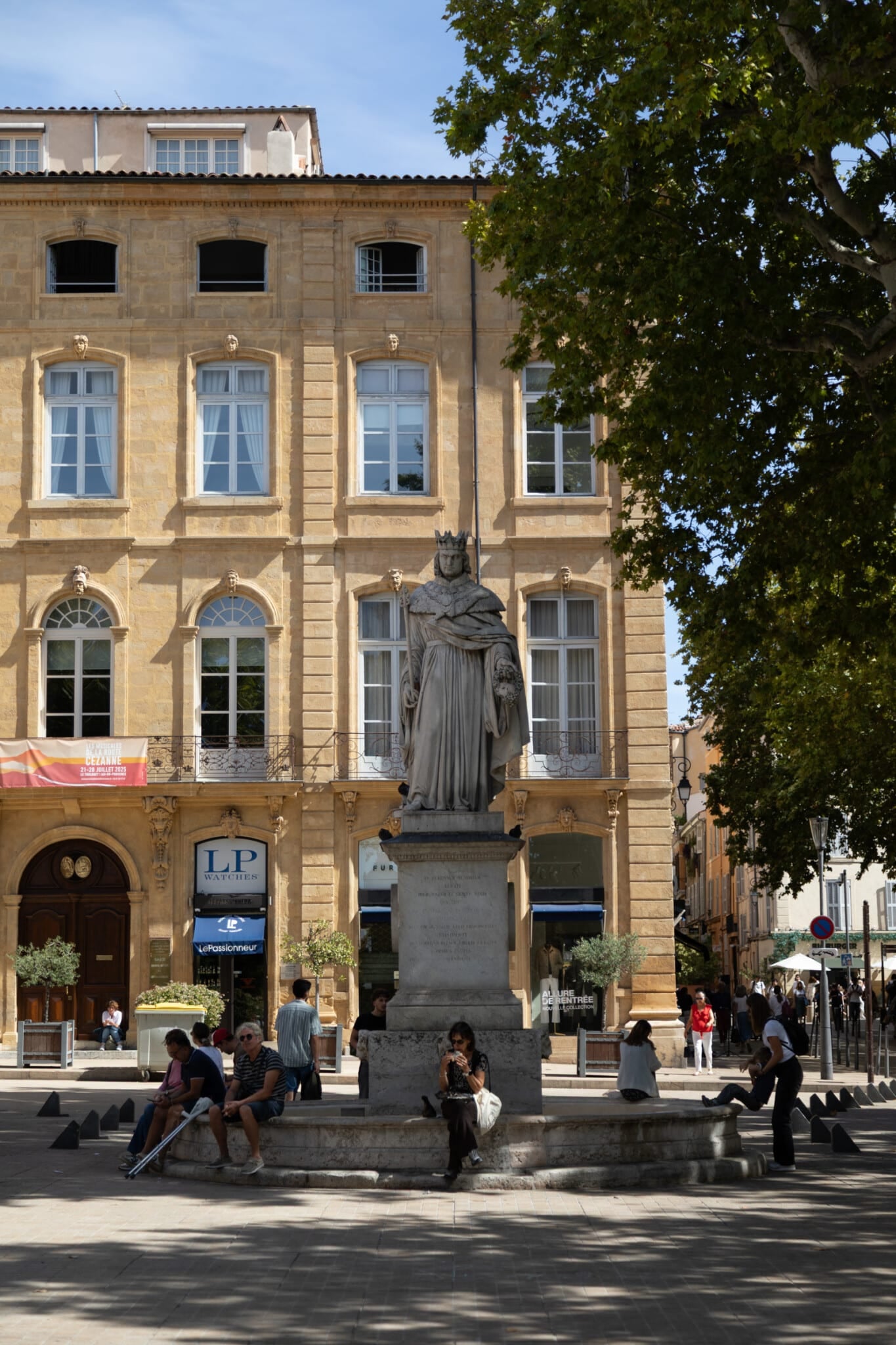
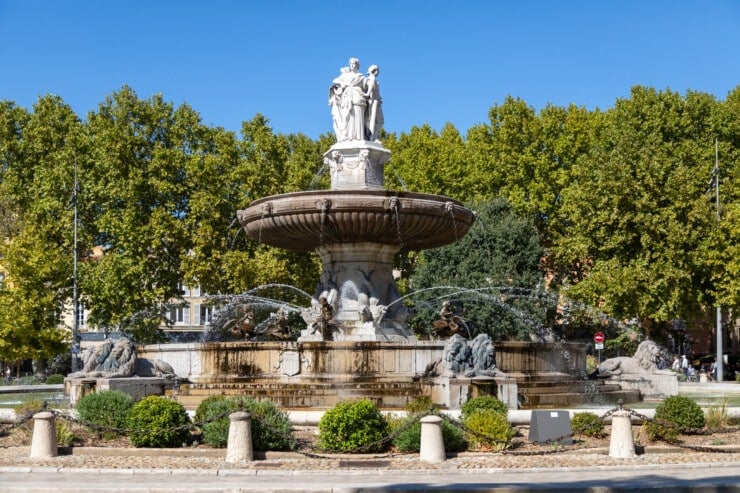
Aix-en-Provence is the Provence you came for, in a city compact enough to walk in an afternoon. The fountains gurgle, the trees shade the main drag of Cours Mirabeau, and the town takes on a golden glow during sunset. The cafés actually fill with locals at aperitif hour, not just visitors. Walking through Aix-en-Provence feels like stepping into a painting, where golden-hued buildings glow in the Mediterranean light and café terraces invite you to linger just a little longer. The first time I visited, I adored it instantly.
Personally, I love Aix because it’s also where I celebrated my engagement! And also because, as a travel planner who lived in Florence, Italy, for 12 years, it takes quite a bit to impress me (living in the center of the Italian Renaissance will do that to a person!), and truthfully, I was simply blown away by Aix-en-Provence. To me, its appeal lies in its ability to offer visitors a perfect blend of history, art, and Provençal charm.
After 10-plus years of sending clients here, we’ve watched first-time travelers arrive expecting a big French city and leave already plotting their next stay. Aix (it rhymes with “ex”) is an inland city in Provence of about 148,000 people. It was founded by the Romans in 123 BCE around its thermal springs (the modern Thermes Sextius spa still sits on the original source), and is a 30-minute drive from the Mediterranean.
Cézanne was born here in 1839, painted Mont Sainte-Victoire from these hills more than 60 times, and his fingerprints are still all over the city if you know where to look.
So why do we send so many clients to Aix? Because it solves a real problem. Provence’s hilltop villages are gorgeous, but staying in one for a full week can feel slow if you like a little energy. The French Riviera has loads of energy but can be lacking in alfresco markets, olive oil orchards, lavender, and the rhythm of a long lunch.
Aix sits right in the middle. Wake up to the produce market on Place Richelme, drive 25 minutes to a Côteaux d’Aix rosé tasting, be back in time for an aperitif and a plate of olives on the Cours Mirabeau as the light turns honey-colored over the limestone. If it’s your first time in Provence, or you want one base for a week that’s not a villa, the town of Aix is probably it.
Why Trust Us With Aix-en-Provence
At Salt & Wind Travel, France is one of our core destinations, and Provence is one we return to constantly for both editorial research and custom client trips. Our founder, Aida Mollenkamp, first visited Aix more than 20 years ago, and members of our team have lived and studied in southern France, including in Aix itself. Today we plan Provence trips that balance markets, wineries, art, slow afternoons, and the day-trip logistics that make or break a week in the region.
Aix-en-Provence At A Glance
- Population: ~148,000
- Founded: 123 BCE (as Aquae Sextiae, by Roman consul Sextius Calvinus)
- Region: Provence-Alpes-Côte d’Azur, southern France
- Best time to visit: May–June, September–early October
- Nights to plan: 3 minimum, 4 to 5 ideal
- Closest airport: Marseille Provence (MRS), 30-minute drive
- From Paris: TGV, ~3 hours direct to Aix-en-Provence TGV station
- Known for: daily markets, Cézanne heritage, Côteaux d’Aix rosé, calissons, Cours Mirabeau
Where Is Aix-en-Provence?
Aix-en-Provence sits inland in the Provence-Alpes-Côte d’Azur region of southern France, about 30 minutes north of Marseille and 30 minutes from the Mediterranean coast. From Paris, the TGV takes around 3 hours to the Aix-en-Provence TGV station (about 20 minutes outside town). The closest airport is Marseille Provence (MRS), roughly a 30-minute drive. If you’re driving from Paris, plan on 7 hours.
Geographically, Aix is the natural pivot point between three very different Provences: the Mediterranean coast (Cassis, the Calanques, Marseille), the Luberon countryside, and the rosé country of the Côteaux d’Aix and Sainte-Victoire foothills.
Using Aix as your base? Our guide to exploring the rest of Provence covers the Luberon villages, lavender, and wine country.
Who Aix-en-Provence Is Best For
As someone who loves a walkable city, Aix is a sho0-in with its Old Town where narrow streets open onto sunlit squares filled with fountains and cafés. The pace of life encourages you to slow down, savor local cuisine, and immerse yourself in the rhythm of daily life.
I also love Aix as it is an ideal base for exploring the region Provence, with easy access to lavender fields, vineyards, and hilltop villages. The lavender fields in particular are worth exploring if you’re there in the right season; in fact, it was in those very lavender fields that my husband proposed! So, if romance is what you’re after on your trip, in my experience, Aix is the perfect base station.
As an art historian, I also have to admit that culturally, Aix punches well above its weight. From art museums and historic architecture to music festivals and open-air markets, there is always something to see or experience. Whether you are interested in history, food, art, or simply relaxing in a beautiful setting, Aix-en-Provence has it all.
We frequently recommend Aix because it spans many types of trips. Here’s where it tends to really land.
Romantic Couples
Picture this: an early-evening aperitif at a café on Place d’Albertas (arguably the prettiest small square in town), a slow walk back to a 17th-century mansion turned hotel, dinner at a candlelit terrace in the Mazarin quarter, a nightcap at a wine bar that doesn’t show up on TikTok. Aix doesn’t need a special occasion to feel romantic, but it absolutely rises to one.
First-Time Provence Travelers
If it’s your first trip to Provence, this is the gentlest landing. The city has enough infrastructure for logistics to feel easy, and enough character that you’re not just in a transit hub. Every classic Provençal experience (market, winery, lavender field, hilltop village, Mediterranean port) is within a day’s drive. We send a lot of first-timers here for exactly that reason.
Art And Architecture Lovers
Where do you want us to start? Cézanne, obviously. Atelier Cézanne, the Bibémus quarries he painted obsessively, and Mont Sainte-Victoire itself on the eastern horizon. Musée Granet, the city’s main fine-arts museum, holds eight Cézannes alongside works by Picasso and Giacometti, as well as a strong modern collection.
The Caumont Center d’Art in the Mazarin quarter is one of our favorite small museums anywhere in France. Cathédrale Saint-Sauveur, with its Romanesque-to-Gothic build and working cloister, houses Nicolas Froment’s Burning Bush triptych from the 1470s. Place d’Albertas is the most photographed square in town for good reason.
On the modernist side, Fondation Vasarely sits on the western outskirts and is the place to see the kinetic geometric work in the scale Vasarely intended. And about a half hour north of the city, Château La Coste is a working vineyard with sculptures and pavilions by Tadao Ando, Frank Gehry, Louise Bourgeois, and Renzo Piano. That last one alone is worth the trip.
Food-Focused Travelers
The food culture in Aix lives in everyday moments: the daily produce market on Place Richelme, the bigger market on Place des Prêcheurs on Tuesday, Thursday, and Saturday, calissons (the city’s iconic almond-and-melon candy) from a maker like Confiserie du Roy René, who’s been making them in Aix since 1920, rosé at golden hour, and tomatoes, basil, olives, stone fruit, and olive oil that show up on every menu through the warm months. You eat well here without trying.
Retired Couples And Slower Travelers
For travelers who want beauty and culture without the intensity of Paris, Nice, or Marseille, Aix is one of the best small cities in France. Train access in, a walkable center, manageable size, a real café and museum culture, and the option to add or skip a day trip without committing to a long drive. Mobility-friendly hotels are easier to find here than in a hilltop village.
Who Might Prefer Somewhere Else
Honestly? If you came for a beach week, head to the Côte d’Azur. If you want full countryside immersion, base in a Luberon village like Lourmarin or Ménerbes instead. Aix is a small city, not a hamlet. That’s exactly what most of our clients end up loving about it, but it’s worth knowing what you’re choosing.
Aix vs. Other Provence Bases: How To Choose
| Destination | Best For | Vibe | Biggest Advantage |
|---|---|---|---|
| Aix-en-Provence | First-time Provence travelers | Elegant, walkable, relaxed | Easy balance of culture, food, and logistics |
| Nice | Riviera-focused travelers | Glamorous, energetic | International airport and beaches |
| Avignon | History lovers | Medieval, historic | Rhône Valley access |
| Luberon Villages | Villa stays and countryside lovers | Rural, quiet | Scenic Provence immersion |
| Marseille | Urban travelers and food lovers | Gritty, coastal, multicultural | Big-city energy and sea access |
What To Know Before Visiting Aix-en-Provence
A few things we wish more travelers knew going in.
Stay At Least 3 Nights
Three nights is the minimum we’ll recommend (two full days plus arrival and departure), and 4 to 5 is the sweet spot once you start adding day trips: Cassis and the Calanques, the Luberon, Mont Sainte-Victoire, and a Côteaux d’Aix winery afternoon.
Don’t Try To Do Everything
This is the biggest mistake we see in Provence in general, and Aix in particular. The city rewards travelers who linger. Pick two or three things you really want to do, and leave room for the long lunches, the second espresso, the unplanned detour into a market or local boutique. The day you over-plan is the day you miss the actual feeling of being here.
You May Not Need A Car Right Away
The walkable center plus TGV access means you don’t necessarily need a rental car for the first few days. Get into town from the Aix-en-Provence TGV station or Marseille airport by transfer or shuttle, then walk for a couple of days. A car becomes really useful once you start exploring wineries, the Luberon, or Mont Sainte-Victoire. A lot of our clients pick one up midway through the trip rather than from day one. It saves on parking, and old-town parking is a real concern.
Time Your Visit Around The Heat
On the weather side, July and August bring lively evenings and the Festival d’Aix-en-Provence (the city’s renowned international opera festival), but also serious heat and crowds. If you’re traveling in peak summer, work with the heat rather than against it. Market in the morning, retreat after lunch, reemerge for an aperitif hour. For milder weather and fewer crowds, May, June, September, and early October are the sweet spots. Lavender season runs roughly mid-June through mid-July if that’s on your list.
Where To Stay In Aix-en-Provence
Aix is small enough that almost anywhere in or just outside the center works, but the neighborhood you choose does shape the trip.
- Old Town (Vieil Aix) is the medieval core: narrow lanes, daily markets, most cafés and shops, and the heaviest foot traffic. Best for first-time visitors who want to walk out the door and be in the middle of everything.
- Mazarin Quarter is the elegant 17th-century quarter just south of the Cours Mirabeau. Quieter, residential, full of hôtels particuliers (the grand townhouses), and home to the Caumont Center d’Art. Best for return visitors or anyone who wants a slightly slower pace within walking distance of the center.
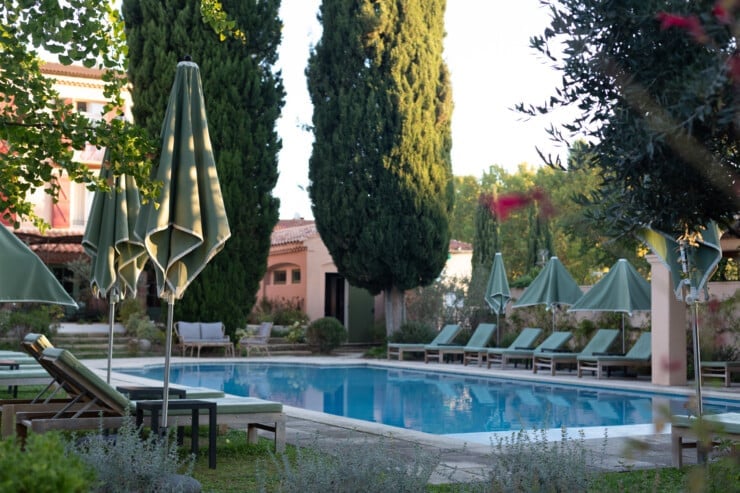
- Edge of town puts you in a garden, often with a pool, usually a 10-to-20-minute walk from the center. Best for travelers who want a true retreat at the end of the day. A few properties we like:
- Hotel Le Pigonnet sits about a 10-minute walk from the historic center in its own gardens. Recently refreshed, with a lovely spa and pool. A favorite for couples who want a five-star hotel with grounds, not a city-center boutique.
- Villa Gallici is a historic property in a residential neighborhood on the edge of town, with the feel of a private villa surrounded by gardens. The best choice when “escape” is the main brief.
Inside the old town, there are boutique hotels that we book regularly. Because rate access and perks vary by season, we usually walk full-service clients through the options based on what’s actually open and which rate band it falls into. If you’d like a tailored pick, get in touch, and we’ll send recommendations matched to your trip.
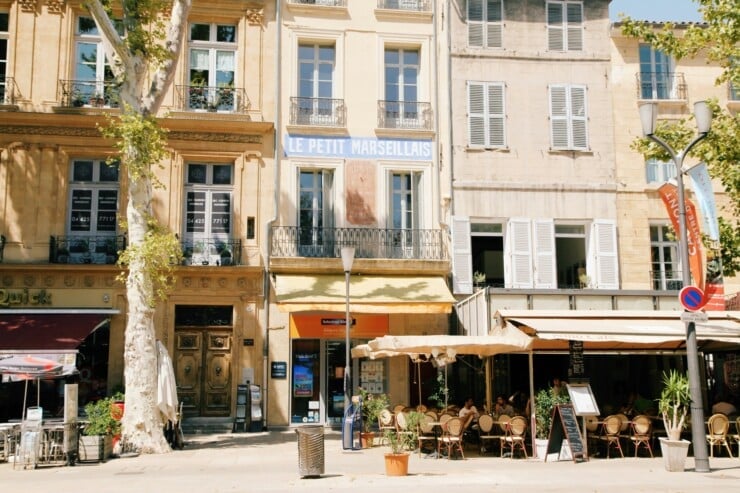
How To Spend 3 Days In Aix-en-Provence
A balanced 3-day itinerary that pairs the city itself with a day in the surrounding countryside or along the coast. Adjust the order based on which day Place des Prêcheurs market falls on (Tuesday, Thursday, or Saturday).
Day 1: Old Town And Cézanne
Start at the Place Richelme produce market when it opens (the locals’ market, daily). Walk the Cours Mirabeau and stop for a café crème. Pick up calissons at Confiserie du Roy René. Lunch at a bistro in the old town. In the afternoon, walk up to Atelier Cézanne, the studio Cézanne used for the last four years of his life, then come back down through the city for an aperitif on Place d’Albertas. Dinner in the Mazarin quarter.
Day 2: Art Morning, Countryside Afternoon
Catch the big market at Place des Prêcheurs (if it’s a market day) and pick up something for a picnic. Spend a couple of hours at Musée Granet for the Cézannes and the modern collection, or at the Caumont Centre d’Art for the rotating exhibitions. Long lunch. In the afternoon, drive out toward Mont Sainte-Victoire with a stop at a Côteaux d’Aix winery.
Day 3: The Coast And The Calanques
Drive south to Cassis (about 45 minutes). Take a small-boat tour into the Calanques National Park to see the white limestone fjords from the water (a few hours; half-day options widely available). Lunch in the Cassis port. Return to Aix in the late afternoon and finish the trip with one more long dinner.
Best Day Trips From Aix-en-Provence
| Day Trip | Best For | Why Go |
|---|---|---|
| Cassis | Wine and seaside lovers | Mediterranean port vibes and coastal scenery |
| Luberon Villages | Countryside and village seekers | Classic Provence villages and markets |
| Wine Country | Rosé and food travelers | Olive oil, wineries, and Provençal agriculture |
| Camargue | Outdoor and horseback riding travelers | Wild landscapes, wetlands, and rustic Provence |
One of Aix’s biggest advantages is its location. The countryside and the coast are both within an easy day’s drive.
Cassis And The Calanques
A 45-minute drive south. Cassis itself is a working fishing port, with the small Cassis AOC (one of the few French appellations that’s primarily white wine) on the hillsides above. But the real draw is the Calanques National Park, the dramatic white-limestone fjords carved into the Mediterranean coast between Cassis and Marseille.
The Luberon
The classic Provence villages: Lourmarin, Ménerbes, Gordes, Roussillon, Bonnieux. About an hour north. Markets, lavender (late June into July), antique-buying, and rosé. The Luberon is also a great place to base later in a trip if you decide an Aix base isn’t enough.
Coteaux d’Aix Wine Country
The AOC rosé country starts right at the city’s edge, so you can go wine tasting in minutes. Domaines range from small family operations to architectural showpieces like Château La Coste. A half day if you want one estate plus lunch; a full day for two or three.
Mont Sainte-Victoire
The mountain Cézanne painted obsessively, just east of town. Hike it, drive its perimeter through the villages he knew, or visit the wineries at its foot. Best paired with the Atelier Cézanne for a full Cézanne day.
Marseille
A 30-minute drive or train. Skip it if you’re nervous about big-city Provence, embrace it if you want a totally different energy and the best bouillabaisse on the coast. The MuCEM (Museum of European and Mediterranean Civilizations) on the waterfront is genuinely outstanding.
Camargue
About 90 minutes west. White horses, pink flamingos, salt flats, gardian cowboy culture, the walled town of Aigues-Mortes. A rustic and very different side of southern France. Better as a full day or an overnight.
Frequently Asked Questions About Aix-en-Provence
Three nights is the realistic minimum to enjoy the city itself: two full days plus arrival and departure. Four to five nights is the sweet spot if you want time for day trips to Cassis and the Calanques, the Luberon, Mont Sainte-Victoire, or a Côteaux d'Aix winery afternoon. For stays longer than five nights, most travelers branch out to a second Provence base.
Yes, especially if it's your first time in Provence. Aix offers the markets, rosé country, Cézanne landscapes, and café culture that people travel to Provence for, all from a walkable city base that makes logistics easy. It's particularly well-suited to first-timers, romantic couples, and travelers who want to slow down without going fully rural.
"Aix" rhymes with the English word "ex." The full name is roughly eks-ahn-pro-VAHNS, with the "en" pronounced as a soft nasal sound. Locals almost always shorten it to just "Aix" in conversation. You'll see both forms used interchangeably in signage and on train tickets.
These are totally different trips. Aix is more walkable, more food- and market-focused, and better for first-time Provence travelers who want a base near the coast. Avignon is grander and more historic (the Papal Palace, the Pont d'Avignon), better positioned for the Vaucluse and northern Provence, and especially compelling during the July theater festival. Many of our clients do both.
May, June, September, and early October are the sweet spots: warm but not hot, gardens and vineyards in full swing, and crowds manageable. July and August are beautiful but hot and busy, with the upside of the Festival d'Aix-en-Provence opera festival. Winter is quiet and atmospheric, with quieter streets and fewer dining options.
Not for the city itself. Aix is compact and walkable, and the Aix-en-Provence TGV station and Marseille airport are both easy to reach by transfer or shuttle. You'll want a car for day trips to wineries, the Luberon, Mont Sainte-Victoire, and the Camargue. Many travelers pick up a rental midway through their stay rather than from day one.
You can, and a half day is enough to walk the Cours Mirabeau, see Place d'Albertas and the cathedral, browse a market, and have lunch. But Aix really comes alive in the late afternoon and evening, and it deserves an overnight if your schedule allows.
Five things, in roughly this order: its daily markets and café culture, its connection to Paul Cézanne (born here, painted Mont Sainte-Victoire from these hills), its Côteaux d'Aix rosé country, calissons (the city's almond-and-melon candy), and the elegant Cours Mirabeau, the plane-tree-lined boulevard that defines the historic center.
Planning A Trip To Aix-en-Provence
Aix is one of those places that grows on people. Travelers arrive expecting a quick stop and end up extending. They come for Cézanne and leave talking about the morning market. They come for rosé and leave with the name of a calisson maker they want to write to in October.
If you’re starting to think seriously about Provence, we’d love to help. We plan custom trips to France around exactly this kind of travel: slow, food- and culture-forward, anchored by the people and places we’ve spent years getting to know. We can tell you which hotels are actually worth the rate this season, which wineries are open and worth your morning, which market days to plan around, and which day trips will work best for your group.
Get in touch and tell us where you’re dreaming of going and what matters most. We’ll come back with ideas you won’t find on a search results page.
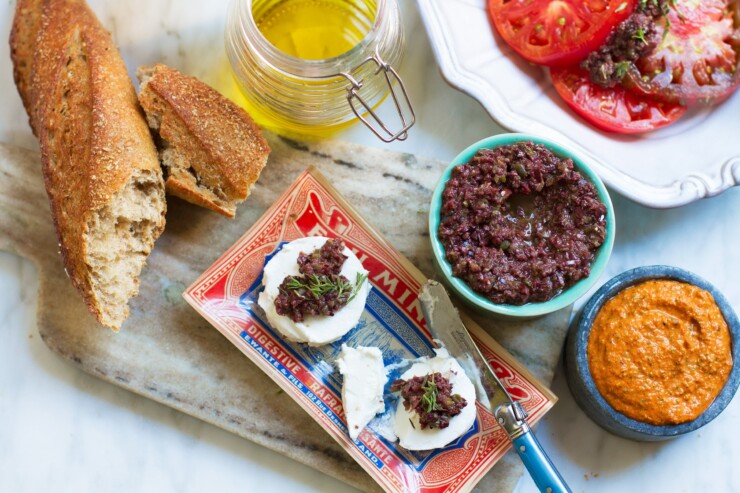
Recipes Inspired By France
Not heading to France quite yet? Here are a few of our favorite classic French recipes to make at home to stoke your wanderlust:
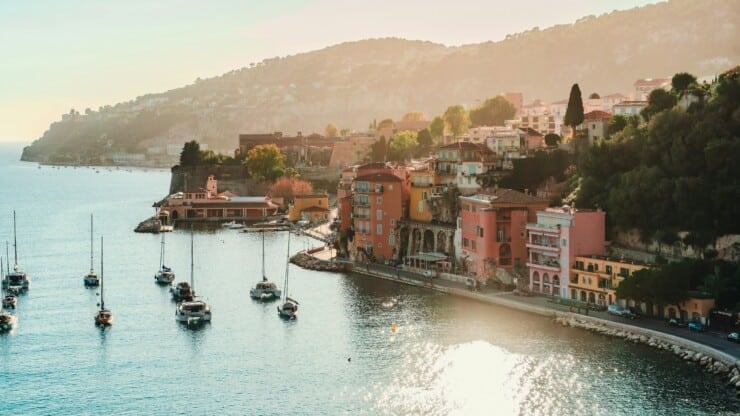
South of France Guide
Aix is one base in a region stretching from the Spanish to the Italian border. If you’re still deciding whether to anchor your trip in Provence, the French Riviera, or the under-the-radar Languedoc (or thinking about combining two of them), our South of France Travel Guide is the natural next read. It compares all three sub-regions side by side, covers what each is best for, and helps you decide where to base yourself.
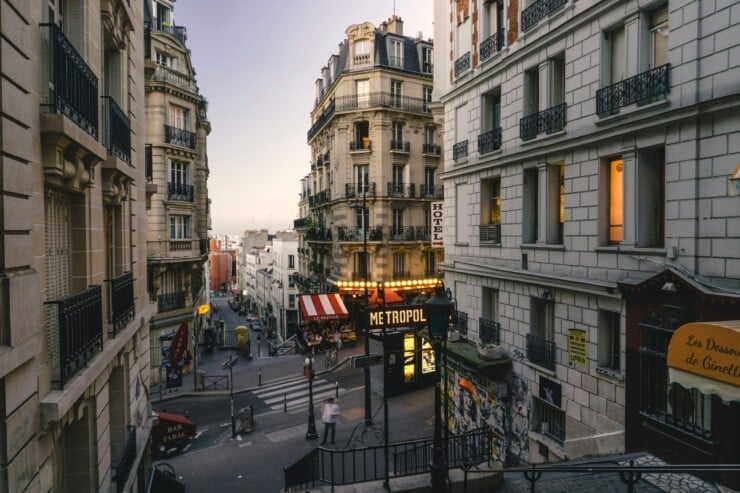
France Travel Guide
Thinking of traveling to France in real life? Check out our free France Travel Guide for our best travel tips, recipes, and articles on France.
Planning a Trip to the South of France
If you’re planning your first trip—or trying to determine the best way to structure your itinerary—our team at Salt & Wind Travel specializes in designing tailored South of France journeys, from countryside villa stays to coastal getaways along the Côte d’Azur.