
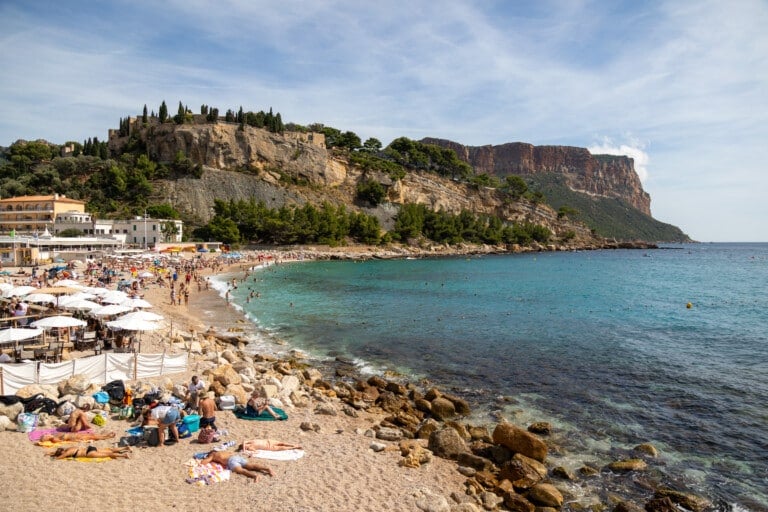
Our Provence travel guide is written for travelers who want the markets, hilltop villages, and rosé-soaked lunches that make this the most beloved corner of southern France.
Provence is the France of lavender fields, Roman ruins, and long tables under plane trees, where the day is built around what’s fresh at the market. This guide covers where to stay, what to do, what to eat and drink, and how to plan a trip that leans into the region’s slow, sensory rhythm.
Why Trust Us
Provence is one of the regions we know best. Members of our team have lived and studied across it, in Aix-en-Provence, Toulon, Hyères, and Lourmarin, and our founder, Aida, has traveled the south of France more than twenty times, from boating along the Rhône to tasting through Bandol and the Luberon. We’ve designed more than sixty custom South of France itineraries for couples, families, and friends.
We plan trips for a living, too. Every hotel, village, and restaurant in this guide is one we’ve been to in person or booked for clients, not one we pulled off a list. We design fully custom itineraries rather than resell packages, and we hold WSET Level 2 wine credentials, which helps when the rosé starts flowing.
Where to Stay in Provence
Provence rewards picking one or two bases and exploring by day trip rather than moving constantly. Where you stay depends on whether you want a lively city, a countryside village, or a coastal port.
- Aix-en-Provence: elegant boulevards, fountains, a great art scene, and superb markets. The easiest, most central base. See our full Aix-en-Provence guide.
- Lourmarin & the Luberon: our clients’ favorite countryside base, within reach of Gordes, Roussillon, and Ménerbes.
- Avignon: historic, walkable, and served by the TGV, an easy hop from Paris or Lyon.
- Saint-Rémy-de-Provence: a tiny, chic village surrounded by olive groves and Van Gogh country.
- Cassis: a pretty coastal port at the edge of the Calanques, worth a night or two for the sea and white wine.
Best Things to Do in Provence
The magic of Provence is in its villages, markets, and landscapes. Wander the hilltop villages of the Luberon (Gordes, Roussillon, Ménerbes), time a visit for the lavender bloom on the Plateau de Valensole, and shop the weekly markets that anchor local life. Beyond that, don’t miss the Roman aqueduct at Pont du Gard, the dramatic Gorges du Verdon, the Calanques near Cassis, and the Van Gogh and Cézanne trails around Saint-Rémy and Aix.
Where to Eat & Drink in Provence
Provençal cooking is Mediterranean at heart: olive oil, tomatoes, herbs, seafood, and sun-ripened produce. Look for ratatouille, tapenade, and bouillabaisse, and let the markets guide your meals. In the glass, this is rosé country, the most-produced rosé in the world, with more structured reds and whites from Bandol and Cassis along the coast.
Provence Wine
Wine is inseparable from Provence. The pale rosés you associate with summer are made throughout the region, while Bandol produces age-worthy reds and Cassis is known for crisp whites. Many estates are family-run and take visitors by appointment, so it pays to plan ahead. See our tips on wine tasting in France and the wider French wine regions.
Sample Provence Itinerary (5 Days)
- Days 1–2: Base in Aix-en-Provence for the markets, museums, and nearby Cézanne country.
- Day 3: The Luberon villages, Gordes and Roussillon, with a long village lunch.
- Day 4: Lavender on the Plateau de Valensole (late June to mid-July) or the Pont du Gard.
- Day 5: The coast at Cassis and the Calanques.
We tailor the pace, the lodging, and the reservations to how you like to travel.
Best Time to Visit & Getting Around
May to June and September to October are the best months, with warm weather, thinner crowds, and either spring blossoms or the harvest. Lavender peaks from late June to mid-July.
We steer travelers away from high summer, when the roads are busy, prices climb, and the heat is intense. You’ll want a car to reach the villages, wine country, and markets, though Aix and Avignon are easy to reach by train.
Provence Travel FAQ
When is the best time to see lavender in Provence?
The lavender bloom runs from late June through mid-July, before the commercial harvest, with the Plateau de Valensole and the Luberon among the best places to see it.
How many days do you need in Provence?
Five to seven days lets you pair a city base like Aix with the Luberon villages and a taste of the coast without rushing. It’s also easy to combine with the French Riviera on a longer trip.
Do you need a car in Provence?
Yes, for the villages, vineyards, and countryside markets. Aix and Avignon are reachable by train, but a car (or a private driver for wine days) opens up the region.
What’s the difference between Provence and the French Riviera?
Provence is the inland and lightly-coastal area of lavender, hilltop villages, and markets. The French Riviera (Côte d’Azur) is the glamorous coastal strip from Cassis to the Italian border. They border each other, so many travelers combine both.
Which is the best town to base in Provence?
Aix-en-Provence is the easiest and most central. For a countryside stay, Lourmarin puts you within reach of the Luberon villages. Avignon is best if you’re arriving by train.
Plan Your Provence Trip With Us
You’ve been inspired. Now let us do the heavy lifting. Book a complimentary Discovery Call and a Salt & Wind travel planner will map out a trip worth taking, plus a quote to make it happen. No cookie-cutter itineraries, no tourist traps. Start Planning →
Here are a few links we trust:
- Apartments: Use code SaltandWindTravel/AM when booking with Plum Guide.
- Tours: Book in-depth tours with Context Travel.
- Shop: See our favorite travel essentials.
Looking for more of France? Head back to our France Travel Guide, or read our wider South of France guide.