Salt & Wind Travel

California Cheese Fondue Recipe

🔑 Quick Answer: This California cheese fondue recipe takes the classic Alpine technique and builds it entirely on California ingredients: Real California Toma-style cheese for the melt, Monterey Jack to soften it, and aged Gouda for depth, plus dry California white wine, garlic, and lemon. It takes just over 30 minutes, serves six, and you can make almost everything ahead.

cheese fondue recipe
– In This Article –

Okay, a hearty cheese fondue recipe might not be what comes to mind when you picture California. It’s a place known for sunshine, palm trees, and sandy beaches. But my corner of the state looks pretty different for much of the year. 

I live in the Eastern Sierra at the base of Mammoth Mountain, an area sometimes called the “California Alps” thanks to its high elevations, dramatic landscapes, and serious skiing. So, when winter arrives, we entertain a lot after days of skiing or outdoor adventures. 

And few things revive a cold, hungry group quite like a bubbling pot of cheese fondue. Melty fondue has become an annual tradition at our house, thanks in part to my brother-in-law, who used to live in the Swiss Alps and has strong opinions about how it should be made.

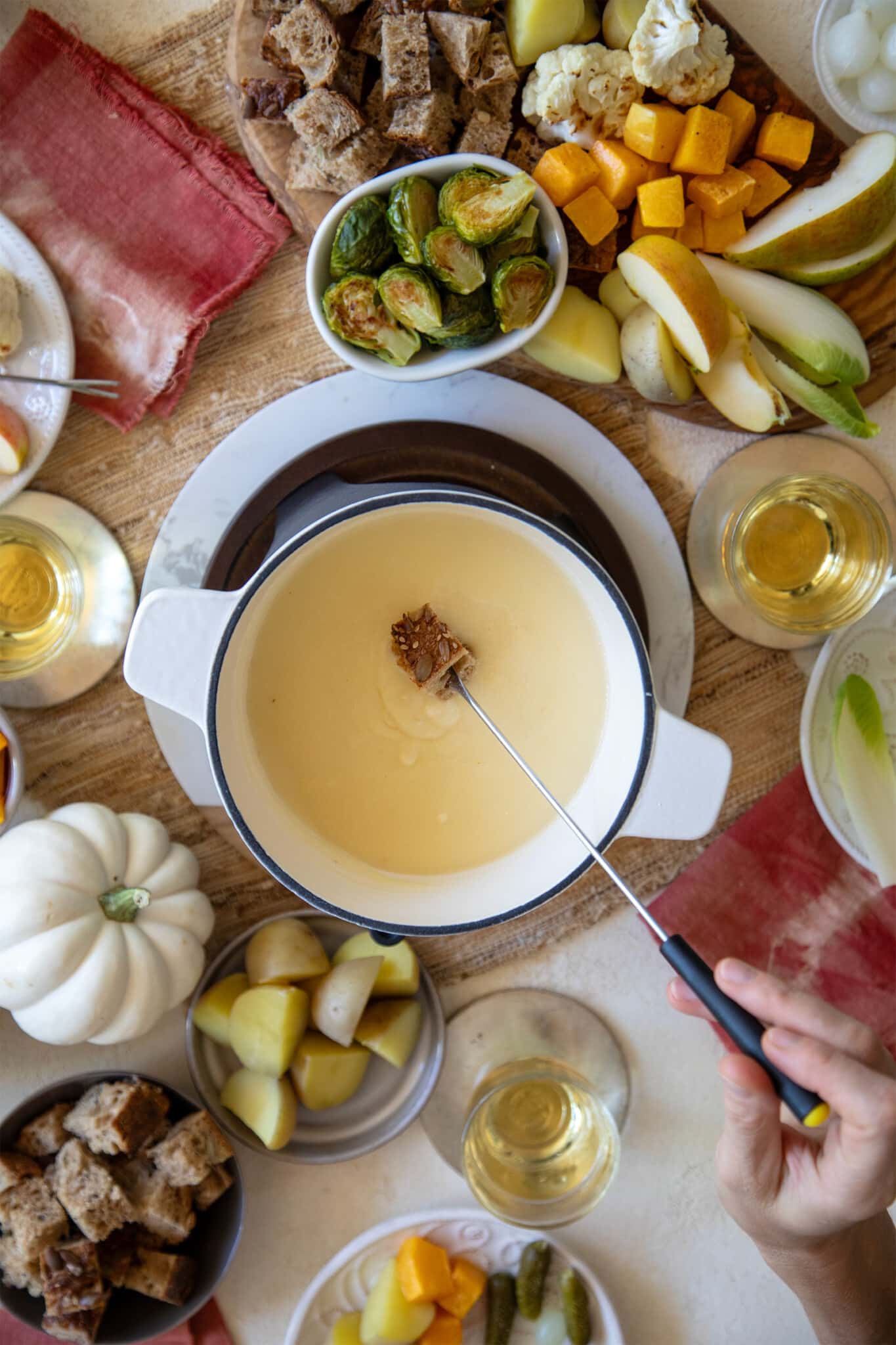
Here I’m making a California version, because we have remarkable cheesemakers right here in the Golden State. This one keeps the Alpine technique but is built around California cheese, California wine, and even California brandy. Serve it with California sourdough, seasonal fruit and vegetables, potatoes, and pickles, and you’re ready for a dinner party.

Why Trust Us

I’m Aida Mollenkamp, a Le Cordon Bleu-trained chef and California native living in Mammoth Lakes. I’ve spent nearly twenty years as a professional recipe developer, and I test every recipe here three to five times before publishing.

I also lived in France and went to culinary school there, so I got plenty familiar with cold-weather Alpine cooking before I ever made it at home in the Sierra Nevada.

Here we make fondue throughout ski season and have become known for our annual fondue party, and my brother-in-law, who lived in the Swiss Alps, keeps us honest about the technique.

Why You’ll Love This Cheese Fondue Recipe

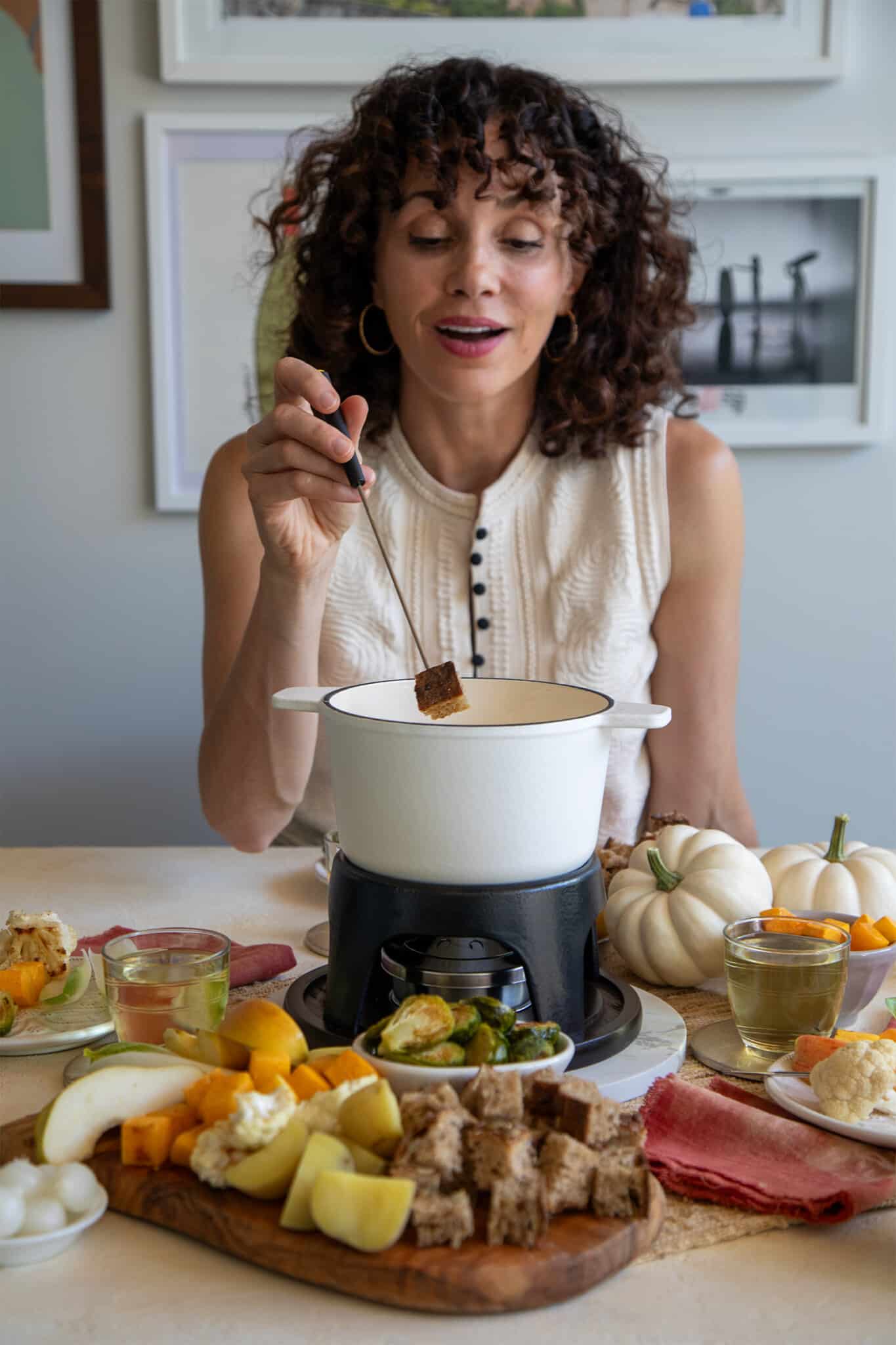
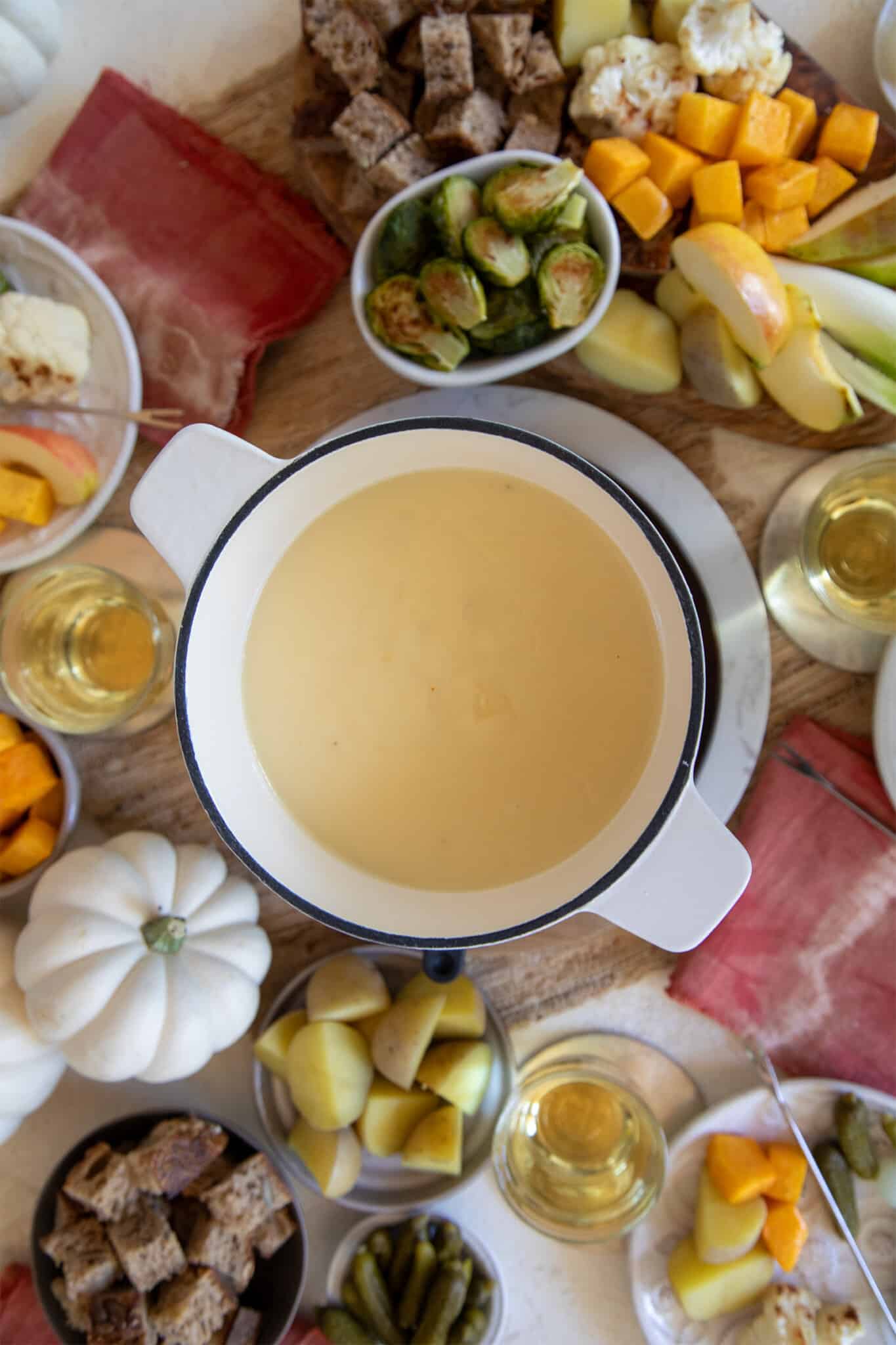
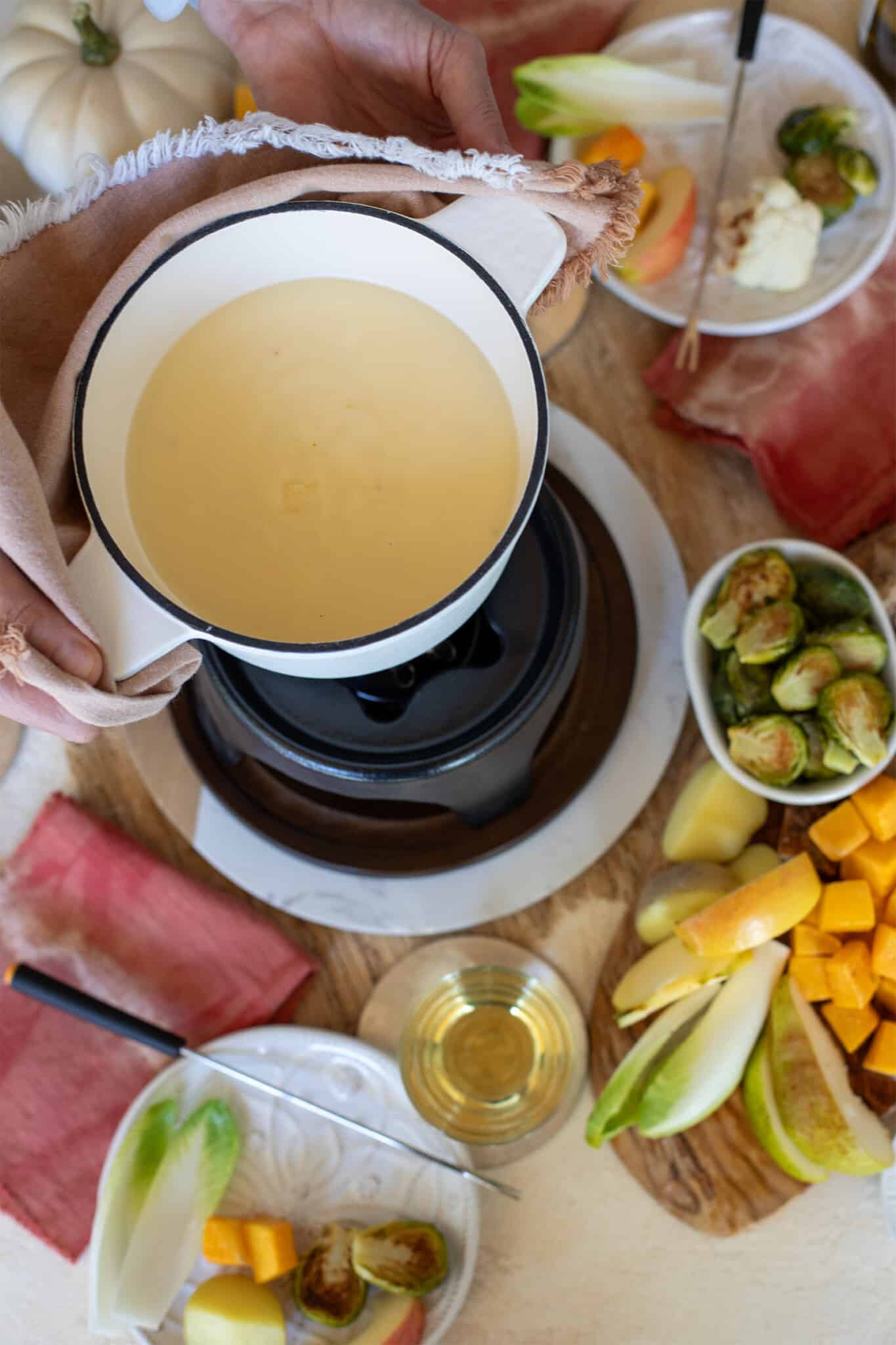
This cheese fondue is a showstopper that’s secretly easy. You bring a bubbling pot to the table surrounded by a platter of dippers, and dinner feels like an occasion, but almost all of it was done before anyone arrived.

It’s made for gathering. Everyone serves themselves from the same pot, which makes fondue particularly good for holiday entertaining, après-ski dinners, New Year’s parties, or any cold night when you want dinner to feel celebratory.

Real California cheese fondue ingredients

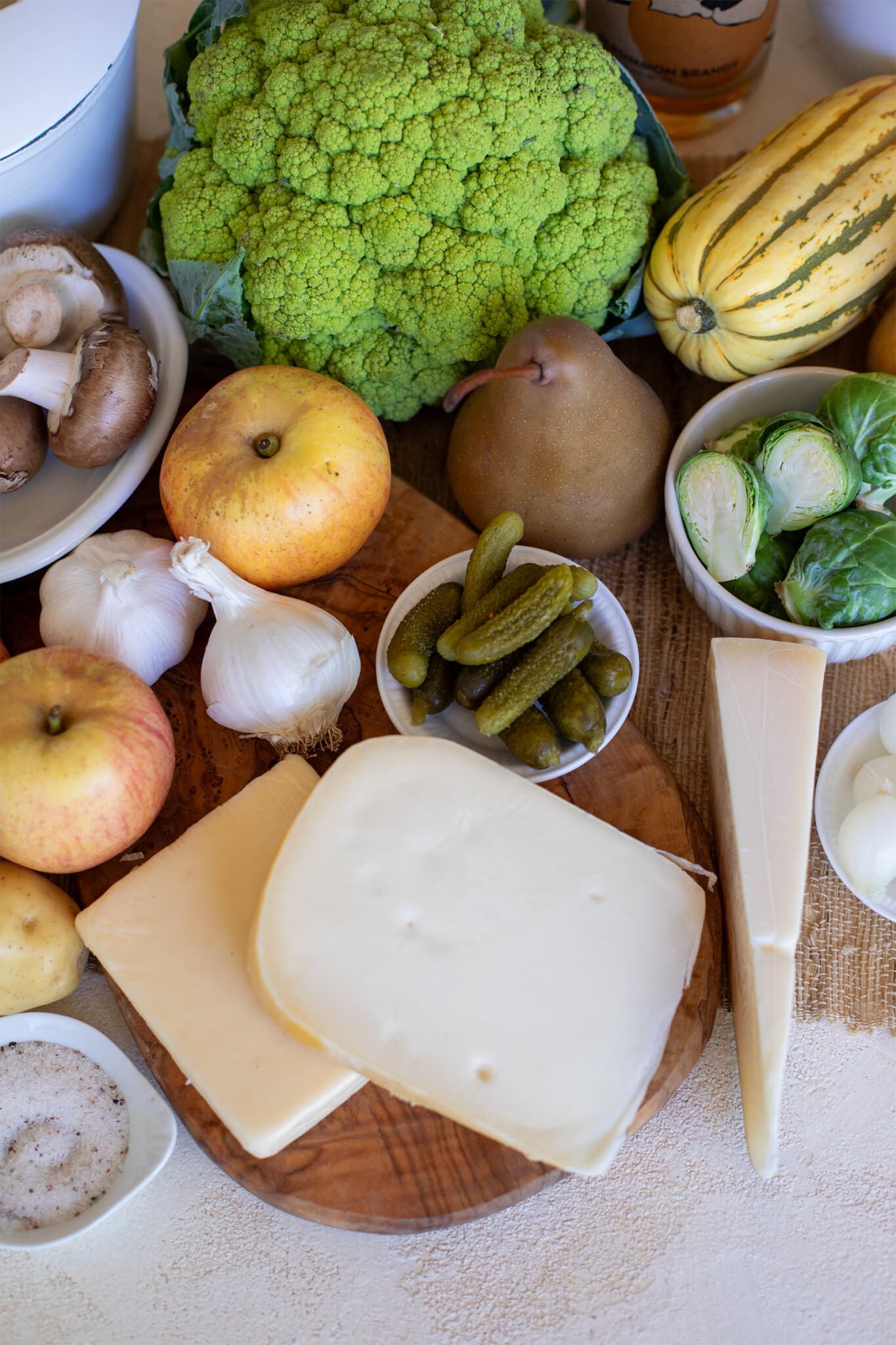
Cheese Fondue Recipe Ingredients

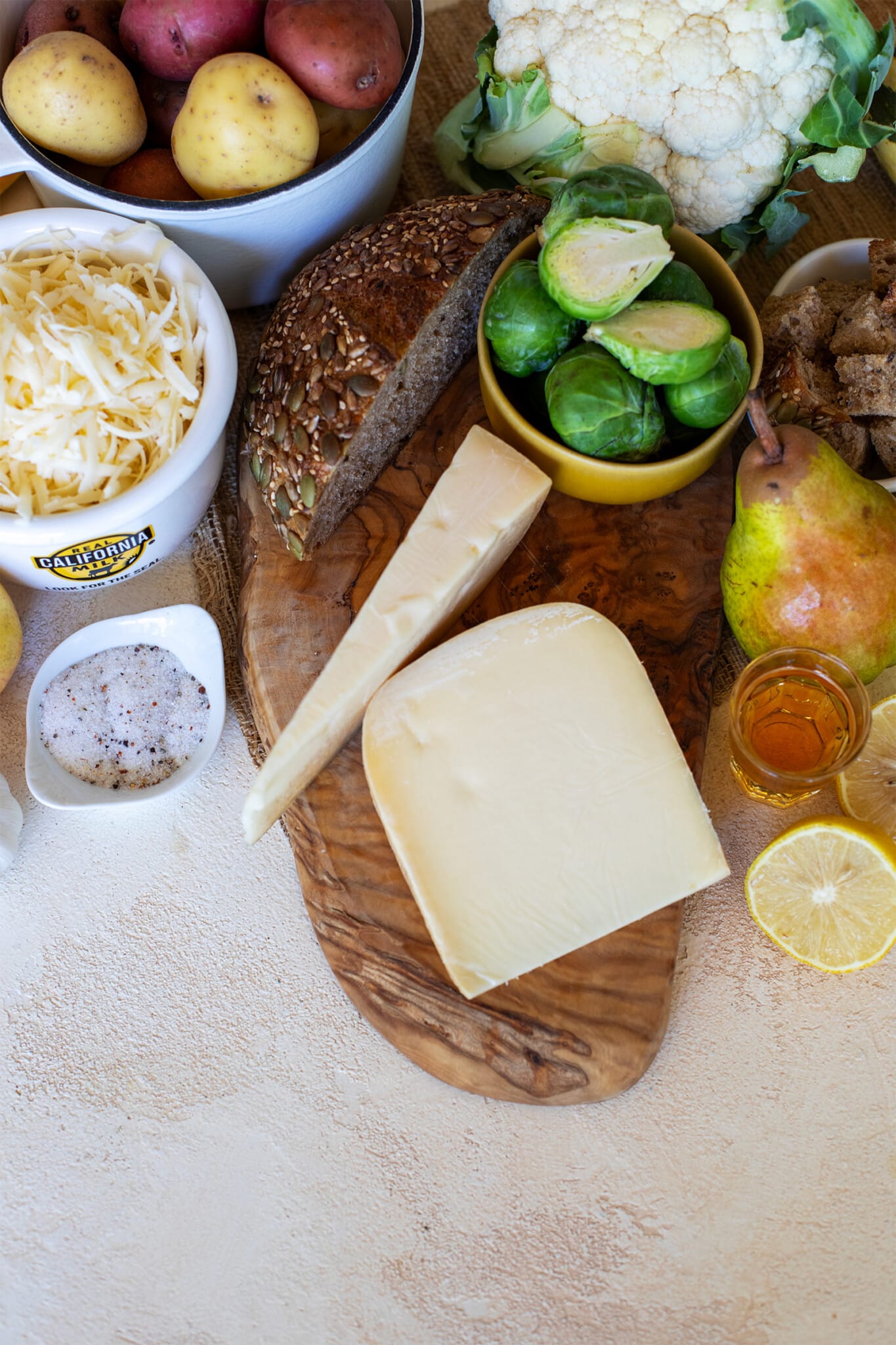
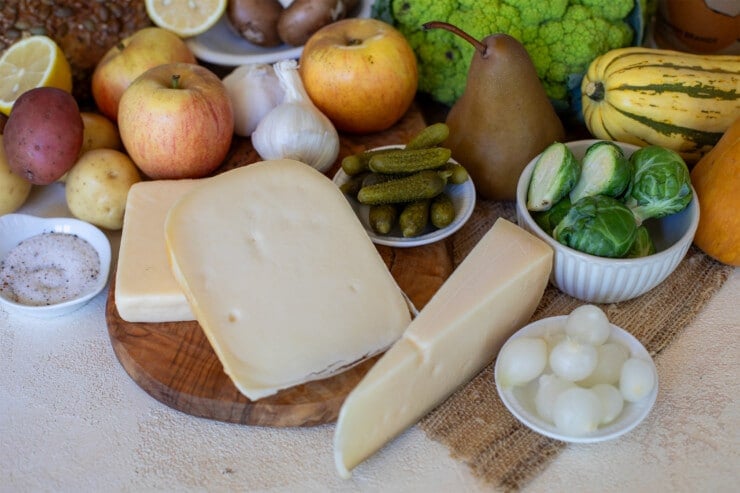
Fondue doesn’t need many ingredients, so each one should be top quality.

  • Real California Toma-style cheese is the base and half the pot. It melts beautifully, and its buttery flavor and grassy tang give the fondue character, not just texture. Any good-melting semi-firm cheese can take this slot.
  • Real California Monterey Jack sits in the middle. It’s mild with a gooey melt, so its job is to round the Toma off and keep the pot from getting too assertive.
  • Real California Aged Gouda is the accent, so a little goes a long way. Either one brings nuttiness and depth, with toasted hazelnut and caramel flavors from the aging.
  • Dry California white wine brings the acid that keeps the cheese from clumping. It doesn’t need to be expensive or a particular grape, just dry, good quality, and something you’d happily drink.
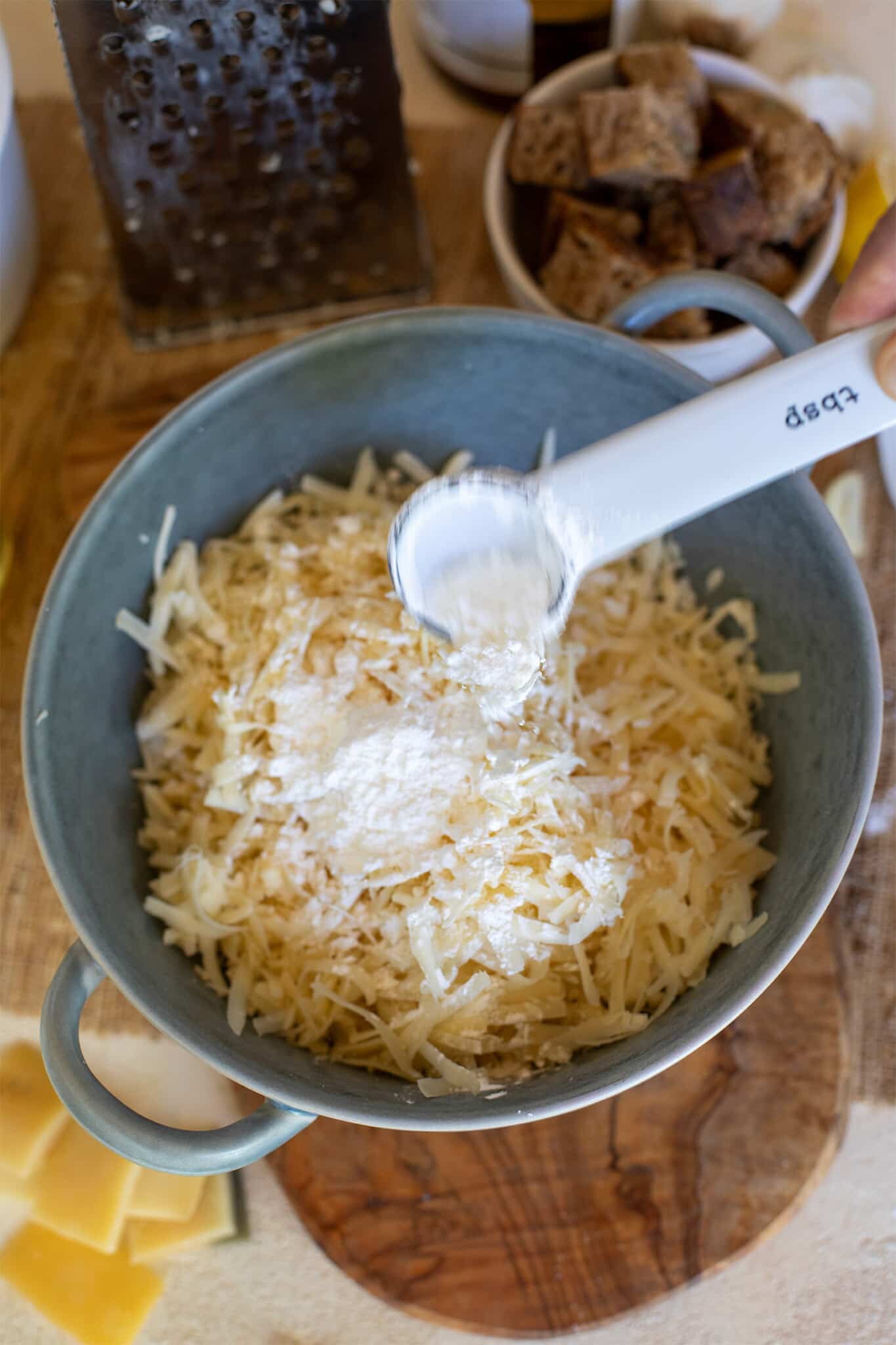
  • Cornstarch stabilizes the fondue and keeps it creamy. My ratio is one tablespoon per pound of cheese, though two tablespoons gives a noticeably thicker pot.
  • Garlic perfumes the fondue without overwhelming.
  • Fresh lemon juice adds acidity that balances the richness and helps with emulsification.
  • Add brandy off the heat at the end to lift the flavor
  • Black pepper and nutmeg: Pepper adds a little bite, and a pinch of freshly grated nutmeg is optional.

How To Make Cheese Fondue

This technique is the difference between a silky pot and a grainy one.

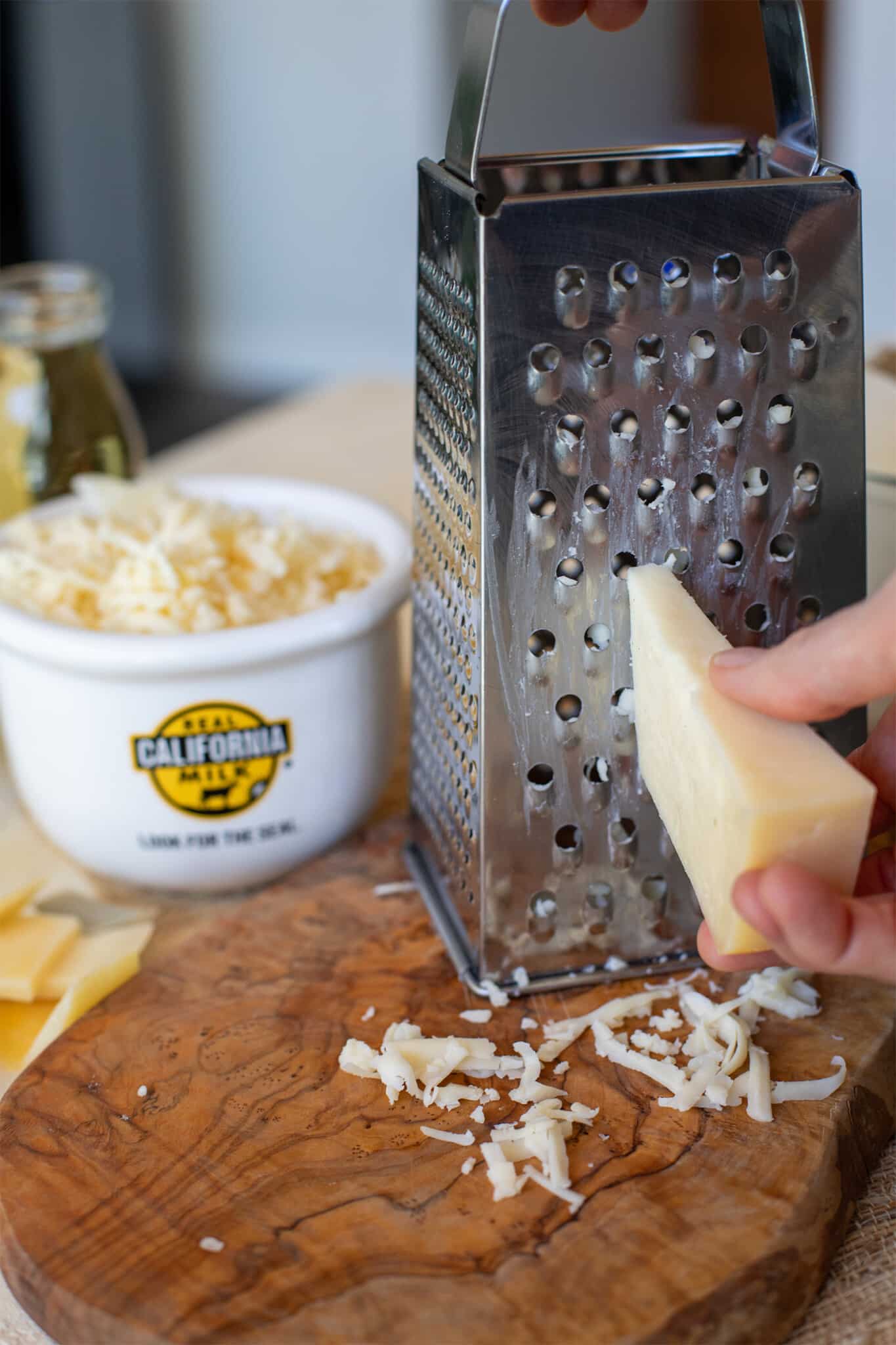
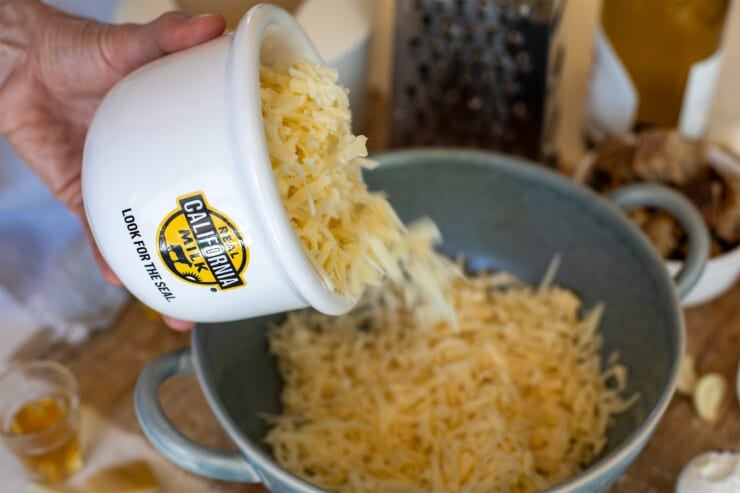
  1. Grate and coat the cheese. Grate all three cheeses, then combine them in a large bowl and toss thoroughly with the cornstarch until every shred is evenly coated.
  2. Prepare the pot. Rub the inside of a heavy-bottomed saucepan or fondue pot with the cut side of a garlic clove, then discard the clove.
  3. Heat the wine. Add the dry white wine and lemon juice, and heat over medium until steaming, but well short of a simmer. Reduce the heat to medium-low before adding any cheese.
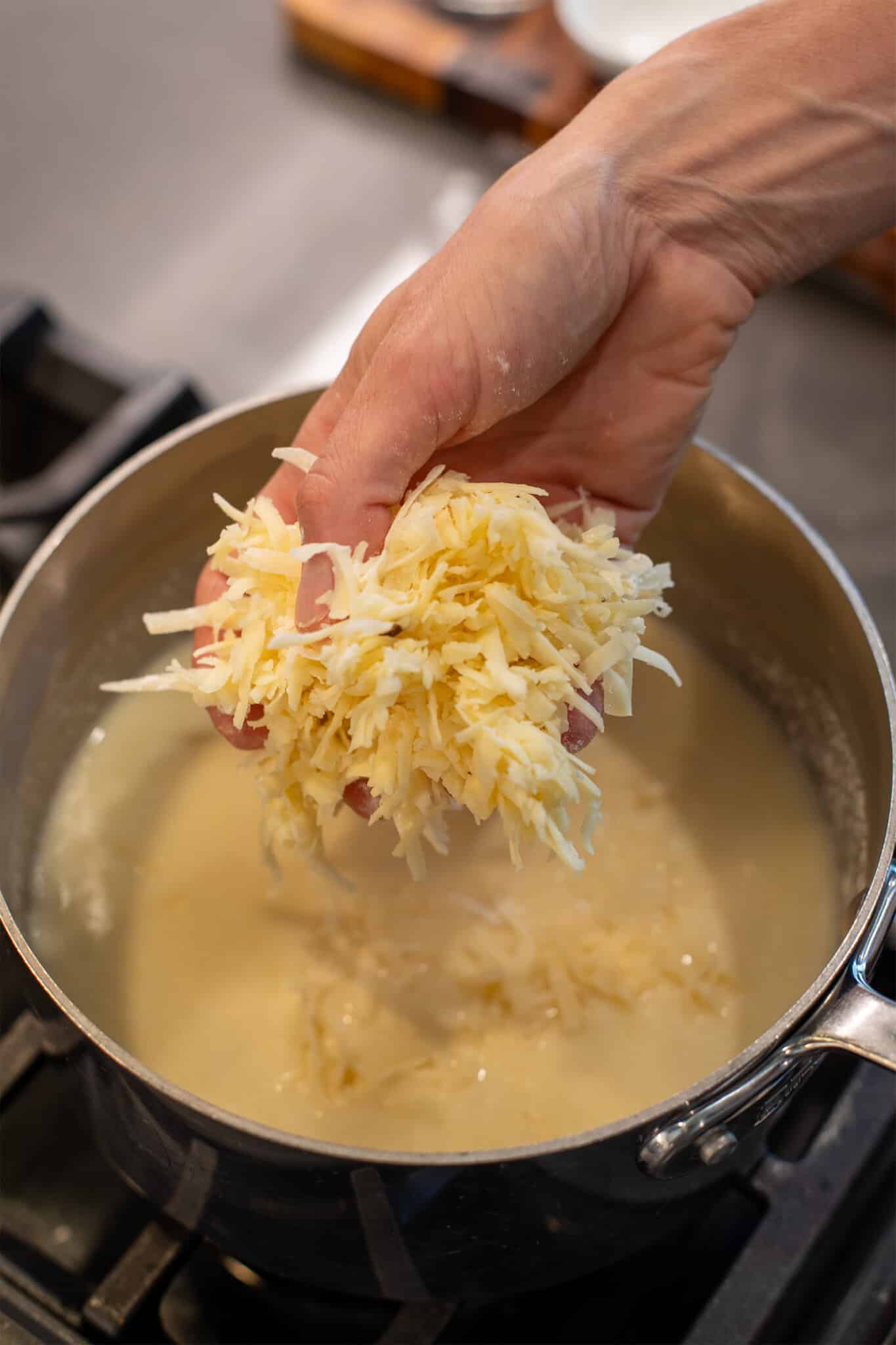
  4. Add the cheese gradually. Add the cheese one handful at a time, stirring slowly with a wooden spoon in a figure-eight and reaching the corners and bottom of the pot so nothing scorches. 
  5. Keep it below a boil. Keep the pot under 165F. You need enough heat to melt the cheese, but too much will leave you with a grainy or separated pot.
    Note: Depending on your pot and your burner, you may need to pull it off the heat now and then to hold it there. And there’s no shame in using a thermometer.
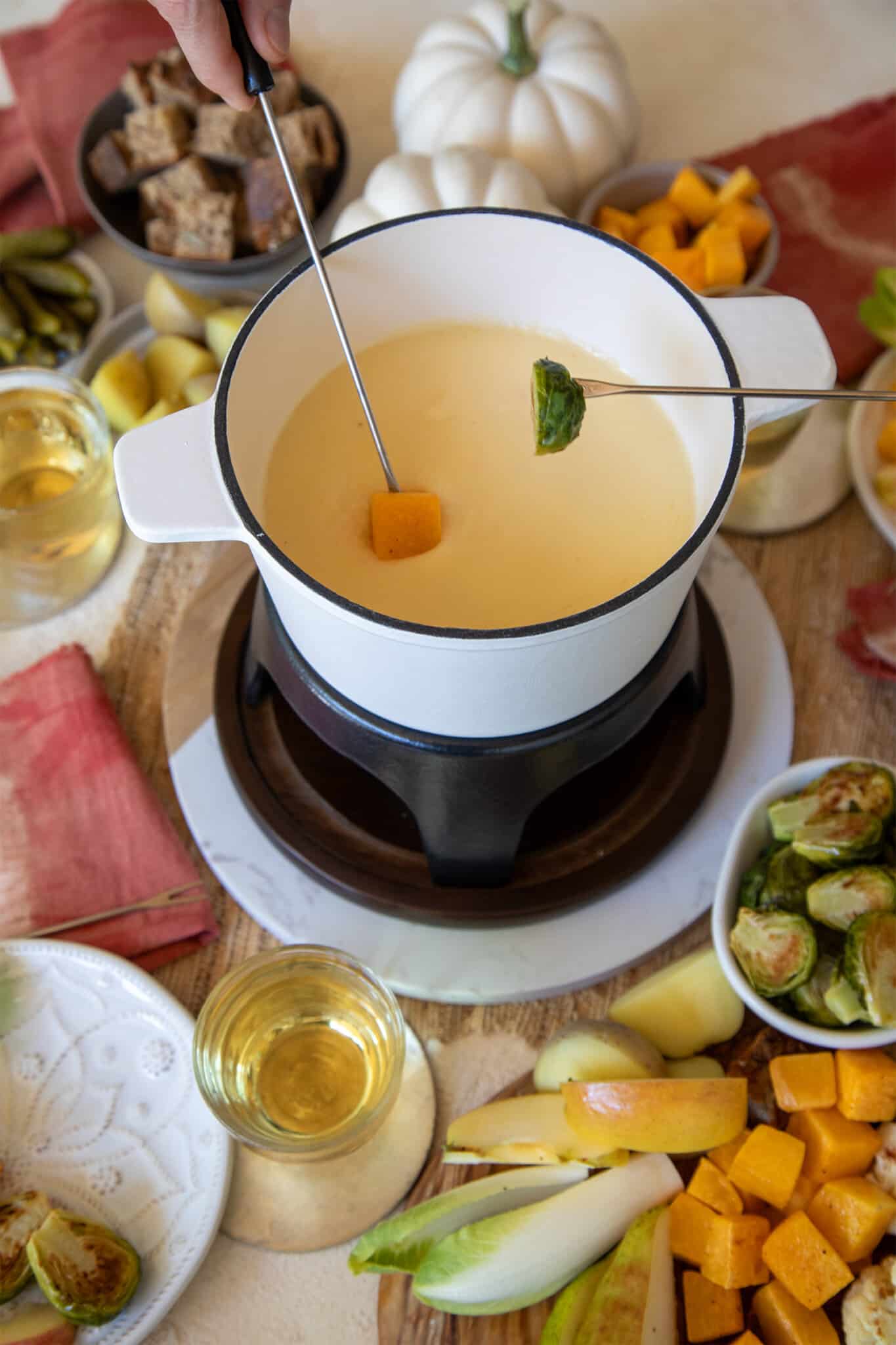
  6. Check the consistency. The finished fondue should generously coat a piece of bread. If it’s too thick to coat evenly, stir in more warm wine one tablespoon at a time. For a thicker pot, use more cornstarch rather than less wine.
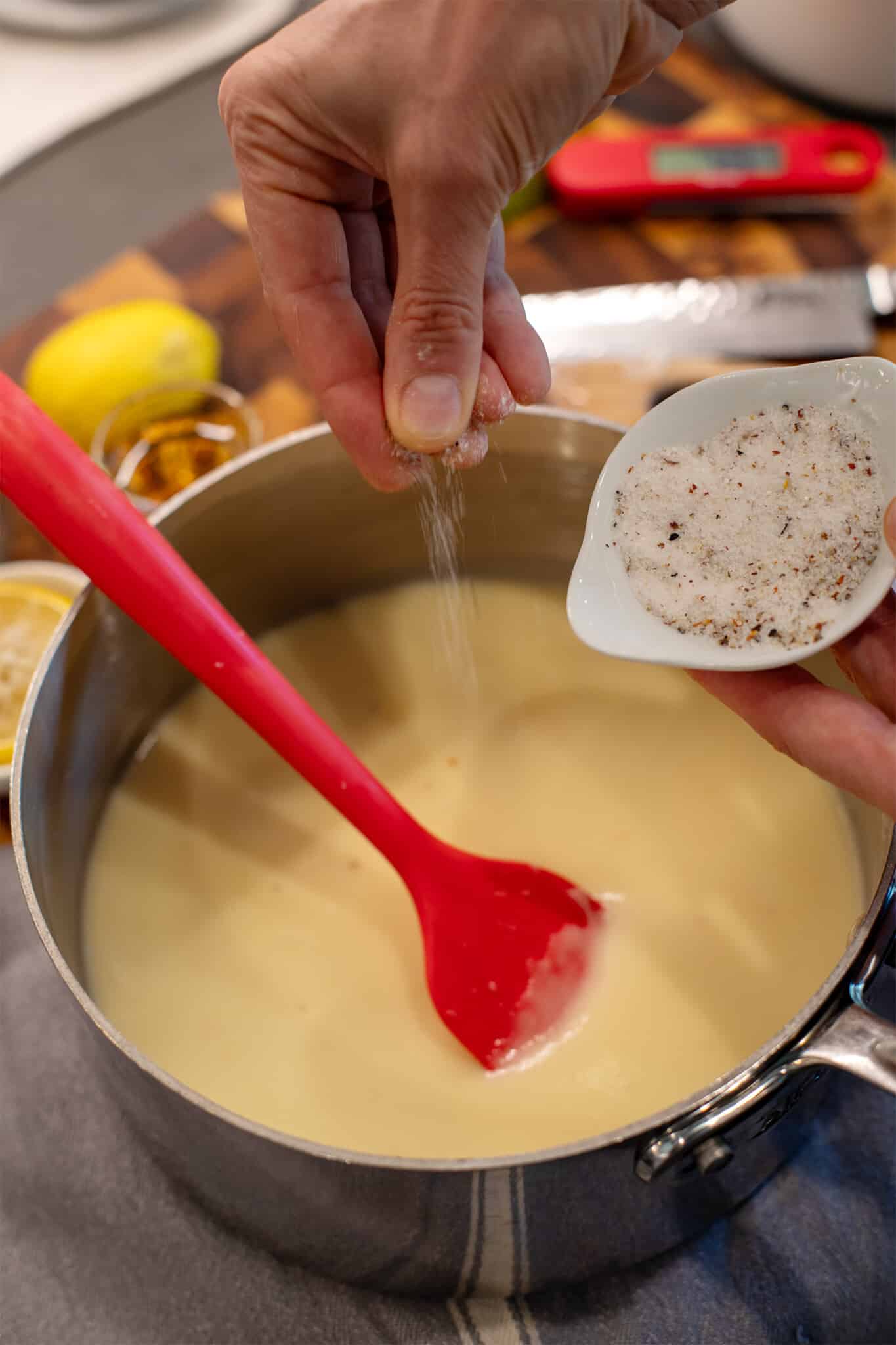
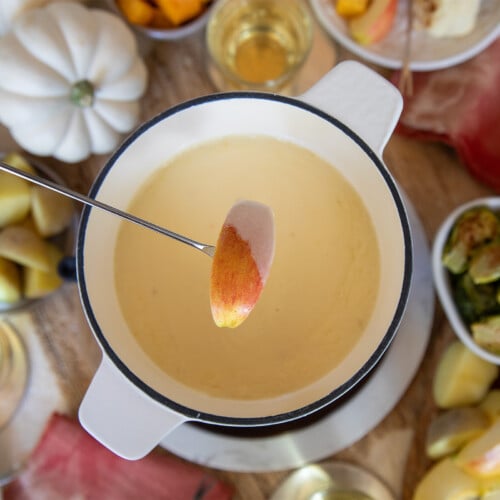
  7. Finish and serve. Off the heat, stir in the brandy and several grinds of black pepper, and add nutmeg if you’d like. Transfer to your fondue pot and keep it warm over gentle heat.

What Makes This Fondue Californian

The technique is Swiss, and it’s historic. The first written fondue recipe appears in a 1699 cookbook called Käss mit Wein zu kochen. It became the national dish in the 1930s, when the Swiss Cheese Union pushed it to get the country eating more dairy.

What might surprise you is that Swiss families also helped build California’s dairy country. More than 27,000 people left the canton of Ticino between the 1850s and 1900, and many headed to ranches in Marin and Sonoma. Those same hills now hold the largest concentration of artisan cheesemakers outside Vermont. So this isn’t a random mash-up but a nod to our state history.

What I changed is everything going into the pot. The cheese, the wine, the lemon, the garlic, even the brandy. And here’s the best part: it uses always-in-season ingredients. Real California cheese, California wine, citrus, and garlic are on the shelf in July as surely as in January.

How I Think About A Cheese Fondue Blend

I build a pot in three parts. The base melts best and makes up the biggest share; the middle is milder and rounds it out, and the accent is the strongest, used like a seasoning.

This isn’t a rule, but it’s how I think about it when I shop. Here it’s Real California Toma-style cheese as the base at half the pot, Monterey Jack in the middle, and aged Gouda as the accent. I tried it with Jack leading, and the Toma-forward version won: more character, more cohesion when you lift the bread out.

Why Semi-Firm And Firm Cheeses Work
Not to get too scientific, but like a vinaigrette, a good fondue is an emulsion. You suspend fat in the cheese’s own protein, and the acid in the wine and lemon makes that possible. The cornstarch thickens the water around it.

Semi-firm and firm cheeses have the protein and fat for the job, because the water has been pressed and aged out. Ripening helps too, cutting the casein into small pieces that won’t clump into strings. Push too far, and it’s too dry to flow, which is why aged Gouda is a grating cheese. 

Soft cheese has the opposite problem: adding water to a pot that already holds a cup of wine, so ricotta, halloumi, and fresh goat cheese are out. The bottom line: use semi-firm to firm cheese for fondue.

The Flavorings Are Up To You
This is where you do you. Garlic and lemon are in my pot every time. Past that, take your pick: Dijon for savor, sweet paprika for warmth, white pepper for something subtler than black, or a flavored salt. We used a fennel salt, and it was lovely against the richness.

California Brandy
Kirsch is a clear cherry eau-de-vie that is traditionally added at the very end. Any fruit eau-de-vie is in the same family, so a California brandy works great. We tested a pear and a persimmon, and both were lovely.

Tips For Success

Between culinary school in France and a brother-in-law who lived in the Swiss Alps and has opinions, we’ve adopted rules that seriously change the cheese fondue outcome for the better:

  • Use a wooden spoon, not a whisk. Stir slowly in a figure-eight, reaching the corners and the bottom. Steady and gentle, not vigorous.
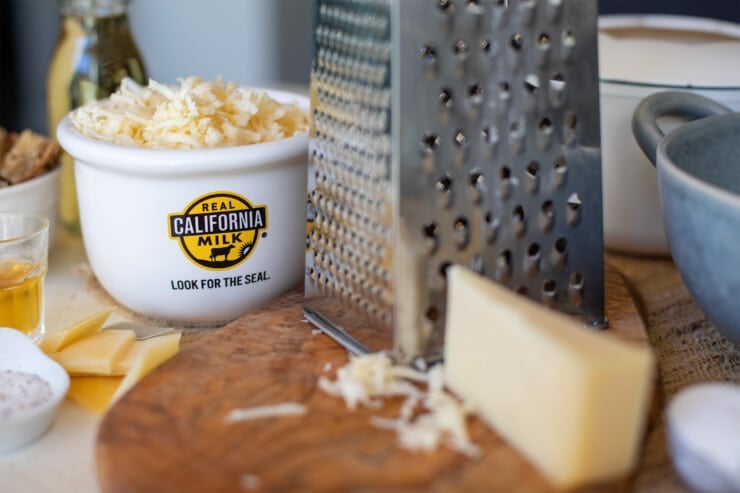
  • Grate your own cheese. Bagged shreds are dusted with starch or cellulose to stop them clumping, and that coating fights a smooth melt.
  • Take the chill off the cheese. Let it sit out for 20 minutes after grating. Fridge-cold cheese hitting hot wine shocks the emulsion.
  • Use a heavy-bottomed pot. A thin pan makes a hot spot at the base that can seize cheese even when the pot as a whole reads right.
  • Never boil the cheese. Start adding it around 135F and keep the pot under roughly 165F. Pull it off the burner whenever it climbs, and use a thermometer if you want.
  • Don’t obsess over the wine. Any good-quality dry white will work, so use something you enjoy drinking.
  • Use day-old bread. Slightly stale bread holds together better when dunked, so cube your sourdough a day ahead and let it dry out.
  • Use a double boiler for a big batch. The gentler heat gives you more control when you’re cooking for a crowd.

Variations And Adaptations

Fondue is hard to ruin and easy to customize. Start here and mix it up to suit your taste:

  • Swap the accent cheese. A California Alpine-style cheese also works and pushes the pot closer to Swiss flavors.
  • Use beer instead of wine. A dry, hoppy beer works just as well as wine.
  • Follow the season on the platter. Asparagus and new potatoes in spring, green beans and stone fruit in summer, the winter board below when it’s cold.

The Best Cheese Fondue Dippers

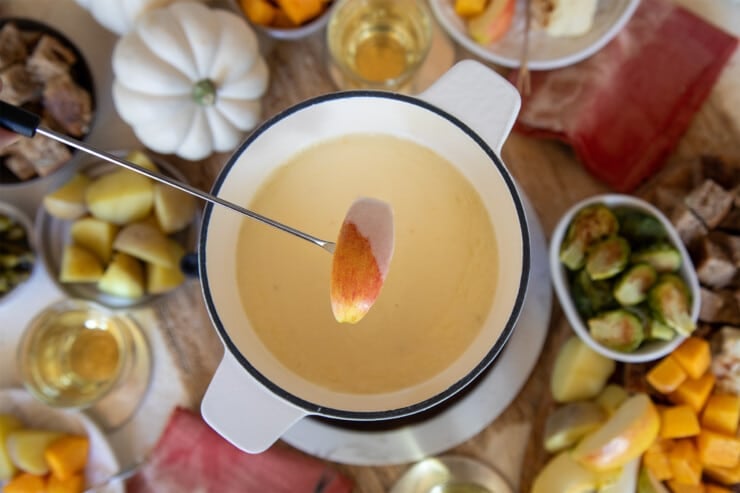
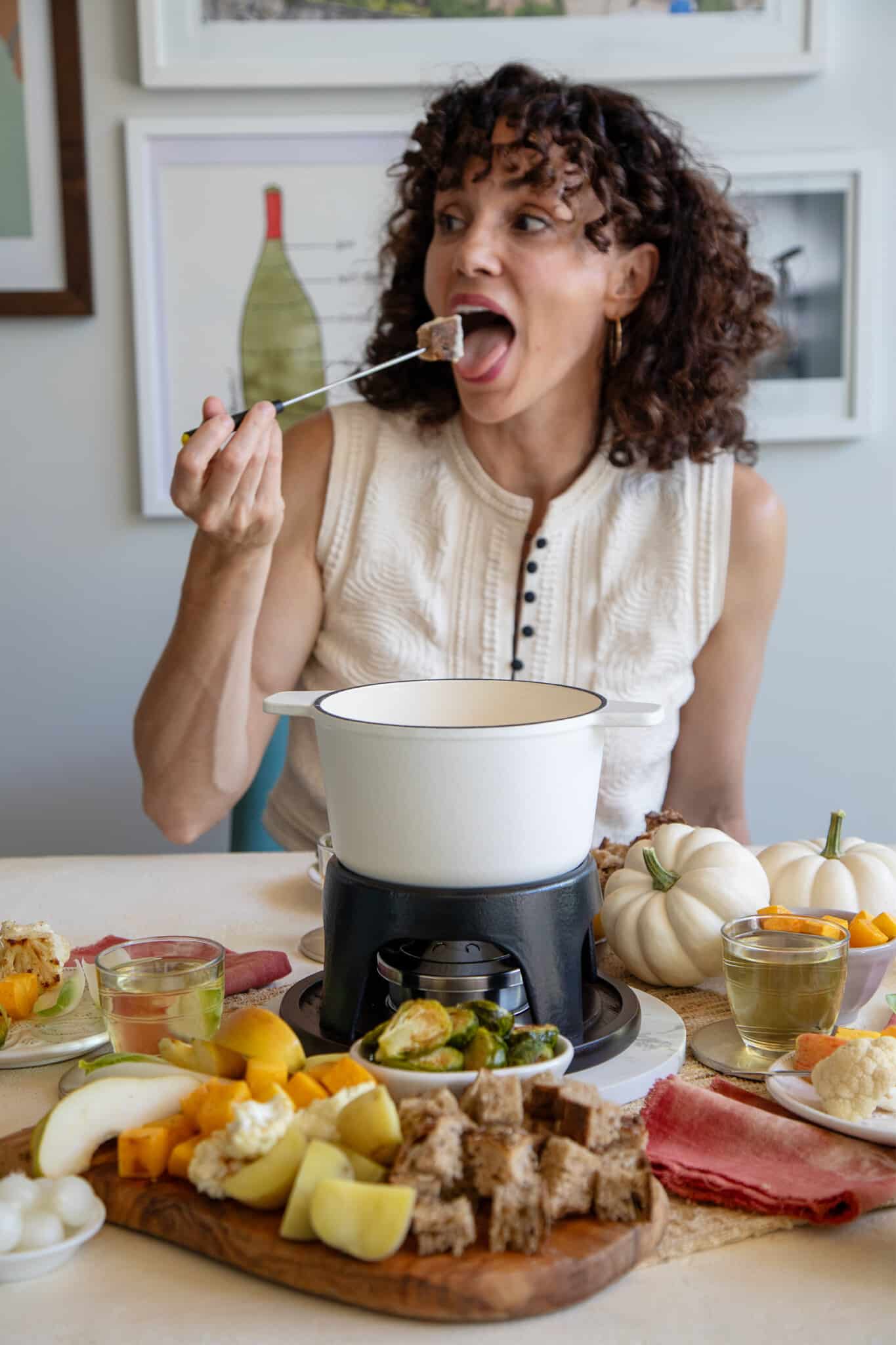
To me, the best cheese fondue dippers cover five things: something roasted, something boiled or steamed, something raw and crisp, something sweet, and something sharp. And, of course, here in the Golden State, we grow and make all of that!

  • Bread. Use quality California sourdough and cut it into 1-inch cubes a day ahead so it dries out slightly and holds up to dunking.
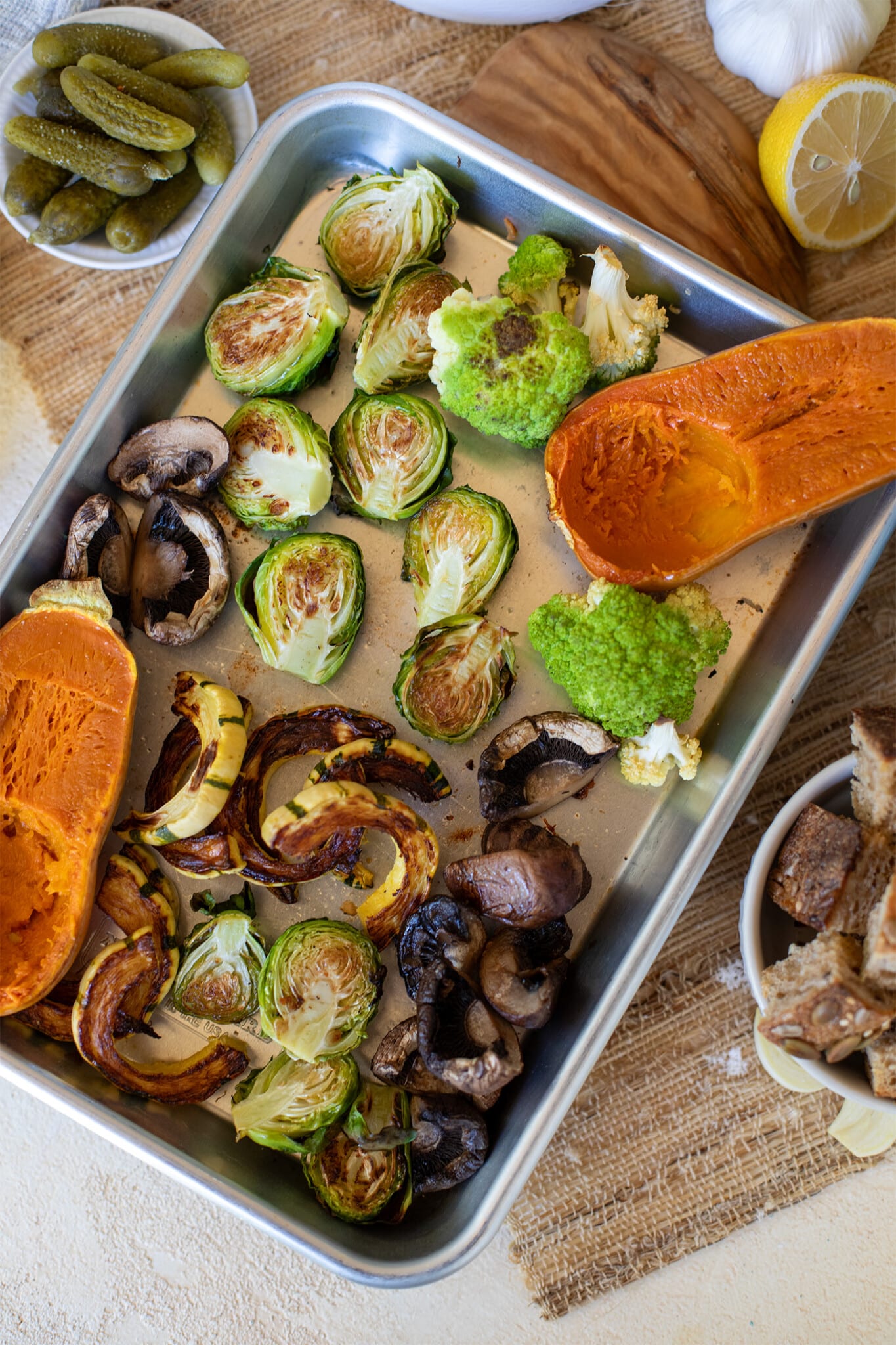
  • Something Roasted. Mushrooms, winter squash, Brussels sprouts, cauliflower. Halve or cut into spear-able chunks, toss with olive oil and salt, roast at 425F for about 25 minutes until browned at the edges but still firm.
  • Boiled or steamed Veggies. Boil baby potatoes in well-salted water until just tender, drain, then halve. Broccoli steamed rather than roasted if you want it greener and snappier.
  • Raw and crisp. I love adding in endive spears in the winter. 
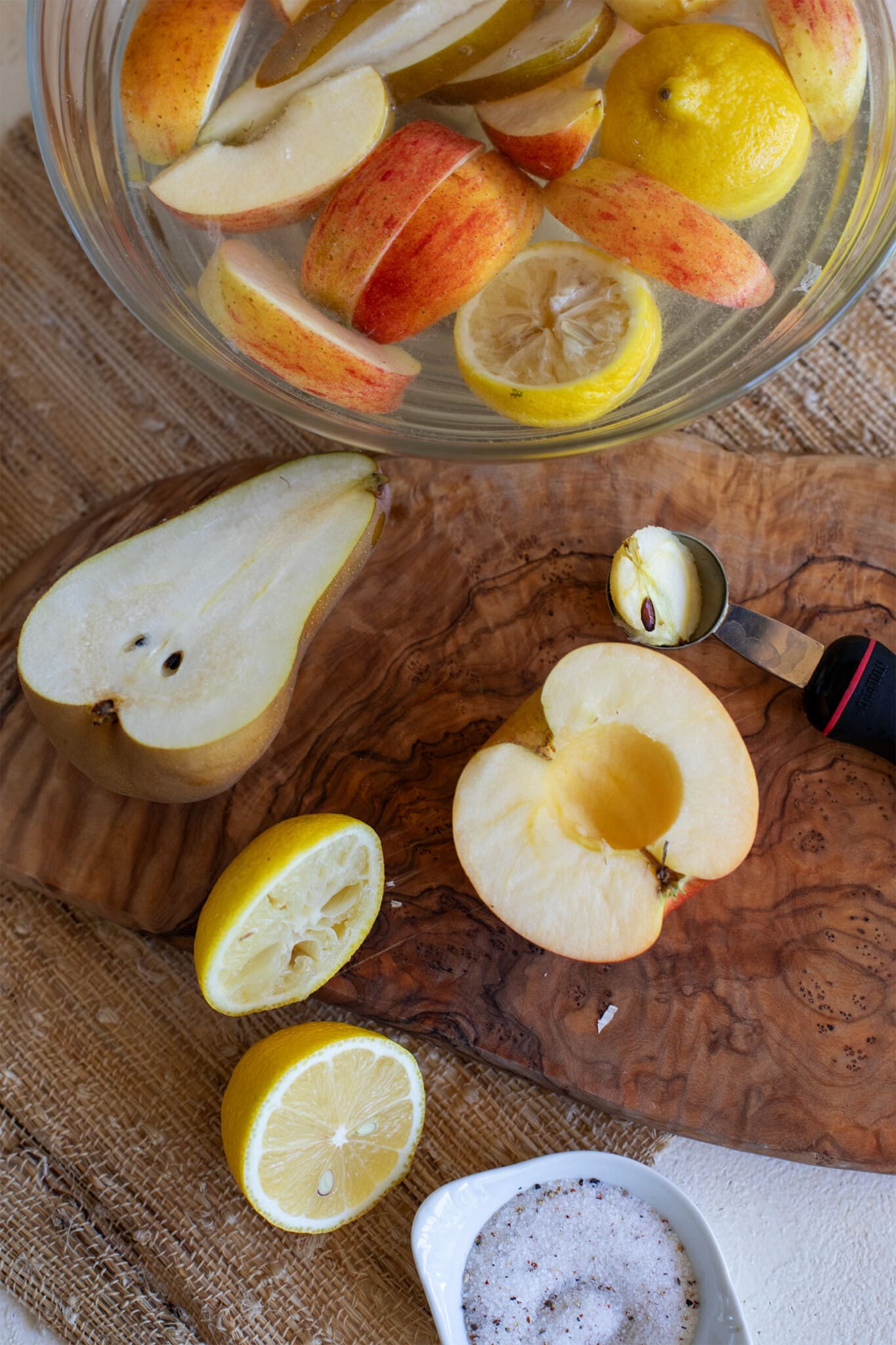
  • Fresh Fruit. In the fall or winter, opt for apples, pears, or firm Fuyu persimmons, cored and cut into about eight wedges each.
  • Something Pickled. Don’t skip adding in cornichons or cocktail onions as they cut the richness between bites.

Per person, I plan on a quarter of a sourdough baguette, six baby potatoes, four Brussels sprouts or a handful of broccoli, four mushrooms, a few endive spears, one piece of fruit, and three or four of each pickle. Arrange it all around the pot on one large platter rather than separate bowls, so it reads as a centerpiece.

What To Eat With Cheese Fondue

Honestly? Not much else. With a platter like that, fondue is dinner. You’ve got bread and potatoes, roasted vegetables, fresh fruit, pickles, and all that cheese. For a bigger gathering, I’ll add a green salad with a sharp vinaigrette, since the acidity cuts the richness.

What Wine To Drink With Cheese Fondue

Pour the same dry California white wine you used to cook it. Something like a Chenin Blanc has acidity that cuts straight through the fat, and because it’s a low-tannin white, it won’t clash with the salt in the aged cheese.

How To Make A Fondue Party Almost Entirely Ahead

This is my favorite thing about fondue. It looks like enormous trouble, and almost none of it happens while your guests are standing there.

  • A day ahead: Cube the sourdough and let it dry slightly, boil the potatoes and refrigerate them, and wash and prep the vegetables.
  • Earlier that day: Roast the vegetables, arrange the pickles and other room-temperature ingredients, and grate and combine the cheeses.
  • For the fruit: Cut it ahead and hold it briefly in lemon water to prevent browning, then drain and dry it well.
  • The fondue itself: Make it up to two days ahead and refrigerate it, then reheat in the microwave in 15-second bursts, stirring between each, until smooth and hot.

Then, once guests arrive, all that’s left is arranging, reheating, opening the wine, and gathering around the pot.

Why Real California Cheese Works So Well Here

Fondue is essentially one ingredient. No sauce to hide behind and no crust to carry it, so cheese is the whole dish. That’s why I care more about where it comes from here than in almost anything else I cook.

And California doesn’t just make cheese. It has invented a few. Monterey Jack takes its name from David Jacks, the Monterey businessman who first brought it to market in the 1880s, made by his Swiss and Portuguese dairymen from old mission recipes. 

To try it for yourself, look for the Real California Milk seal when you shop (use the product locator to find it near you). The seal means the milk came from California dairy farm families, and the overwhelming majority of those farms are family-owned and family-run, many of them for generations.

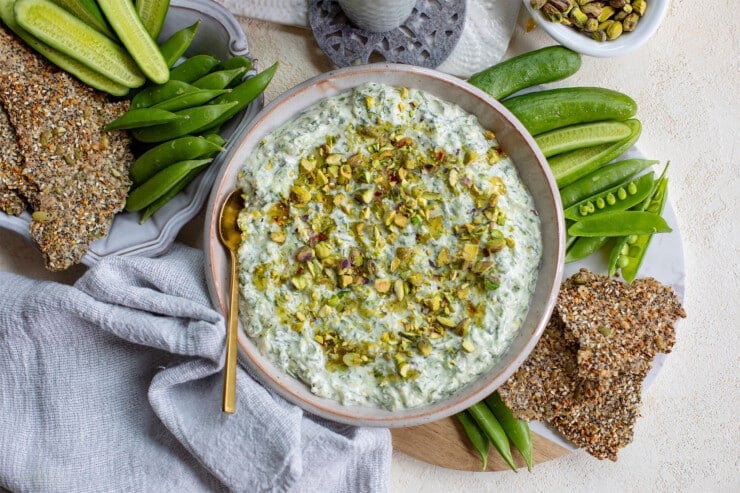
Tzatziki Whipped Feta Dip

More California Real Milk Recipes

Here are three recipes spotlighting California dairy that our readers love:

Frequently Asked Questions

Look for semi-firm and firm cheeses that melt smoothly. Build around your best melter and use the strongest cheese in the smallest amount. Here, use real California Toma-style cheese as the base (half the pot), Monterey Jack to soften it, and aged Gouda for depth.

Heat is usually the culprit, so keep the pot between 160F and 165F, add the cheese gradually, and stir gently. Next, not enough acid, because the wine and lemon stop the proteins from clumping. If you scale the cheese up, scale those up with it.

After that, it's technique. Pre-shredded cheese, fridge-cold cheese, too coarse a shred, and a thin pan with a hot spot at its base will each do it.

One thing that isn't a fault: in a well-aged cheese, tiny crunchy bits may be tyrosine crystals, which form as cheese matures and never melt. Taste the cheese on its own, and if you feel the same crunch there, that's a mark of good cheese rather than a broken fondue.

No! Grate your own. Bagged shreds are dusted with starch or cellulose so they don't stick together, and that coating fights the smooth melt fondue depends on. A pound takes about five minutes on a box grater.

You want it thick enough to coat a piece of bread and slide back off it slowly. Starch is the dial: one tablespoon per pound of cheese gives you that; two gives a thicker pot that falls in a ribbon. The Swiss moitié-moitié uses less than I do, so a fondue that coats rather than ribbons is traditional, not a mistake.

A little, but not like mozzarella. A long pull needs intact, aligned protein fibers, which no fondue cheese has. What you get is cohesion: the cheese comes away with the bread in a short, soft pull before it breaks. This blend gives some of that, and a more aged pot gives less and coats instead. Both are good. What you don't want is stringy and grainy at once, which is a broken pot rather than a stretchy one.

Yes. Make it, cool it, and refrigerate it. Reheat gently in short intervals, stirring often, until smooth and hot, then transfer to the fondue pot over low heat.

cheese fondue recipe

California Cheese Fondue Recipe

This is a California take on classic cheese fondue built on Real California Toma-style cheese, with Monterey Jack to soften it and aged Gouda for depth, plus dry California white wine, garlic, and lemon. Serve with sourdough, seasonal produce, potatoes, and pickles for a winter dinner you can largely make ahead.
No ratings yet
Prep Time 20 minutes
Cook Time 15 minutes
Total Time 35 minutes
Calories 5201 kcal

Ingredients
  

For The Cheese Fondue:

  • 12 ounces Real California Toma-style cheese grated
  • 6 ounces Real California Monterey Jack cheese grated
  • 6 ounces Real California aged Gouda cheese grated
  • 2 tablespoons cornstarch
  • 1 garlic clove halved
  • 1 1/4 cups dry California white wine such as Chenin Blanc
  • 1 1/2 tablespoons freshly squeezed lemon juice
  • 1 tablespoon brandy
  • Freshly ground black pepper
  • Pinch of freshly grated nutmeg optional

For The Fondue Dippers:

  • 1 to 2 sourdough baguettes preferably a day old, cut into 1-inch cubes
  • 24 to 36 boiled baby potatoes quartered
  • 16 to 24 Brussels sprouts halved and roasted
  • 2 to 3 crisp apples firm-ripe pears, or Fuyu persimmons, cored and cut into wedges
  • 2 to 3 firm-ripe pears cored and cut into wedges
  • Cornichons and cocktail onions
  • Optional substitutions or additions: roasted cauliflower roasted winter squash, or charcuterie.

Instructions
 

  • Prepare the cheese. Combine the grated Real California Monterey Jack, Real California Toma-style cheese, and Real California aged Gouda in a large bowl. Add the cornstarch and toss thoroughly until the cheese is evenly coated.
  • Prepare the pot. Rub the cut sides of the garlic all over the inside of a heavy-bottomed saucepan or fondue pot, then discard the garlic.
  • Heat the wine. Add the wine and lemon juice and place the pot over medium heat. Heat until it reaches about 135F to 140F, which is steaming but well short of a simmer, then reduce the heat to low.
  • Melt the cheese. Add the cheese mixture one handful at a time, stirring slowly and continuously with a wooden spoon in a figure-eight and scraping the bottom and corners of the pot. Allow each addition to mostly melt before adding the next. Keep the pot under about 160F to 165F, never letting it simmer or boil, and pull it off the heat if it climbs.
  • Finish the fondue. Once all the cheese has melted and the fondue is smooth, remove it from the heat. Stir in the brandy or kirsch and several grinds of black pepper, and add nutmeg if desired.
  • Adjust the consistency. The finished fondue should generously coat a piece of bread and hold together slightly when you lift it out. If it's too thick, stir in additional warm wine one tablespoon at a time.
  • Serve. Transfer the fondue to a fondue pot set over gentle heat. Arrange the sourdough, potatoes, roasted vegetables, fresh fruit, cornichons, and cocktail onions on a large platter and serve immediately.

Nutrition

Calories: 5201kcalCarbohydrates: 518gProtein: 249gFat: 218gSaturated Fat: 129gPolyunsaturated Fat: 13gMonounsaturated Fat: 64gCholesterol: 720mgSodium: 6569mgPotassium: 8821mgFiber: 66gSugar: 111gVitamin A: 8097IUVitamin C: 565mgCalcium: 6535mgIron: 28mg
Tried this recipe?Mention @saltandwind or tag #swsociety!

This post may contain affiliate links. Please refer to our privacy policy.

About The Author

Leave a Comment

Your email address will not be published. Required fields are marked *

Recipe Rating


TRAVEL SERVICES

We'll help you taste Italy California Hawaii Mexico France Spain Portugal Switzerland the world

We specialize in food-focused experiences in the most interesting culinary regions of the world.

We craft elevated family getaways that delight every generation. We handle the details so you simply show up, connect, and enjoy.

Our tailored-to-you travel planning services help you make the most of your trip.