
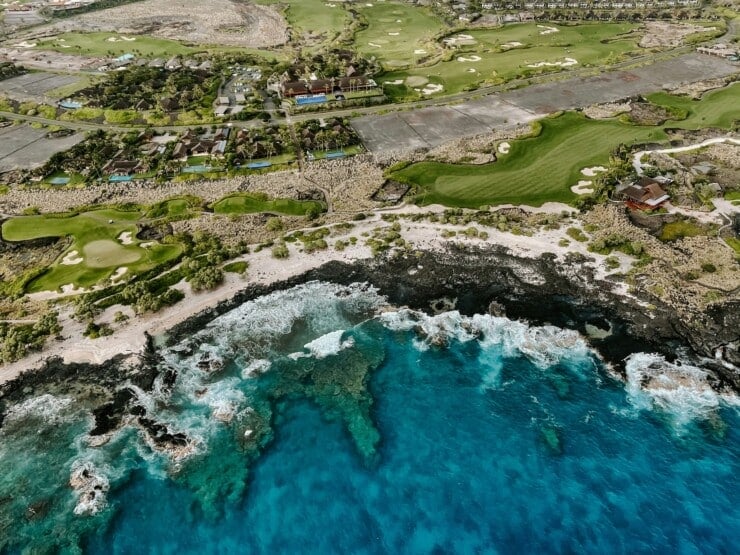
Our Big Island travel guide is written for food lovers and nature seekers drawn to the largest, wildest, and most varied of the Hawaiian islands. The Island of Hawaiʻi is the youngest island in the chain, home to active volcanoes, green- and black-sand beaches, lush waterfall valleys, and farms growing everything from coffee to vanilla. This guide covers where to stay, the best things to do, where to eat, and how to plan a trip built around the island’s raw nature and farm-to-table food.
Why Trust Us
Hawaiʻi Island is special to us because our founder, Aida, has extended family there. We’ve planned custom Hawaiʻi travel for over a decade, and the Island of Hawaiʻi is high on our list for food and nature. Our guidance comes from real-time on-the-island and island-based experts, not a guidebook, and every hotel and restaurant here is one that Team Salt & Wind has visited in person.
We plan trips for a living, too, and we plan with care for these islands, supporting local farms and businesses and respecting the culture. We design fully custom itineraries rather than resell packages, so our advice stays honest about how to split your time on an island this big.
Where to Stay on the Big Island
The Island of Hawaiʻi is enormous, and the two coasts feel like different worlds. Choose your base by what you want to see:
- Kona & the Kohala Coast (west): sunny, dry, and resort-focused, with Waikoloa and the island’s best beaches. The easiest base for a relaxed trip.
- Hilo (east): lush, rainy, and local, close to waterfalls, gardens, and the Hilo Farmers Market. Best for nature and culture.
- Volcano town: tiny and forested, right by Hawaiʻi Volcanoes National Park, ideal for an overnight near the crater.
Many travelers split their stay between the Kona side and the Hilo or Volcano side to cover the whole island.
Best Things to Do on the Big Island
The Island of Hawaiʻi is made for adventure. Explore Hawaiʻi Volcanoes National Park, home to Kīlauea and Mauna Loa and the only place in the US to see active lava when the volcanoes erupt. Stargaze from the slopes of Mauna Kea, tour a Kona coffee farm, and seek out the island’s striking beaches, including green- and black-sand shores. Add a waterfall drive near Hilo and some of the island’s best hiking, and see our roundup of things to do on the Big Island.
Where to Eat & Drink on the Big Island
The island’s topographic range makes it a farm-to-table paradise, growing coffee, vanilla, cacao, honey, and cattle. Start your mornings with Kona coffee, graze the Hilo Farmers Market, and seek out the farm-driven restaurants and food trucks on both coasts. We build the island’s best local tables into every itinerary.
Sample Big Island Itinerary (6 Days)
- Days 1–2: Base on the Kona/Kohala coast for beaches and a coffee-farm visit.
- Day 3: Drive south to the black- and green-sand beaches.
- Day 4: Hawaiʻi Volcanoes National Park, with an overnight in Volcano town.
- Day 5: Hilo, its waterfalls, gardens, and farmers’ market.
- Day 6: Mauna Kea stargazing or a final beach day.
We tailor the pace, the lodging, and the reservations to how you like to travel.
Best Time to Visit & Getting Around
The Island of Hawaiʻi is a year-round destination, with the shoulder seasons (April to May and September to October) offering the best mix of weather, value, and crowds. The Kona side stays sunny while Hilo is wetter year-round. A rental car is essential; the island is vast, the sights are far apart, and there’s little public transit.
Big Island Travel FAQ
Should you stay in Kona or Hilo?
Kona and the Kohala Coast are sunny and resort-focused, best for beaches and relaxation. Hilo is lush, local, and close to waterfalls and Volcanoes National Park. Many travelers split their stay to see both sides.
How many days do you need on the Big Island?
Plan at least five to six days, given the island’s size. That’s enough for both coasts, Volcanoes National Park, and a coffee farm or beach day without spending the whole trip driving.
Can you see lava on the Big Island?
Only when Kīlauea or Mauna Loa is actively erupting, which varies. Check the National Park Service for current conditions. Even during dormant periods, the park’s craters, lava tubes, and trails are well worth a visit.
Do you need a car on the Big Island?
Yes, absolutely. The island is the largest in the state, the highlights are far apart, and public transit is minimal, so a rental car is essential.
When is the best time to visit the Big Island?
Spring and fall bring the best balance of weather, price, and crowds. The Kona side is reliably sunny year-round, while the Hilo side is greener and wetter.
Plan Your Big Island Trip With Us
You’ve been inspired. Now let us do the heavy lifting. Book a complimentary Discovery Call and a Salt & Wind travel planner will map out a trip worth taking, plus a quote to make it happen. No cookie-cutter itineraries, no tourist traps.
Big Island Travel Resources
Starting to plan? A few links we trust:
- Hotels: Book high-quality stays at Booking.com, or ask us about perked rates at our partner resorts.
- Tours: Book in-depth tours with Context Travel.
- Travel Tips: Join our free Facebook group.
- Shop: See our favorite travel essentials.
Looking at other islands? Head back to our Hawaii Travel Guide.