
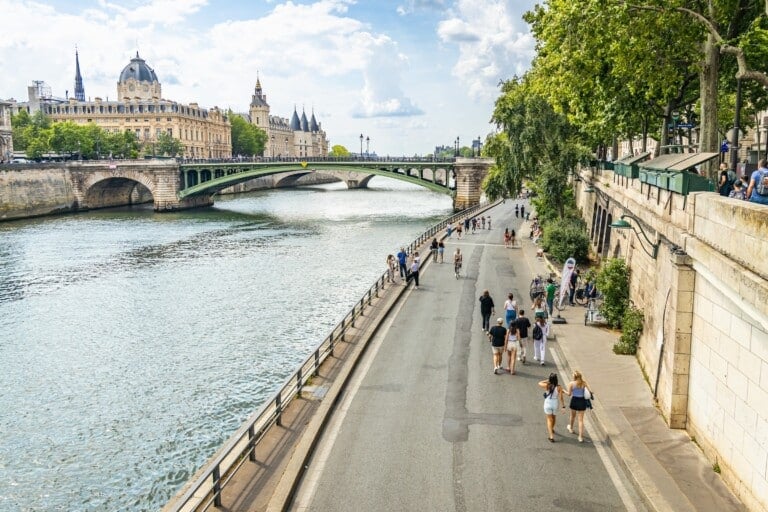
Our Paris travel guide is written for the food lover who wants to experience the city like a local, one neighborhood at a time. Paris rewards slowing down: a morning at a market, an afternoon in a museum, a long dinner in a quartier most visitors never reach.
This guide covers where to stay, what to eat, the best things to do, and the day trips worth taking, so you can plan a trip built around the city’s food, art, and everyday pleasures
Why Trust Us
Paris is personal for us. Our founder, Aida, lived in Paris while attending culinary school, has French family, and has been back countless times over more than twenty years, long enough to have a favorite bakery on both banks of the Seine. We plan custom Paris trips for travelers on their first visit and their twentieth, and every hotel, restaurant, and neighborhood in this guide is one we know firsthand.
We plan trips for a living, too. Every recommendation here is one we’ve vetted in person or booked for clients, not one we pulled off a list. We design fully custom itineraries rather than resell packages, so our advice stays honest about which streets are worth staying on and which to skip.
Where to Stay in Paris
Paris is divided into 20 arrondissements that spiral out from the center, split by the Seine into the Right Bank and the Left Bank. Where you stay shapes your whole trip, so choose the neighborhood that matches your style. Our clients most often base themselves in the 1st, 3rd, 4th, 7th, 9th, and 18th, on specific streets we help them pick to avoid crowds and traffic.
- Le Marais (3rd & 4th): our travelers’ most-requested area, full of boutique hotels, galleries, great shopping, and Sunday-open restaurants. Best for first-timers who want charm and walkability.
- Saint-Germain & the Latin Quarter (5th & 6th): classic Left Bank, with cafes, bakeries, and the Jardin du Luxembourg. Posh and central.
- Eiffel Tower & Musée d’Orsay (7th): quieter and upscale, with beautiful streets and Rue Cler. Great for a calmer, elegant stay.
- SoPi & Pigalle (9th): buzzier, with the best bars and trendy boutiques. Best for repeat visitors who want nightlife.
- Montmartre (18th): a hilltop village feel with cobblestones and views. Charming, but stay on the right streets.
For the full breakdown of all 20 arrondissements, see our guide to the best arrondissement to stay in Paris.
Best Things to Do in Paris
Paris is a city to wander, and the joy is mixing the icons with the everyday. Climb to Sacré-Cœur in Montmartre, spend a morning at the Louvre or the Musée d’Orsay, and stroll the Marais and the islands where the city was founded.
Shop the Marché des Enfants Rouges, browse the Saint-Ouen flea market, and picnic along the Canal Saint-Martin. Better yet, build the day around a great lunch and let the sightseeing fall into place.
Where to Eat & Drink in Paris
Eating is the reason to come. Work through the famous foods of Paris, from a perfect croissant and a jambon-beurre to coq au vin and a wedge of runny cheese. Start your mornings at a neighborhood boulangerie, graze the covered markets, and book at least one long, proper bistro dinner. For a treat, the pastry shops of Saint-Germain (Pierre Hermé’s original among them) are worth the detour.
Day Trips from Paris
Paris is also a launchpad. Some of the best day trips from Paris include the palace and gardens of Versailles, the Champagne cellars around Reims and Épernay, Monet’s gardens at Giverny, and the châteaux of the Loire Valley. A day in Champagne is our travelers’ most-requested add-on.
Sample Paris Itinerary (4 Days)
- Day 1: Settle into the Marais, wander the islands, and dinner in the 4th.
- Day 2: Louvre or Musée d’Orsay in the morning, Left Bank bakeries and the Luxembourg Gardens in the afternoon.
- Day 3: Montmartre and Sacré-Cœur, then markets and a long dinner in SoPi.
- Day 4: A day trip to Versailles or Champagne.
We tailor the pace, the lodging, and the reservations to how you like to travel.
Best Time to Visit & Getting Around
Spring (April to June) and fall (September to October) are the sweet spots, with mild weather and lighter crowds than summer. August is quiet and warm, but many shops and restaurants close for the holidays.
Getting around is easy: the metro is the fastest way across the city, much of the center is walkable, and the Vélib bike-share is a lovely way to explore. Skip taxis and cars; traffic is heavy, and parking is scarce.
Paris Travel Frequently Asked Questions
How many days do you need in Paris?
Three to four days cover the highlights without rushing, plus a day trip. Five or more lets you go deeper, neighborhood by neighborhood, which is how we think Paris is best experienced.
What is the best arrondissement to stay in Paris?
For first-timers, the Marais (3rd and 4th) is our top pick for charm, walkability, and central location. The 7th is quieter and upscale, and SoPi (9th) is best for repeat visitors who want nightlife. The right street matters as much as the arrondissement.
Is Paris expensive?
Paris spans every budget. Lodging is the highest cost, and it climbs in the most central arrondissements. You can eat brilliantly at every price point, from bakeries and markets to bistros and haute cuisine.
Do you need to speak French in Paris?
No, but a few polite phrases go a long way and are warmly received. Starting with “Bonjour” before any request is the single most useful habit.
When is the best time to visit Paris?
Late spring and early fall offer the best weather and fewer crowds. Summer is busy and warm, and winter is quiet and atmospheric, especially around the holidays.
Plan Your Paris Trip With Us
You’ve been inspired. Now let us do the heavy lifting. Book a complimentary Discovery Call and a Salt & Wind travel planner will map out a trip worth taking, plus a quote to make it happen. No cookie-cutter itineraries, no tourist traps. Start Planning →
Here are a few links we trust:- Apartments: Use code SaltandWindTravel/AM when booking with Plum Guide.
- Hotels: Book high-quality stays at Booking.com.
- Tours: Book in-depth tours with Context Travel.
- Shop: See our favorite travel essentials.
Looking for more of France? Head back to our France Travel Guide.