
🔑 Quick Answer: To eat like a local in Italy, make sure to: Order the dishes that are specialties of the region you’re in. Make restaurant reservations in advance, especially in peak season. Eat seasonal food whenever you can. Walk away from restaurants with huge menus covering every corner of Italy. Put distance between yourself and major sights before you sit down to eat. Trust local recommendations over social media trends. Be willing to order a dish you’ve never heard of.

Key Takeaways
- Italian food is deeply regional, so don't eat the same dishes everywhere you go.
- The phrase "eat like a local" really means eating food that reflects local traditions and ingredients.
- Reservations matter far more than most visitors realize.
- Restaurants next to major attractions deserve extra scrutiny.
- Following the crowd rarely leads to your most memorable meal.
Want to know how to eat like a local in Italy? Here’s the short version. Eating well in Italy isn’t about finding the most famous restaurant. It’s about understanding regional food traditions, eating seasonally, making reservations, and choosing where to dine the way Italians actually do. Do that, and you skip the tourist trap restaurants almost every visitor falls into.
I’ve been at this a while. I first traveled to Italy more than 30 years ago, lived there for two years, worked there professionally for nearly 15 years, and have planned custom Italy trips for over a decade through Salt & Wind Travel. And the thing I keep coming back to? Despite what you’ve heard, it is absolutely possible to have a bad meal in Italy.
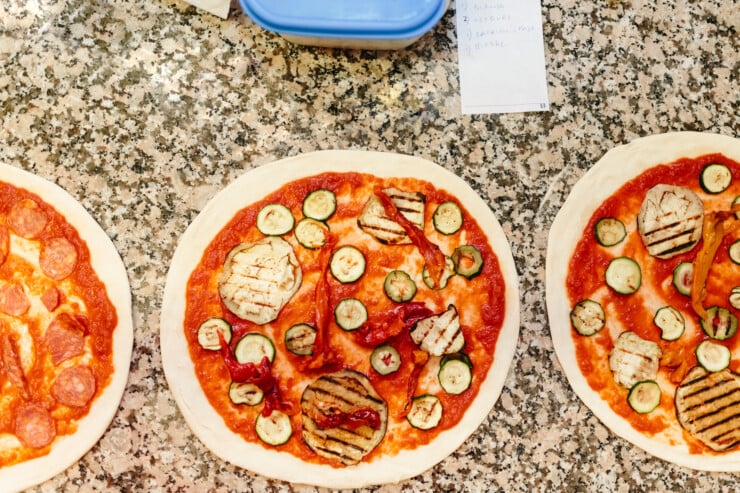
One of my first lessons came on a family trip. My grandmother spoke Italian and assumed that alone would keep us out of trouble. At a restaurant near our hotel, the owner insisted on ordering for us, never mentioned prices, and then charged us a small fortune for a few simple pizzas. The lesson stuck. Speaking the language isn’t enough. Just like anywhere else, you have to know how to choose the right restaurant.
More recently, I was walking through Rome when a mother and daughter stopped me, completely deflated. They’d spent over an hour hunting for somewhere to eat and had already sat through several disappointing meals that trip. The second they told me where they were headed, I recognized every warning sign of a tourist trap. So I walked them around the corner to one of my favorite traditional Roman trattorie instead.
Their reaction reminded me of what I tell clients all the time. Eating like a local in Italy isn’t luck. It’s understanding how Italians approach food, and then doing what they do.

What Does It Mean To Eat Like A Local In Italy?
Eating like a local in Italy means ordering the dishes a place is actually known for, in the season they belong to, at the kind of restaurant a resident would choose. It’s regional and seasonal first, famous second. It means embracing how Italian food varies from town to town rather than chasing the same meal across the country.
That last part trips people up. The most common thing travelers tell me is, “I just want real Italian food.” The trouble is that real Italian food means something different in every part of the country.
Many visitors arrive expecting carbonara, caprese, pizza, and pasta everywhere. But Italians mostly eat what’s rooted in their own regional traditions. A Roman isn’t looking for Venetian food. A Venetian isn’t hunting for Tuscan specialties. And a Milanese kitchen has no reason to cook the same things you’d find in Sicily. Eating like a local means leaning into those differences instead of fighting them.
Stop Ordering The Same Foods Everywhere
The biggest mistake I see Americans make is defaulting to pizza and pasta, even when those aren’t the local specialties. So instead of ordering on autopilot, seek out the dishes that define wherever you are. The single easiest way to improve your meals in Italy is to eat seasonal, local food. That’s the whole game.
| Destination | Local Dishes To Seek Out |
|---|---|
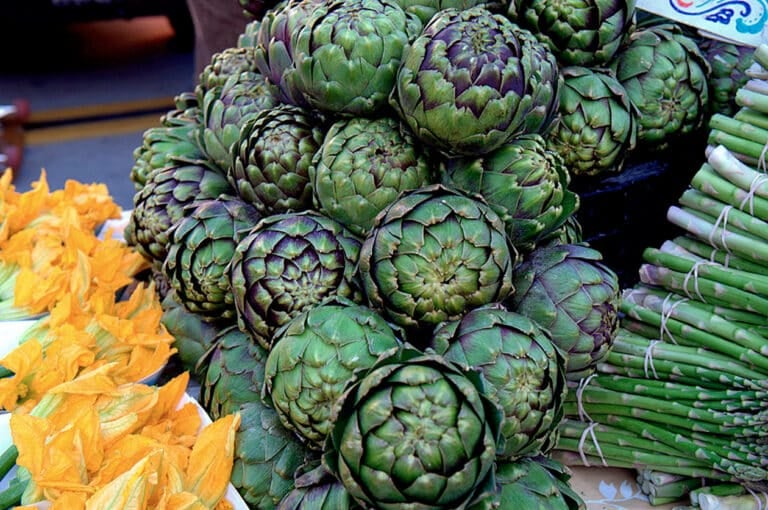
| Rome | Carbonara, cacio e pepe, amatriciana, carciofi alla romana, abbacchio |
| Milan | Cotoletta alla milanese, risotto alla milanese, ossobuco (slow-cooked veal shank) |
| Venice | Cicchetti, baccalà mantecato, sarde in saor, zaletti |
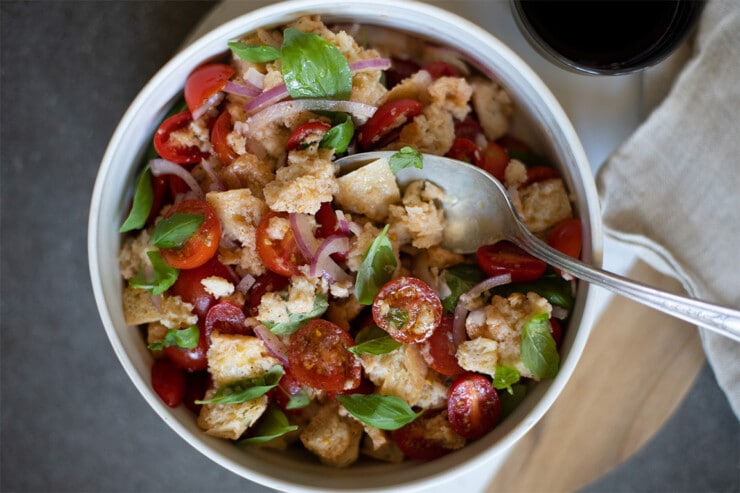
| Tuscany | Pici, panzanella, tagliata, ribollita |
| Sicily | Caponata, arancini, pasta alla norma, fresh seafood, pistachio everything |
How Italians Actually Order: A Quick Etiquette Guide
If you’ve ever wondered about Italian dining etiquette, or how to order food in Italy without giving yourself away as a first-timer, a few rules carry you a long way.
Meals come in courses, and you do not have to order all of them. A typical structure runs antipasto, then primo (pasta, rice, or soup), then secondo (meat or fish) with a contorno (side) on its own plate, then dolce. Ordering a primo and a secondo is plenty. Ordering just a pasta is completely normal too.
A few things Italians take for granted that visitors often miss. Cappuccino is a morning drink, so ordering one after lunch or dinner will get you a look. Order a “latte” and you’ll get a glass of milk, since the drink you actually want is a caffè latte. After a meal, Italians skip the milk entirely for a quick espresso, usually standing at the bar for a fraction of the table price. House wine, the vino della casa, is almost always a safe, affordable order. Bread is for mopping up sauce, not for dipping in olive oil before the meal. That coperto on your bill isn’t a scam, it’s a small, standard cover charge for the table and bread. And dinner runs late. Many kitchens don’t really open until 8pm, and in the south even later, so a restaurant packed at 6:30 is usually feeding visitors, not locals.
Tipping works differently too. There’s no 20% expectation. If the coperto is on the bill, you’re covered. For service you loved, rounding up or leaving a few euros is a warm gesture, not an obligation. One more small thing. Italians almost always drink bottled water, and tap water (acqua del rubinetto) usually isn’t offered, so don’t be thrown when the waiter brings a bottle.

Know Your Restaurant Types
Part of eating like a local is knowing what kind of room you’re walking into. The names aren’t interchangeable, and they tell you a lot before you ever see a menu.
None of these is better than the others. But if you’re after the meal that feels most local, a trattoria or osteria is usually where you want to be.
| Type | What To Expect | When To Go |
|---|---|---|
| Trattoria | Family-run, regional home cooking, shorter menu, moderate prices | Your everyday go-to for traditional food |
| Osteria | Historically wine-focused, simple local dishes, casual | Relaxed lunches and low-key dinners |
| Ristorante | More formal, broader menu, higher prices, fuller service | Special occasions and bigger nights out |
| Enoteca | Wine bar, often with small plates and cheese and salumi | Aperitivo or a light, wine-led meal |
How Italians Choose Restaurants
Most Italians don’t pick restaurants the way visitors do. They rarely chase trends. They don’t assume the busiest place is the best one. And they definitely don’t believe every meal in Italy is automatically great.
Instead, they look for regional specialties, seasonal ingredients, a kitchen with a clear point of view, a recommendation from someone they trust, and places they go back to again and again.
That’s why one of the biggest red flags is a menu that tries to do everything. If a restaurant is serving Roman pasta, Venetian seafood, Milanese risotto, Neapolitan pizza, and Sicilian specialties all at once, it’s usually built to catch visitors rather than to do one thing well.
Restaurant Red Flags Locals Notice
There are exceptions to all of these, but here’s what I pay attention to before sitting down.
I almost never eat somewhere when the menu is translated into a dozen languages, and the food is displayed out front. That combination tells me everything.
And here’s the flip side. A short, hand-written menu that changes with the season is one of the best green flags there is. It usually means the kitchen is cooking what’s fresh that day rather than reheating the same forty dishes year-round.
| Red Flag | Why It Matters |
|---|---|
| Huge menus | Usually a sign of no real specialization |
| Photos of the food | Often aimed at visitors, not locals |
| Dishes from every region of Italy | Weak regional identity |
| Menus in five languages | Frequently a visitor-first operation |
| Food displays out front | Designed to pull in passersby |
| Prime spot right beside a major sight | Often surviving on one-time customers |
Why Reservations Matter More Than You Think
One of the biggest mistakes I see has nothing to do with picking the wrong restaurant. It’s taking too long to book the right one.
A lot of visitors figure they’ll just decide where to eat once they arrive. Then, a few weeks out, they discover the places they had their hearts set on are already full. So treat your restaurant reservations with the same seriousness you give your hotel. If food matters to your trip, book it accordingly.

How To Eat Like A Local In Rome
Rome is one of my favorite food cities in Italy, and also one of the easiest places to eat badly. The sheer volume of visitors means some restaurants can get by without ever seeing the same face twice.
If I had one evening in Rome and wanted to load the dice toward a great meal, I’d head for the Jewish Quarter or around Campo de’ Fiori, then duck onto a quieter side street. For a real taste of how the city eats, the Mercato di Testaccio is hard to beat for lunch.
For clients, I usually point toward neighborhoods like Centro Storico, Prati, Trastevere, and Monti. Monti works beautifully for couples and solo travelers because so many of the rooms are small and intimate. Trastevere has a younger energy, more classic trattorie, and tends to suit larger groups. When people ask me what to eat in Rome, my answer is always the Roman canon: cacio e pepe, carbonara, amatriciana, and carciofi alla romana when they’re in season.
For lunch on the move, grab pizza al taglio, the rectangular pizza by the slice sold by weight all over Lazio.
How To Eat Like A Local In Milan
Many travelers assume Milan doesn’t have a real food culture. The reality is that Milan’s food traditions are just different.
Milanese cooking is built on butter, veal, risotto, and polenta rather than olive oil and pasta. It’s also one of Italy’s most cosmopolitan cities, so you’ll find genuinely great international food sitting right alongside classic Lombard cooking. Visitors often expect a postcard “Italian” experience and instead find something that feels a little more like New York. International, stylish, ambitious, always changing.
When you’re in Milan, don’t miss a properly made cotoletta alla milanese. Bone-in, veal, pounded thin, fried in butter. And for a quick, very Milanese bite, grab a panzerotto from one of the counters that have been frying them for decades, then go stand at a bar for your espresso like everyone else.
How To Eat Like A Local In Venice
In Venice, look for restaurants that show a real commitment to local ingredients and traditions. That can mean spotlighting local producers, taking part in Slow Food initiatives, or serving dishes rooted deep in Venetian history.
The restaurants right around St. Mark’s Square and the Rialto aren’t necessarily bad, but they’re often expensive for what they put on the plate. Just walking a few minutes into a neighborhood like Dorsoduro or Cannaregio improves both the atmosphere and the value. My move in Venice is always cicchetti, the little bar snacks you eat standing up with a glass of wine, hopping from one bacaro to the next.
How To Eat Like A Local In Bologna And Emilia-Romagna
If there’s one region Americans skip and shouldn’t, it’s Emilia-Romagna, the stretch of central-northern Italy that gave the world some of its most famous foods. This is the home of real tagliatelle al ragù, the dish most people abroad call bolognese, along with tortellini in brodo, mortadella, Parmigiano-Reggiano, and the balsamic vinegar of Modena that’s aged for years and bears no resemblance to the supermarket stuff.
Bologna earns its nickname, La Grassa, the fat one. Eat your way through its porticoed streets, pull up a chair in an old-school trattoria, and order the pasta. Just know you won’t find spaghetti bolognese on a single menu here, because it isn’t a real Italian dish. Order the tagliatelle instead.
How To Eat Like A Local In Tuscany
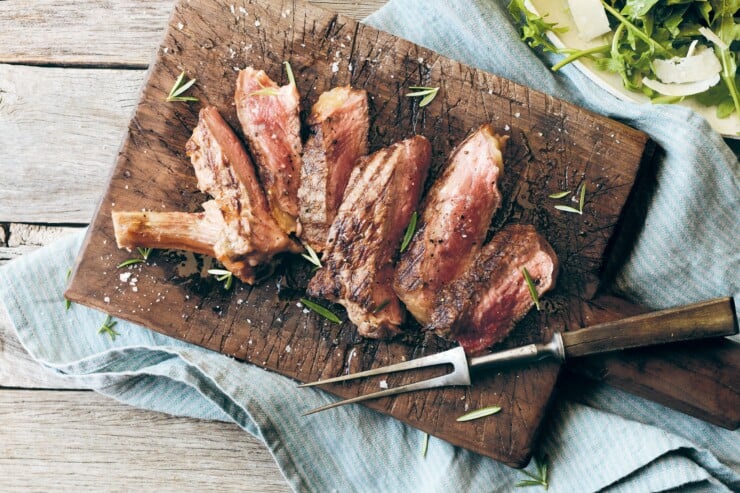
A lot of visitors arrive in Tuscany fixated on Florentine steak. And bistecca alla fiorentina absolutely earns its reputation. But Tuscan cooking is also built on hunting traditions, beans, vegetables, and rustic, peasant-rooted dishes. Don’t leave without trying panzanella, pici, ribollita, and a good tagliata, ideally with a glass of Brunello di Montalcino if the budget stretches.
And don’t assume the most viral restaurant is the best one. Some of Tuscany’s most memorable meals happen in small towns and family-run trattorie that have never once appeared on social media. That’s usually exactly where you want to be.
How To Eat Like A Local In Sicily
If one ingredient sums up Sicily for me, it’s the pistachio. The island’s cooking is tightly tied to its ingredients, from seafood and citrus to almonds, capers, and, yes, those famous Bronte pistachios.
The one dish I wish more visitors ordered is caponata, that sweet-and-sour tangle of eggplant that captures Sicily’s whole agrodolce tradition in a few bites. Pasta alla norma is right behind it, and you should eat at least one arancino, the fried, stuffed rice ball that’s a Sicilian street-food icon. When I’m choosing a restaurant in Sicily, I look for a menu built around local products rather than generic Italian dishes that could’ve come from anywhere.
How We Vet Restaurants For Our Italy Clients
At Salt & Wind Travel, we don’t just lean on review sites. We track openings and closures, read Italian food publications, talk to local guides, concierges, chefs, and food writers, and we eat at these places ourselves whenever we can.
We also gather feedback from clients after their trips, and we watch for changes in ownership or kitchen, because a restaurant can shift dramatically over a single season. If the quality slips or a place stops being good value, we start reevaluating whether it still belongs on our list. That’s the difference between researching a city and actually knowing it.
Stop Standing In Food Lines
One trend I really don’t love is the growing culture of waiting in long lines for food. Twenty years ago, queuing an hour for a sandwich or a plate of pasta just wasn’t part of how Italians ate. Today, social media has normalized it.
Sometimes the hype is earned. Often it isn’t. The best meals I’ve had in Italy almost never came from the place with the longest line. They came from kitchens committed to local traditions, seasonal ingredients, and taking care of whoever walked through the door.
If you remember only three things from all of this, make it these. Don’t follow the crowd. Be open to trying new dishes and regional specialties. And make your reservations. That’s how you eat like a local in Italy.
Frequently Asked Questions For How To Eat Like A Local In Italy
Yes, Italy has consumer protection laws that cover situations including being overcharged or receiving poor service at a restaurant. If discussing the issue with the restaurant doesn't resolve the problem, you can report the incident to the local police station (Carabinieri) or a consumer protection agency such as the "Autorità Garante della Concorrenza e del Mercato" (AGCM).
It's helpful to keep receipts and any other evidence that can support your claim. Additionally, EU citizens can seek assistance through European Consumer Centres, which offer advice and support in dealing with cross-border consumer issues.
It means ordering the dishes a region is actually known for, in their proper season, at the kind of restaurant a resident would pick. Italian food is hyper-regional, so eating like a local means embracing those differences instead of ordering the same pizza and pasta everywhere you go
Walk a few streets away from major sights before choosing where to eat. Be wary of huge multi-language menus, photos of the food, displays out front, and staff waving you in. Look instead for short, seasonal menus focused on regional specialties, and book ahead when you can.
Later than most visitors expect. Dinner service often doesn't start until 8 pm, and in southern Italy, it can run even later. A restaurant that's busy at 6:30 pm is usually feeding visitors. If you want the local rhythm, aim for an 8-9pm reservation.
Not at all. A full Italian meal has several courses, but you're never required to order them all. Ordering just a primo, like a plate of pasta, is completely normal, especially at lunch. Order what you actually want to eat.
There's no 20% tipping culture in Italy. Many bills include a small coperto, or cover charge, which is standard and not a scam. For service you genuinely enjoyed, rounding up or leaving a few euros is a kind gesture, but it's never expected the way it is in the US.
Yes, more than most travelers think. Popular local restaurants book up two to four weeks out, and fine dining or Michelin-starred spots can require one to three months. If food is central to your trip, reserve your tables with the same seriousness you give your hotels.
Amalfi Coast Towns
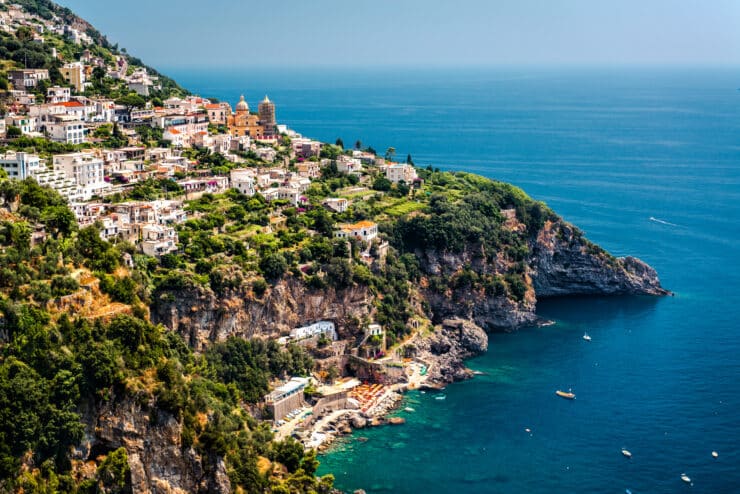
Trying to figure out where to stay on the Amalfi Coast? You’ll want to research the 13 Amalfi Coast towns to find the perfect place for you. From famed Positano to bustling Amalfi and lesser-visited (by Americans) Cetara and Minori, we’re giving you the essential info about each.
Classic Italian Recipes
Here are a few of our readers’ favorite Italian recipes to cook:
Italy Travel Guide
Are you considering traveling to Italy in real life? Check out our free Italy Travel Guide for our best travel tips, recipes, and articles.
Have Us Plan Your Italy Trip
Did you know we’re also a boutique travel agency specializing in Italy travel planning? If you’re looking to plan one of the best trips to Italy, our Italy trip planner services are here to help you plan your perfect itinerary.
Photo credit: Raw pizzas on a counterBy Mattia
