
🔑 Quick Answer: Cortina d’Ampezzo is a mountain town in the Ampezzo Valley of Italy’s Veneto region, inside the UNESCO-listed Dolomites. It’s a 2- to 3-hour drive from Venice Marco Polo, the closest major airport. Cortina makes a great base for skiing from December to April and hiking from June through September, and four nights is the right minimum.

Key Takeaways
- Cortina d'Ampezzo is the best-connected base on the Veneto side of the Dolomites, so you'll spend less time driving to Tre Cime, Lago di Sorapis, and Cinque Torri.
- Many hotels and restaurants close in late fall and late spring, so check what's open before you book.
- In summer, the Tre Cime toll road and Lago di Braies parking both take advance booking.
- Plan at least four nights, and pick up a rental car in Venice.
Cortina d’Ampezzo is the town people picture when they dream about skiing in the Italian Alps, and it’s just as lovely in summer. Cafés and boutiques line the car-free center, the peaks rise straight out of town, and lunch is often a plate of pasta at a mountain hut with the Dolomites all around you.
Cortina co-hosted the Milano Cortina 2026 Winter Olympics in February 2026, its second Games after 1956, so the town is more popular than ever. This guide covers how Cortina fits into the Dolomites, when to come, where to base yourself, and what to do on a trip here.
Why Trust Us
I’m Aida Mollenkamp, founder of Salt & Wind Travel. I’ve traveled to Italy almost every year since 1994, and I live in Mammoth Lakes, a ski town in California’s Eastern Sierra, which is the closest thing California has to the Dolomites. I spend 6 to 8 weeks in Italy each year, and in 2026 I spent some of that time in the Veneto, Trentino, and the Dolomites.
This guide is a group effort. Travel photographer Jessica Wright of Bontraveler spent several weeks around Cortina, and she shared her on-the-ground expertise and every photo here. Our planning team has worked across the Trentino and Veneto sides of the Dolomites for years, planning trips for couples, groups of friends, and outdoor adventurers.
We’ve sent dozens of clients to Cortina, mostly from spring through fall, and what they tell us when they get home shapes this guide.

Getting Your Bearings in Cortina d’Ampezzo
Cortina d’Ampezzo sits in the Ampezzo Valley in the province of Belluno, in Italy’s Veneto region, about a 2- to 3-hour drive north of Venice. Four big mountain groups ring the town: the Tofane, Sorapiss, Cristallo, and Croda da Lago. The whole range has been a UNESCO World Heritage Site since 2009.
The valleys of South Tyrol to the west speak German and Ladin, an ancient Romance language, but Cortina is mostly Italian-speaking, and it feels like a chic Italian town more than a Tyrolean village. People call it the Pearl of the Dolomites. For how the whole region fits together, see our Dolomites guide.
Jessica’s biggest takeaway from her weeks here was that your base matters. Staying in a central town like Cortina cuts down on drive time, so you can beat the crowds to the trailheads and spend more of the day outside.
Who Cortina d’Ampezzo Is Best For
Cortina suits travelers who want one well-placed base, great food, and big days in the mountains without a long morning drive. Some of the best luxury hotels in the Dolomites are in and near Cortina, so it’s great for those who love 5-star accommodations. The area also has great boutique properties our clients love that offer great value.
- Couples get the most out of Cortina, with a stylish town to return to, long lunches, and big hikes nearby.
- Skiers get slopes right above town, and the Dolomiti Superski pass opens up 12 ski areas across the region.
- Hikers and climbers have Tre Cime, Lago di Sorapis, and some of the most famous via ferratas in the Alps within a short drive.
- History lovers can walk the World War I front lines at Cinque Torri and Lagazuoi.
- Families with young kids may be happier in Val Gardena, where lifts leave from town, and the meadow trails are gentler.

When to Go to Cortina d’Ampezzo
The best months to visit Cortina are September, then June, when the trails are open and the crowds are thinner. Skiers should aim for January through March, when the snow is most reliable. Early October is quiet and gorgeous, but many hotels and restaurants have closed by then, and late spring brings a second round of closures.
| Season | Months | What's Open | Best For |
|---|---|---|---|
| Summer | June through September | Lifts, rifugi, the Messner Mountain Museum, and the Sorapis trail; July and August are the busiest months | Hiking, via ferratas, lakes |
| Fall shoulder | Late September through November | Lifts, gondolas, and most rifugi wind down, and many hotels and restaurants close; larches turn gold in mid to late October | Empty valleys and golden light |
| Ski season | Early December through early April | Ski lifts and the après-ski scene; snow is most reliable January through March | Skiing, après-ski, a lively town |
| Spring shoulder | Mid-April through May | Many hotels, restaurants, and lifts close; high trails are often still snowy | Quiet town strolls, if you don't mind closures |
Cortina or Alta Badia: Where to Base in the Dolomites
The Dolomites aren’t one place, and the valley you pick changes the whole trip. Cortina is Italian-speaking and glamorous, while Alta Badia and Val Gardena are Ladin- and German-speaking valleys with a different food culture and a slower pace.
If you base in Cortina itself, stay within walking distance of the center, so you can stroll to dinner and leave the car parked. Cortina’s hotel scene also changed a lot around the Olympics, with some landmark properties closed for renovation or rebranded, so trust recent reviews over old photos.
| Base | What It Feels Like | Best For |
|---|---|---|
| Cortina d'Ampezzo | Italian-speaking, glamorous, with a real town center | Couples who want shops, après-ski, and restaurants out the door |
| Alta Badia (San Cassiano and Corvara) | Ladin and German-speaking, quieter, about 40 minutes from Cortina | Travelers who want a resort stay, serious dining, or ski access on the Sella Ronda |
| Val Gardena (Ortisei) | Ladin and German-speaking, with lifts from town and meadow trails | Hikers who want trails at every level |
How We Can Help
Being informed isn’t enough here. Lift schedules change by the date, not the month; much of the valley shuts down between seasons, and the most famous spots now require advance booking in summer.
When we plan a Cortina trip, we match you to the right valley and hotel for your dates. We also work with a handful of local guides who lead food tours, guided hikes, and ski days, and with drivers who know the mountain passes. They know which rifugi are serving and which passes are clear, so your hiking day doesn’t end at a closed gondola. Start planning your Dolomites trip with us.
How to Get to Cortina d’Ampezzo
The easiest way to reach Cortina is to fly into Venice Marco Polo, then rent a car; it’s about 2 to 3 hours away. You’ll want the car for the lakes and trailheads. Verona and Innsbruck in Austria also work if you’re coming from the south or the north, and the drive over the passes to Bolzano is a beautiful way to continue your trip.
If you’d rather not drive, ATVO runs direct buses between Venice and Cortina, and local buses reach the lakes and trailheads in summer.


Things to Do in Cortina d’Ampezzo
The best things to do in Cortina d’Ampezzo include hikes, lake days, ski days, and long lunches in the surrounding mountains. These are the days we build a trip around.
Stroll the Town of Cortina d’Ampezzo
The pedestrian center is lined with cafés, boutiques, and luxury shops, and it’s the place for an aperitivo after a day in the mountains. In winter, the town is famous for its après-ski.
Hike Tre Cime di Lavaredo
Tre Cime di Lavaredo is a trio of limestone peaks north of Cortina, and the loop around them is the Dolomites hike everyone pictures. A rifugio, one of the region’s staffed mountain huts, sits at the base for lunch.
In high season, it’s also one of the region’s busiest spots, and driving the toll road up to Rifugio Auronzo requires an online booking, so reserve ahead and start early. On the way back, stop at Lago di Misurina, about 20 minutes from Cortina, for a picnic by the water.
Hike to Lago di Sorapis
Lago di Sorapis is a turquoise lake below the Sorapiss peaks. It’s worth every step, but this is a real hike. It takes 4 to 5 hours round trip, with ladders along the way, and the trail is only passable from June through September. Wear sturdy shoes and bring water and food. Jessica hiked it in the fog, and it was still beautiful.
Walk Through History at Cinque Torri
Cinque Torri is a cluster of five rock towers west of Cortina. Ride the lift up for the open-air museum, where restored trenches tell the story of the World War I battles fought across these peaks. With lunch at a rifugio up top, it makes an easy half-day.
Visit the Messner Mountain Museum
In summer, the museum on Monte Rite, founded by mountaineer Reinhold Messner, is devoted to the Dolomites and the climbers who opened them up. The summit views are half the reason to go.
Climb a Via Ferrata With a Guide
Cortina is famous for its via ferratas, the iron-cable climbing routes built along World War I lines. They take a harness, helmet, and via ferrata lanyard, plus real experience, so do your first one with a guide. In summer, afternoon thunderstorms can roll in fast, and trails above the tree line can be exposed, so start early and turn back if the sky changes. We pair clients with a local mountain guide for anything beyond a marked trail or groomed run.
Hit the Slopes
Cortina’s ski areas start right above town, and the Dolomiti Superski pass links them to the rest of the region. Italian law requires helmets for all skiers and snowboarders, plus third-party liability insurance, which you can buy with your lift pass.
If you’re heading off-piste where there’s avalanche risk, you must carry a transceiver, shovel, and probe, so go with a guide. We work with local guides who lead ski days, so we can set that up for you.
Take a Day Trip to Lago di Braies (Pragser Wildsee)
Lago di Braies is one of the most photographed lakes in the Dolomites. Go early to rent a rowboat, then pack a lunch and grab a picnic table around the lake. In peak summer, the road is closed to cars during the day unless you’ve booked parking, so reserve ahead or take the bus.
Take a Day Trip to Val Gardena
Val Gardena is a Ladin and German-speaking valley in South Tyrol, with lifts from town and trails at every level. The drive is long but beautiful, and it’s a calmer alternative to Tre Cime in high season.
Eat Like a Local
Cortina sits where Italian and Alpine cultures meet, so the cooking is mountain food first. Order casunziei, Cortina’s beet-filled ravioli with brown butter and poppy seeds, and Jessica says lunch at a rifugio is the best part of any hiking day. Our Dolomites food guide covers the region’s other specialties.
For a special meal, book SanBrite well ahead. Jessica calls it the pinnacle of dining in the Dolomites, with house-made pasta, butter from the family’s own cows, and foraged ingredients, and it holds a Michelin star and a Michelin Green Star. In town, Ristorante Tivoli is Cortina’s long-standing Michelin-starred table, run by Graziano Prest since 2002, and it’s closed on Mondays.
If you’ll drive an hour for lunch, chef Norbert Niederkofler, who made St. Hubertus famous, now cooks at Atelier Moessmer in Brunico. It holds three Michelin stars and cooks only with ingredients from the surrounding mountains. Book well ahead, and note that it’s closed on Mondays and Tuesdays.
These are a few of our favorites, not the full list. We save the rest, including the rifugi worth hiking to for lunch, for the trips we plan.
How to Visit Cortina Without the Crowds
Cortina gets very busy in July and August, but most of the crowding sits at a few famous spots. Here’s how we keep our clients’ days calm and lighter on the mountains.
- Go in June or September, when the trails are open and the summer crowds have thinned.
- Book the Tre Cime toll road and Lago di Braies parking before you leave home, then go first thing in the morning.
- Stay several nights in one base instead of driving a new loop every day.
- Leave the car for a day and take the bus to the lakes and trailheads.
- Trade one famous stop for a quieter one, like Val Gardena, the Alpe di Siusi, or Corvara.
- Stay on marked trails and carry out everything you carry in.
Frequently Asked Questions
Cortina d'Ampezzo is in the Ampezzo Valley in the province of Belluno, in Italy's Veneto region. It sits in the Dolomites, surrounded by the Tofane, Sorapiss, Cristallo, and Croda da Lago mountains, about a 2- to 3-hour drive north of Venice.
Cortina d'Ampezzo is known as one of Europe's most glamorous ski towns. It gained fame for hosting the 1956 Winter Olympics and co-hosting the Milano Cortina 2026 Winter Olympics in February 2026. In summer, it's a base for hiking Tre Cime, Lago di Sorapis, and Cinque Torri.
Yes, especially if you want one base for winter skiing or summer hiking. Cortina puts Tre Cime, Lago di Sorapis, and Cinque Torri within a short drive, with Michelin-starred restaurants back in town.
Venice Marco Polo is the closest major airport, about 2 to 3 hours away by car. You can rent a car at the airport or take the direct ATVO bus to Cortina. Verona and Innsbruck also work if you're coming from the south or the north.
The best months are September and June, when the trails are open and the crowds are thinner. Winter is prime for skiing, and many hotels and restaurants close in late fall and late spring.
Stay in Cortina if you want a lively, Italian-speaking town with shops and restaurants just outside your door. Choose Alta Badia if you'd rather have a quieter Ladin valley and a resort stay, about 40 minutes away.
In summer, yes. The toll road up to Tre Cime's Rifugio Auronzo and daytime parking at Lago di Braies both require advance booking. Check the official sites before you go, since the rules change each year.
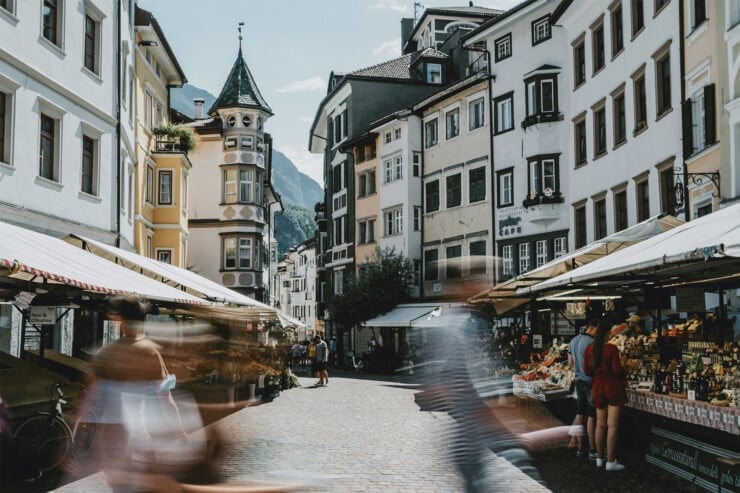
Bolzano Italy Travel Guide
While Cortina d’Ampezzo is renowned for its stunning Dolomite landscapes and luxury resorts, Bolzano offers a different yet equally captivating experience just a scenic drive away. Known as the gateway to the Italian Alps, Bolzano blends Italian and Austrian influences, offering rich cultural experiences, unique architecture, and a thriving food and wine scene.
Explore medieval castles, sipping local wines from nearby vineyards, or wandering through vibrant markets. For those intrigued by this Alpine gem, our comprehensive guide to Bolzano will help you uncover all the must-visit spots, including where to eat, drink, and stay.
Have Us Plan Your Italy Trip
Did you know we’re also a boutique travel agency that specializes in Italy travel planning? If you’re looking to plan one of the best trips to Italy, our Italy trip planner services are here to help you plan your perfect itinerary.
Photo Credit: All photos by Jessica Wright
