
🔑 Quick Answer: Paso Robles is a Central Coast wine region with more than 200 wineries, and the best wineries for a first visit are DAOU, Eberle, Epoch, Hope Family, J. Lohr, JUSTIN, and Tablas Creek. For the new generation, add Desparada, Sans Liege, and Ulloa Cellars. Most standard tastings run $15-$40 per person.

Key Takeaways
- Paso Robles is California's largest wine appellation by area, with more than 200 wineries and 40,000 acres of vines between Los Angeles and San Francisco.
- Cabernet Sauvignon is the most planted grape here, but Paso made its name on Rhône varieties like Grenache, Syrah, and Mourvèdre.
- Split your days by side of town: the hilly west side for the estate classics, and Tin City for the small new-generation producers.
- Book ahead. The best tastings increasingly run by appointment, and reserve tastings cost noticeably more than a standard flight.
Paso Robles’ best wineries are spread across a region nearly three times the size of Napa Valley, which is exactly why first-timers get lost. Many of our travelers have heard great things about Paso wine but don’t know where to start, which side of town to stay on, or which tastings require a reservation.
This guide gives you our 10 picks, split between the classics that put Paso on the map and the new-generation winemakers we can’t stop talking about, plus what a tasting day really costs.
Who this is for: couples planning a Central Coast wine weekend. Friend groups will find plenty here too, especially in Tin City.

Why Trust Us for the Best Wineries in Paso Robles
I’m Aida Mollenkamp, a Le Cordon Bleu-trained chef, cookbook author, and Food Network personality, and I hold WSET Level 2 wine certification. I was born and raised in California, and I’ve been tasting through Paso Robles for years. For this guide, I toured the region’s classic estates and its new generation of winemakers with Discover California Wine, and I was back in Paso in September 2026 for the California Agritourism Summit.
At Salt & Wind Travel, we plan California wine country trips for couples, friend groups, and families, and Paso Robles is a regular stop on our Central Coast itineraries. We book many of the region’s hotels directly for our clients, and we’ve tasted the wineries on this list ourselves or heard our clients come back raving about them.
Here’s the honest part: Paso is big, and a lot of its best wine is poured by appointment, at the end of a long country road, by the person who made it. Knowing the names isn’t enough. You need someone to make the introductions. So for our clients, we pair a Paso-based wine guide who books seated tastings with the winemakers (not just a pour at the bar) with a driver who knows the back roads, so nobody has to count tastings.
Tasting fees, hours, and reservation rules change often, so confirm with each winery before you go.
How We Picked the Best Wineries in Paso Robles
For our list, the best wineries in Paso Robles are the ones that show what makes the region different, not just the biggest names. We split the picks into two groups. The classics are the estates that built Paso’s reputation, most of them on the hilly west side of town. The new generation is a set of small, independent winemakers, several of them in the Tin City warehouse district just south of downtown. The table below gives you the whole list at a glance.
| Winery | Area | Known For | Best For | Book Ahead? |
|---|---|---|---|---|
| DAOU Vineyards and Winery | Adelaida District, west side | Cabernet Sauvignon and mountaintop views | couples; special occasions | Yes |
| Eberle Winery | Highway 46 East, east side | Zinfandel and underground caves | couples and friend groups; first-timers | Some experiences |
| Epoch Estate Wines | Templeton, west side | Rhône-style blends and whites | couples; food & wine lovers | Yes |
| Hope Family Wines | West side | Austin Hope and Treana wines | friend groups; first-timers | Recommended |
| J. Lohr Vineyards and Wines | East side | Bordeaux and Rhône varieties and sustainability | couples and friend groups; first-timers | Recommended |
| JUSTIN Vineyards and Winery | Adelaida District, west side | Bordeaux-style blends like Isosceles | couples; special occasions | Yes |
| Tablas Creek Vineyard | Adelaida District, west side | Rhône blends and regenerative organic farming | couples; food & wine lovers | Yes |
| Desparada | Tin City | Small-lot Sauvignon Blanc and Chenin Blanc | friend groups; food & wine lovers | Recommended |
| Sans Liege Wines | Tin City | Rhône and Spanish grape blends | friend groups; food & wine lovers | Recommended |
| Ulloa Cellars | East of downtown | Grüner Veltliner and Gewürztraminer | couples; food & wine lovers | Recommended |
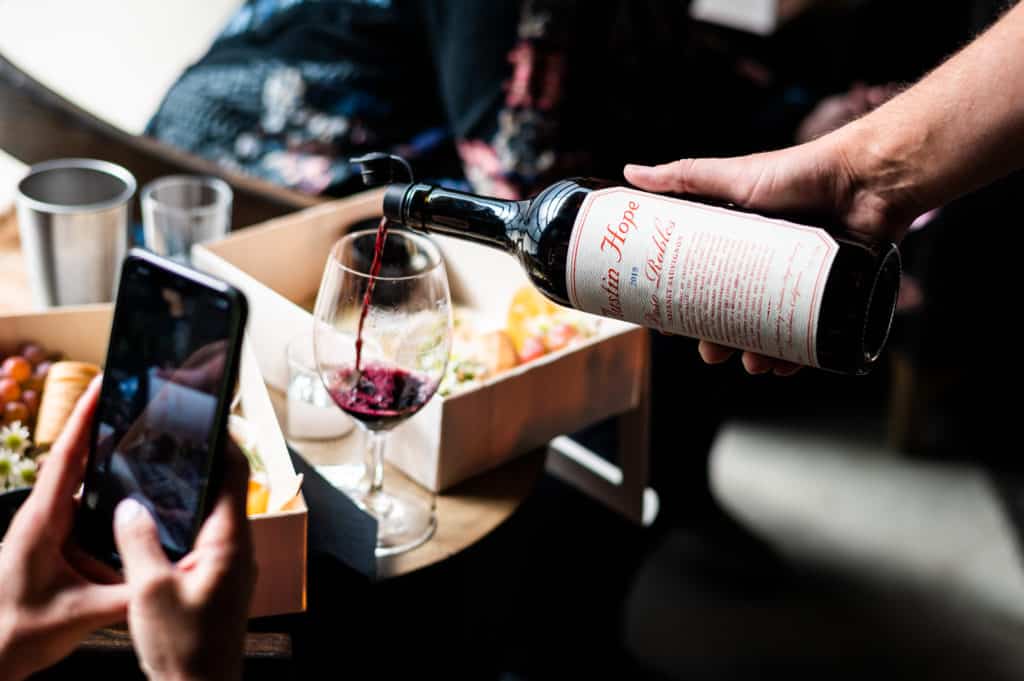
Classic Paso Robles Wineries
Paso Robles has more than 200 wineries, and these seven are the estates we’d send a first-timer to first. Each one tells a different part of the region’s story, from Cabernet on the mountaintops to the Rhône grapes Paso is famous for.
DAOU Vineyards and Winery
DAOU is Paso Robles’ best-known name, and the view alone justifies the drive. Brothers Georges and Daniel Daou founded it on DAOU Mountain, at the top of the Adelaida District, to make Cabernet Sauvignon that could stand with the best in California. Book a seated tasting on the terrace, and plan to linger over the view.
Eberle Winery
Eberle Winery is owned by one of Paso’s pioneers. Founder Gary Eberle helped establish Paso Robles as a serious wine region, and the winery is still known for its Zinfandel. Tastings range from a relaxed patio pour to reserve experiences in the winery’s underground caves, and some require an appointment.
Epoch Estate Wines
Epoch Estate Wines makes Rhône-style blends and showcases white grapes like Viognier, Roussanne, and Marsanne, as well as reds. The winemaking leans artisanal, and the wines taste of the limestone-rich hills they come from.
Hope Family Wines
Hope Family Wines is a family-owned winery that has been part of Paso for more than 30 years, and it makes the Austin Hope and Treana wines, among others. Its standard tasting runs $25 a person. The family also pairs its wines with local Stepladder Creamery cheeses, so ask whether a wine-and-cheese pairing is on the schedule when you book.


J. Lohr Vineyards and Wines
J. Lohr has made wine in Paso Robles since the 1980s, and its family-owned estates are synonymous with the region. J. Lohr grows Bordeaux and Rhône varieties across Paso Robles and Monterey County, and it has led the way on sustainable winemaking in Paso and across California.
JUSTIN Vineyards and Winery
JUSTIN planted its first vineyard in 1981 to make Bordeaux-style blends, and its Isosceles blend became one of the wines that put Paso on the map. JUSTIN combines Old World methods, like hand-harvesting and aging in small French oak barrels, with modern technology.
Tablas Creek Vineyard
Tablas Creek Vineyard pioneered California’s Rhône movement, and it is the world’s first Regenerative Organic Certified vineyard. Tablas Creek is a partnership between the Perrin family of Château de Beaucastel in Châteauneuf-du-Pape and American wine importer Robert Haas. The vines were propagated from Beaucastel’s own cuttings and are farmed organically and biodynamically. If you only taste one Rhône blend in Paso, taste it here.


New Generation Paso Robles Wineries to Know
Paso’s next generation is where the energy is, and a few of the best small producers pour in or near Tin City, a warehouse district about seven miles south of downtown. These three are our favorites.
Desparada
Desparada is a new-generation Paso Robles winery, and founder and winemaker Vailia From makes small-lot wines from some of the region’s most respected vineyards. Her Sauvignon Blanc and Chenin Blanc are among our favorites, but taste through everything she’s pouring when you visit.

Sans Liege Wines
Sans Liege Wines is winemaker Curt Schalchlin’s project, known for unconventional blends of Rhône and Spanish grapes. Curt sources fruit from across the Central Coast to pair New World experimentation with Rhône Valley heritage, and he is also part of the team behind Fableist Wine Company.
Ulloa Cellars
Winemaker and founder Nancy Ulloa started Ulloa Cellars, a boutique winery, in 2019, and opened a tasting room east of downtown Paso Robles in 2023. Nancy came to winemaking only a few years ago, but she has already made a name for herself with aromatic whites like Grüner Veltliner and Gewürztraminer.

What to Know About Paso Robles Wine Country
Paso Robles wine country is the 612,000-acre Paso Robles AVA, an official American Viticultural Area in northern San Luis Obispo County. Here’s the background to help your tastings make more sense.
Where Is Paso Robles?
Paso Robles sits on California’s Central Coast, about halfway between San Francisco and Los Angeles off Highway 101. The town has a historic downtown square full of independent restaurants, shops, and boutique hotels, with vineyards spreading in every direction from there. Paso sits inland from the Pacific, so many travelers who drive California’s coastal Highway 1 miss it entirely.
How Big Is Paso Robles Wine Country?
The Paso Robles Wine Country Alliance puts the region at 612,000 acres, with more than 40,000 acres planted to vines and more than 200 wineries. The AVA’s western edge is just six miles from the Pacific, and it runs about 35 miles from east to west and 25 miles from north to south.
The region has 11 smaller districts, each its own AVA: Adelaida District, Creston District, El Pomar District, Paso Robles Estrella District, Paso Robles Geneseo District, Paso Robles Highlands District, Paso Robles Willow Creek District, San Juan Creek, San Miguel District, Santa Margarita Ranch, and Templeton Gap District.
What Grapes Grow in Paso Robles?
Paso Robles grows more than 60 grape varieties, and red wine dominates. Cabernet Sauvignon is the most planted grape, at about 39% of vineyard acreage, followed by Merlot, Syrah, and Zinfandel, which is Paso’s heritage grape. Rhône varieties like Grenache, Syrah, and Mourvèdre, often blended and called GSM, are what many wine lovers seek out here. Warm days and cool nights give the grapes a long growing season, and Paso has one of the biggest day-to-night temperature swings of any region in California.
A Short History of Paso Robles Wine
Paso Robles wine isn’t new. Spanish missionaries planted Mission grapes on the Central Coast in the late 1700s, and settlers planted Zinfandel here in the 1800s. The modern wine industry took off in the 1970s, and the Paso Robles AVA was established in 1983. Paso still has deep farming roots too, so you’ll find olive oil, cheese, almonds, and lavender alongside the vineyards. For the non-wine side of the region, see our guide to things to do in Paso Robles.
Is Paso Robles the Next Napa?
Local winemakers bristle when people call Paso Robles “the next Napa,” and they have a point. Paso has its own grapes, its own laid-back culture, and a spirit of cooperation between wineries that you feel as you taste. Sustainability runs through it too, from pioneers like J. Lohr to many of the new-generation winemakers.
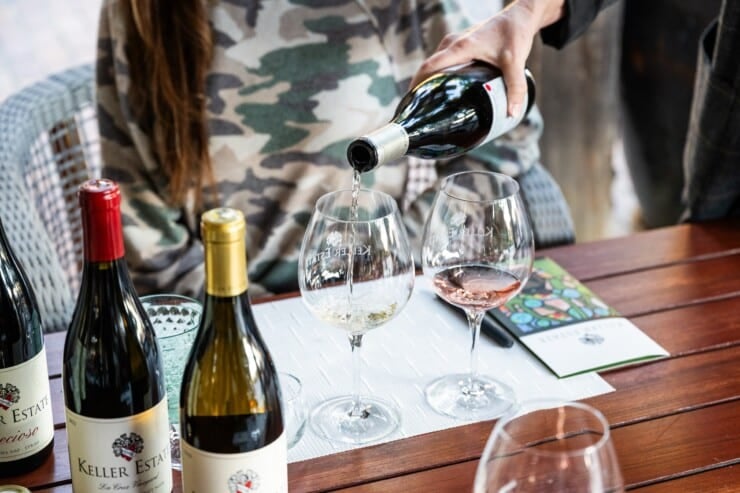
Paso Robles Wine Tasting Tips
A good tasting day in Paso comes down to planning, pacing, and a sober ride home. These five tips are the Paso-specific ones we give our clients, and our full guide to wine-tasting tips for California wine country covers the rest, from what to wear to what to tip.
Plan by Side of Town
Paso’s wineries cluster on the west side, the east side, and in Tin City, and the drives between them add up. Pick one area per day so you spend your time tasting, not driving.
Book Tastings Ahead
Many Paso Robles wineries now take reservations only, especially for seated or private tastings. Book at least a week ahead in spring and during the late summer and fall harvest, and further ahead for weekends.
Budget for Tasting Fees
Most tastings in Paso run $15 to $40 per person, and reserved, seated tastings often cost $60 or more. Many wineries waive the fee if you buy wine.
Stay Hydrated and Pace Yourself
Paso summers are hot, often above 95°F, so drink plenty of water between tastings. Two or three wineries a day is plenty if you want to enjoy the last pour as much as the first.
Have a Designated Driver
Paso’s wineries sit on winding country roads, so never drive after drinking. Hire a driver or guide, or choose one person in your group to stay sober.
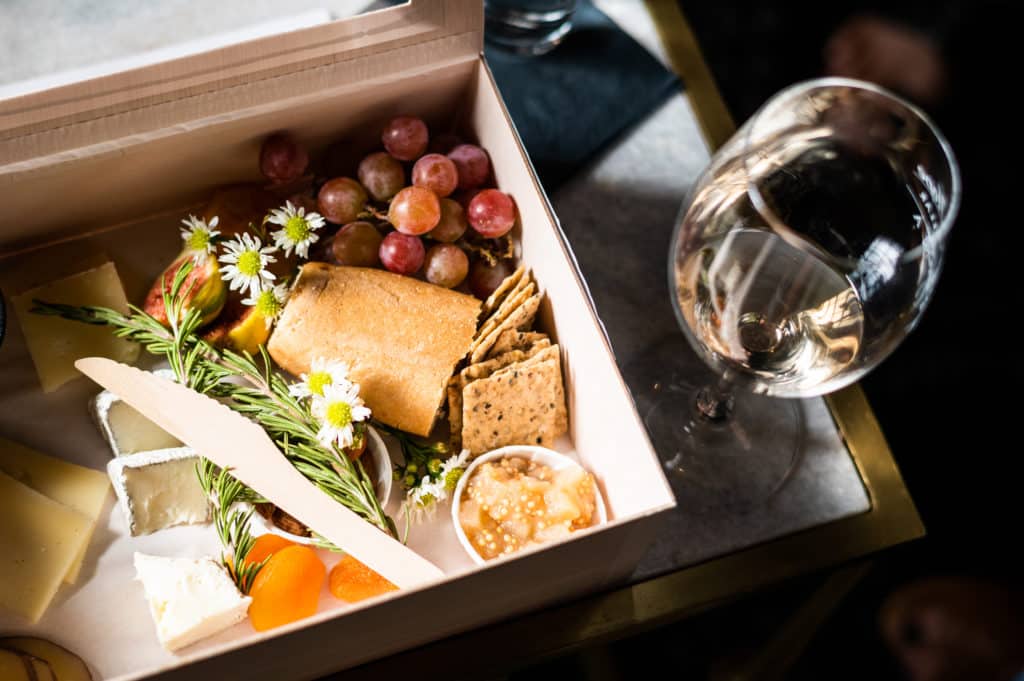
Frequently Asked Questions About Paso Robles
The best wineries in Paso Robles for a first visit are DAOU, Eberle, Epoch, Hope Family, J. Lohr, JUSTIN, and Tablas Creek, plus Desparada, Sans Liege, and Ulloa Cellars for the new generation. Together they cover Cabernet, Rhône blends, Zinfandel, and the crisp whites the region does better than people expect.
Paso Robles and Napa Valley are different in a lot of ways including location, soil types, wines, and attitude. While Napa is north of San Francisco, Paso Robles is between Santa Barbara and Hearst Castle in California’s Central Coast. While both Paso Robles and Napa have a variety of wine styles grown across the regions, Rhône varietals are the most popular in Paso Robles while Cabernet and Chardonnay dominate in Napa. Finally, while Napa Valley is almost exclusively wine, Paso Robles has a more varied agriculture with everything from almonds and olive oil to avocados and flowers. Some say that Napa is snobbier than Paso but of course, that all depends on where you go and who you meet.
No. Paso Robles is on California's Central Coast, between Santa Barbara and Hearst Castle, more than 200 miles south of Napa Valley by road. Paso is known for Rhône grapes and Zinfandel as well as Cabernet, while Napa leans on Cabernet and Chardonnay. Paso also grows olives, almonds, and lavender, while Napa is almost all vineyards.
Paso Robles has more than 200 wineries, according to the Paso Robles Wine Country Alliance, spread across 11 smaller districts and more than 40,000 acres of vines.
Situated halfway between San Francisco and Los Angeles in San Luis Obispo County, Paso Robles is located inland from the Pacific Ocean in California's Central Coast.
Paso Robles is known for bold reds. Cabernet Sauvignon is the most planted grape, Zinfandel is the region's heritage grape, and Rhône blends of Grenache, Syrah, and Mourvèdre are its signature.
Most standard tastings in Paso Robles cost $15 to $40 per person, and reserved or seated tastings often run $60 or more. That's usually less than in Napa Valley, and many wineries waive the fee if you buy a bottle.
Two days give you time to taste on both the west side and in Tin City. Most of our clients add a third day to visit the town's farms, olive oil producers, and hot springs, or take a side trip to the coast.
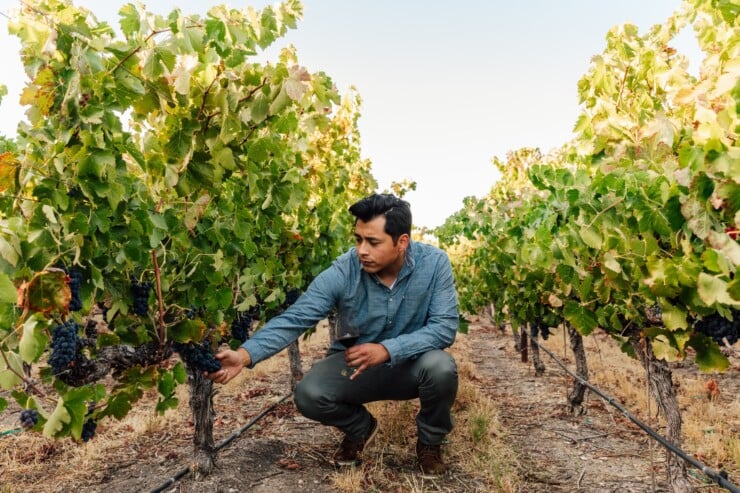
Tour More California Wine Regions
Looking to do wine tours in the Paso Robles area and beyond? Check out our travel clients’ favorite California wine regions then dive into tips for wine tasting in Monterey County.

California-Inspired Recipes
Want to get a taste of the Golden State at home? Cook up these recipes inspired by the Golden State:

California Wine Country Travel Guide
If you’re inspired to explore more about this iconic region, our California Wine Country Travel Guide offers everything you need to plan your visit. Discover the best wineries, restaurants, and experiences that showcase the beauty and bounty of California wine country.
Have Us Plan Your California Trip
If you’re looking to plan a trip to California, let us lend our expertise. As California-focused travel planners, we can plan your time from beginning to end with our California trip planning services.
Photo Credit: Photos by James Collier for California Grown
Sponsored Post: This article was brought to you by Discover California Wine. Thanks for supporting these sponsors who help us keep Salt & Wind Travel up and running!
